Besides architecture, nothing says so much about a city or country as a cemetery. Here you look at the history, the culture, the faith – yes almost a little into the soul of people. We enjoy the tranquility of cemeteries and were therefore thrilled to be able to discover the Central Cemetery in Vienna together with Gudrun from “Reisebloggerin“.
History of the origin of the Central Cemetery in Vienna
As in many European cities, the population growth in the mid-19th century also made itself felt in Vienna. The existing cemeteries were reaching the limits of their capacity, and in 1863 the Vienna City Council decided to build a central cemetery. This was to be located outside the city and planned to be large enough to be usable for an indefinite period of time. The decision was made in favor of a plot of land in Kaiserebersdorf and two plots in Simmering. In 1870, planning began for the design of the cemetery.
The Viennese decree that in the future the city should be responsible for the burial places played a decisive role in the creation of the cemetery. An interdenominational cemetery could be created. Individual denominations were allocated certain areas, but free areas were also to be made available, where everyone could be buried regardless of their faith.
On 1.11.1874 the Central Cemetery in Vienna was inaugurated with the burial of Jakob Zelzer. This grave still exists in the cemetery today.
At the end of the 19th century, the demand for cremation in Vienna grew. In 1922, the Simmering crematorium was opened.
The unloved cemetery
Initially, the Central Cemetery was not very popular with the Viennese population. The grounds were initially still very poor in vegetation and appeared desolate. The additional facilities could also only be completed slowly; in the beginning, it looked more like a construction site than a cemetery in many places.
Another problem was the poor connection of the site with public transport. There was no direct connection by train and visitors to the cemetery often spent hours on the road.
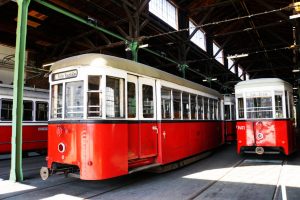
The transport of the corpses proved to be particularly difficult. The Simmeringer Hauptstraße was the feeder road to the cemetery. In the beginning, the horse-drawn carriages with the coffins drove along this road, and with more than 100 dead bodies a week, there were often more hearses on the road than passenger transports. It was not until much later that electrified streetcars with special hearses were used.
The cemetery today
Today, there are about 330,000 graves and about 3 million deceased in the Vienna Cemetery. With an area of 2.5 km², it is one of the largest cemeteries in Europe. The site is so large that a bus travels the grounds every half hour, stopping at 19 stops. For a fee, cars are also allowed to drive on the extensive road network.
On an information board I even discover a 5 kilometer running route that is supposed to be signposted on the cemetery paths. Jogging on the cemetery, it’s called Silent Run, I have not come up with this idea before.
Especially during funerals of famous personalities or state funerals a lot of visitors come to Simmering. The graves can be found in the presidential crypt and the honorary grave fields of the complex.
Although a large area of the grounds is still used interdenominationally and thus open to any denomination, there are additional areas that are assigned to specific denominations. In addition to the Catholic, Protestant and Jewish areas, one can also find Buddhist, Islamic, Orthodox and Mormon areas.
On the way to the central cemetery in Vienna
We take the tram 71 to the entrance gate 2 of the central cemetery. When we go through the entrance I am speechless at first. What a huge facility stretches out before us. There is an information point, a café, parking for e-bikes and horse-drawn carriages. But of course there are also typical buildings that belong to a cemetery, the burial halls.
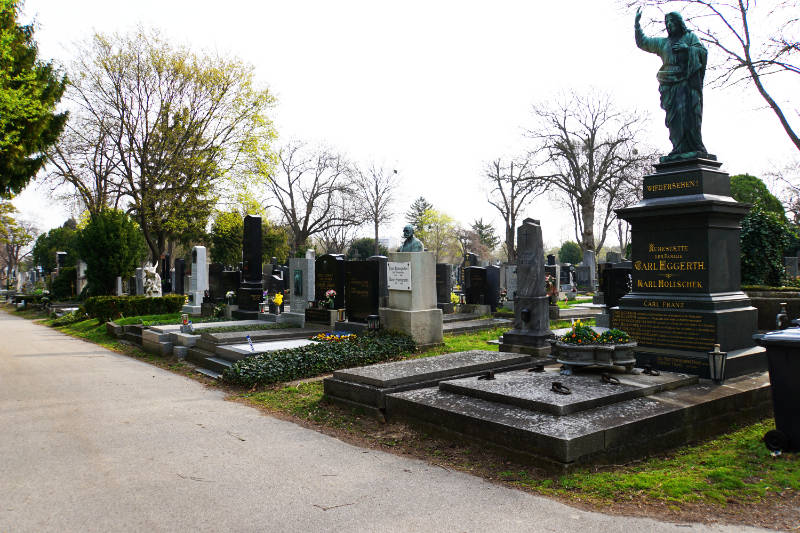
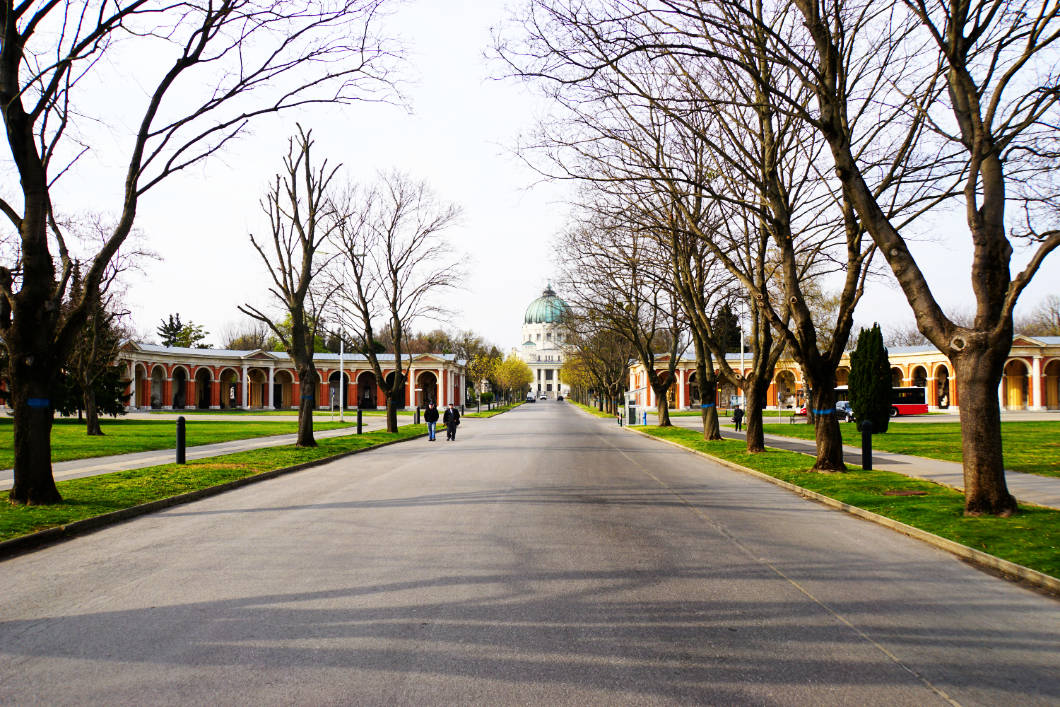
We walk along the wide main path, which almost resembles an avenue. To the right and left of the path are individual numbered grave fields. The grave fields can be assigned with the help of a plan for example to a certain denomination, whereby the largest part is used interdenominationally. The map also tells the visitor whether and in which field a famous person is buried.
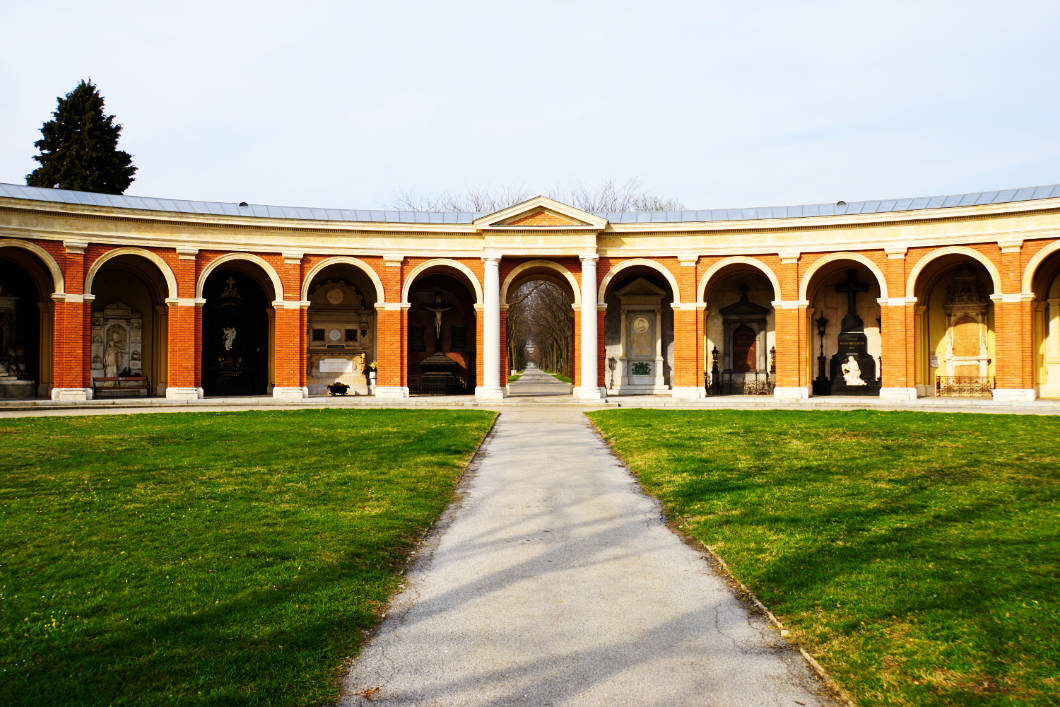
Our way goes past the Old Arcade Walkways (1879-1881). The brick building in neo-Renaissance style has 36 arcade crypts, in which mainly families of the bourgeoisie of the Ringstrasse period are laid out. The building was financed at that time exclusively from private funds and was one of the first buildings to be completed.
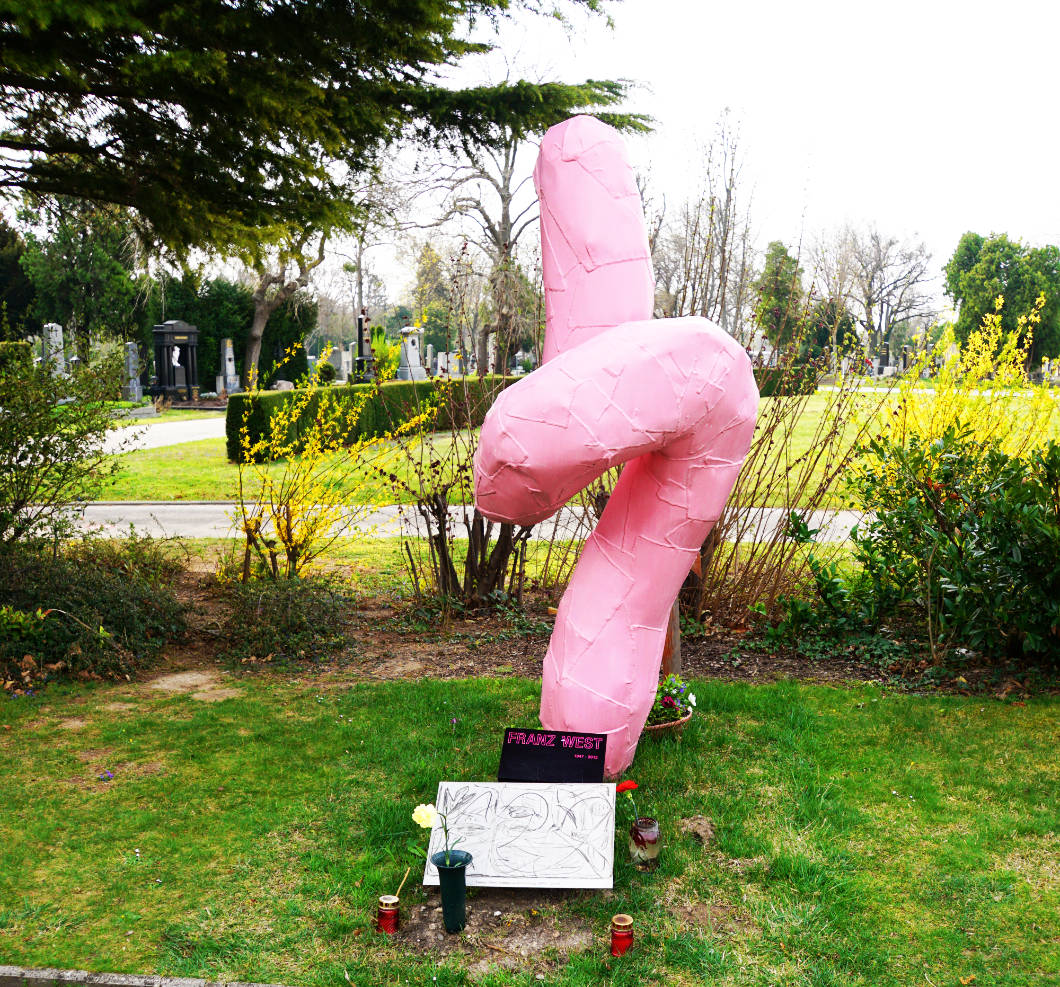
Even before we reach the large cemetery church, we turn left and stroll past some honorary graves. Here one finds artists from the most different areas. Some have quite unusual gravestones. In any case, I have not seen a pink “sausage” in any cemetery so far, like on the grave site (plot 33 G) of Franz West (Austrian artist, focus on three-dimensional design).
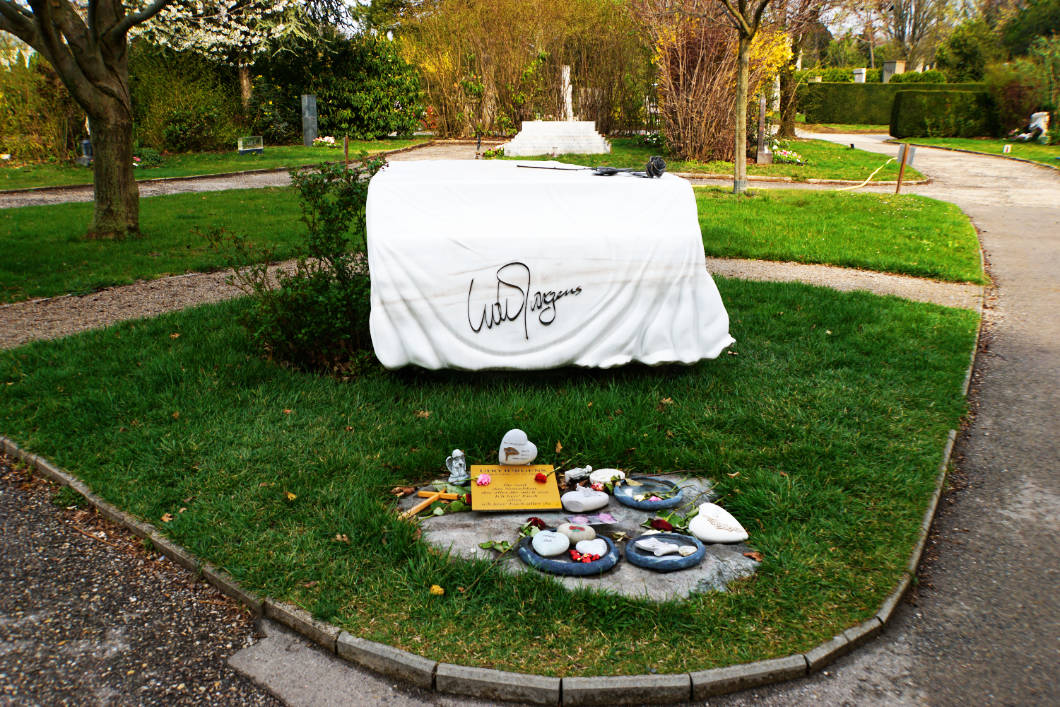
A few meters away is the grave of Udo Jürgens, one of my favorite artists from childhood. Unforgotten for me the “Tom and Jerry” theme song and of course my travel blogger hymn ever “I’ve never been to New York….”.
Church of the cemetery
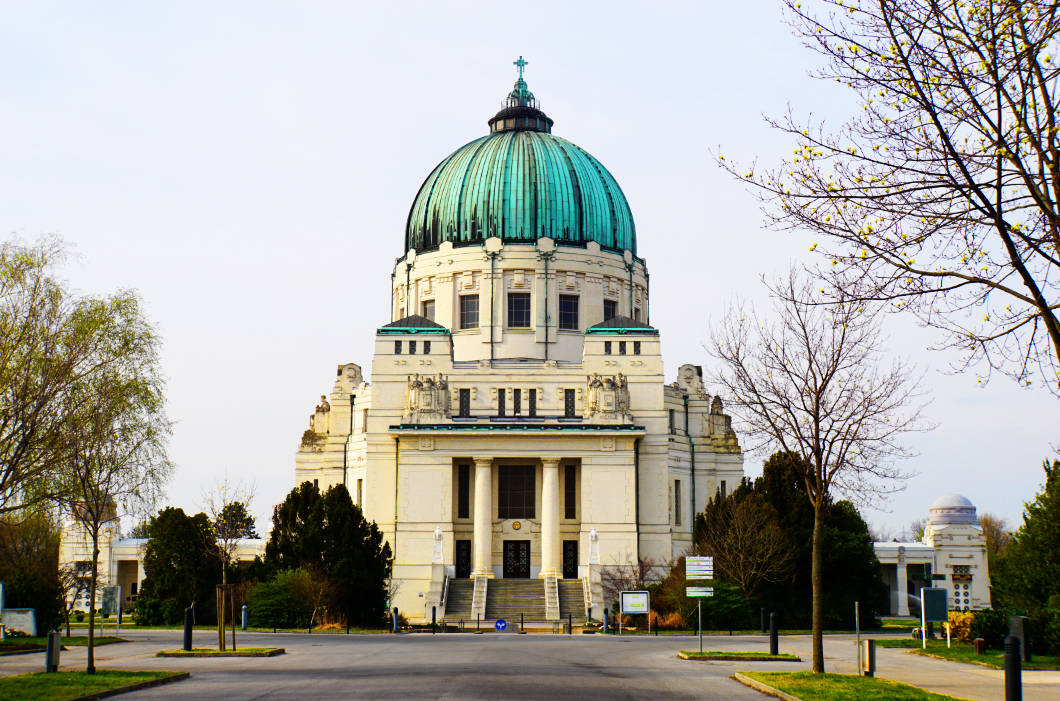
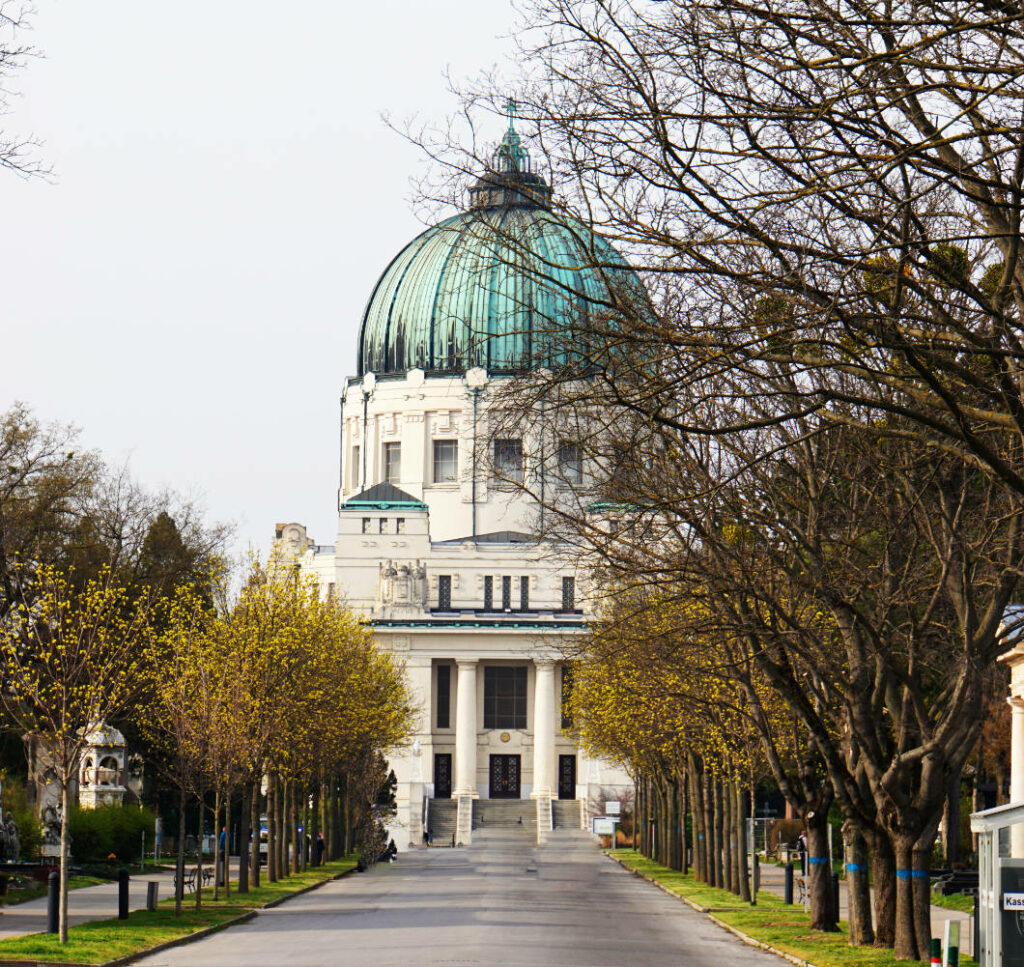
The cemetery church of St. Charles Borromeo is actually just called Dr.-Karl-Lueger- Gedächniskirche (after the mayor of Vienna who died in 1910) and is our next stop on the tour of the cemetery grounds.
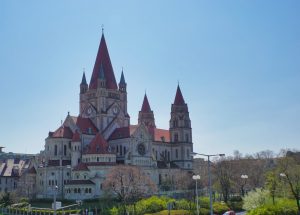
Even from the outside, I like the Art Nouveau building, it is beautiful. It dominates the site with its size and bright color and forms a striking, highly visible landmark.
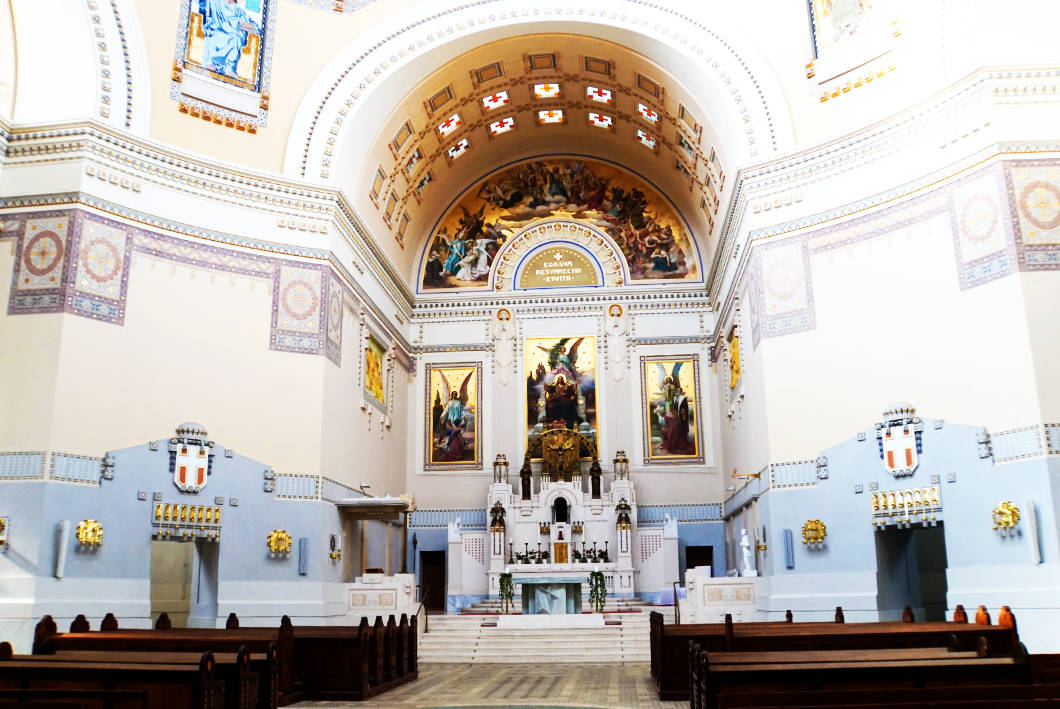
We enter the building and are greeted by a wonderful silence. A few rays of sunlight shine through the beautiful glass windows. If you look up, it seems as if you are standing under the sky. A huge blue dome spans the room and symbolically directs my gaze almost magically into the sky.
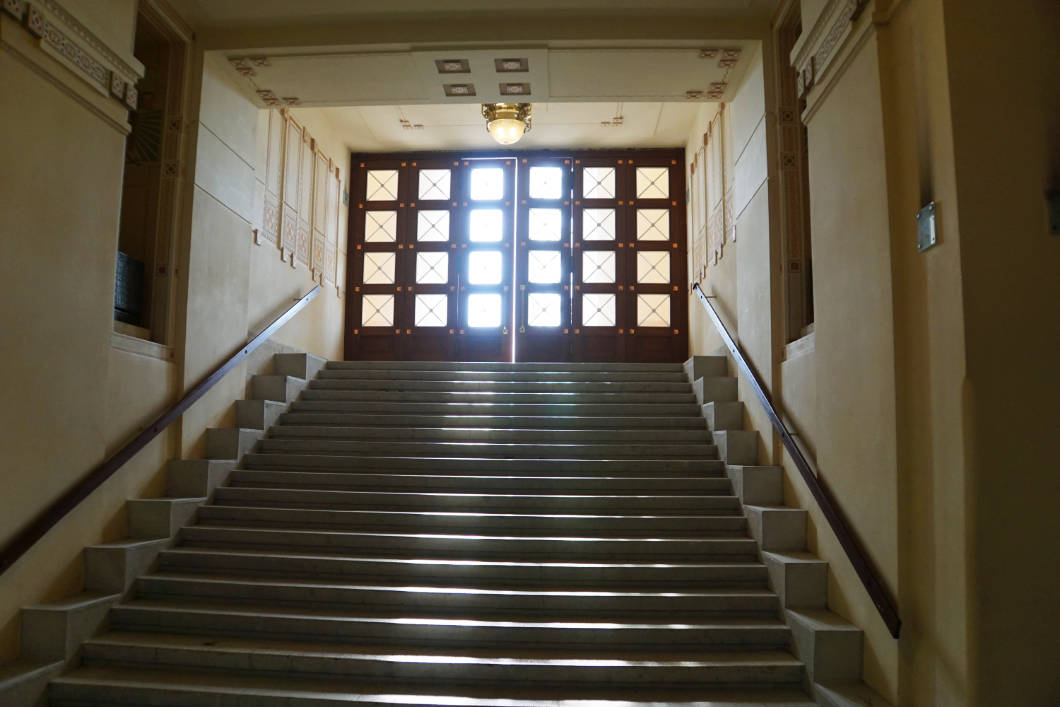
Via a staircase we reach the rooms below the church. Light shines in here indirectly through a glass in the church floor. Under the main altar lies the imposing tomb of Karl Lueger. Down here it is literally dead silent and I feel a bit depressed by the atmosphere. It’s good that we don’t stay here too long and take the stairs back to the cemetery.
Jewish cemetery area
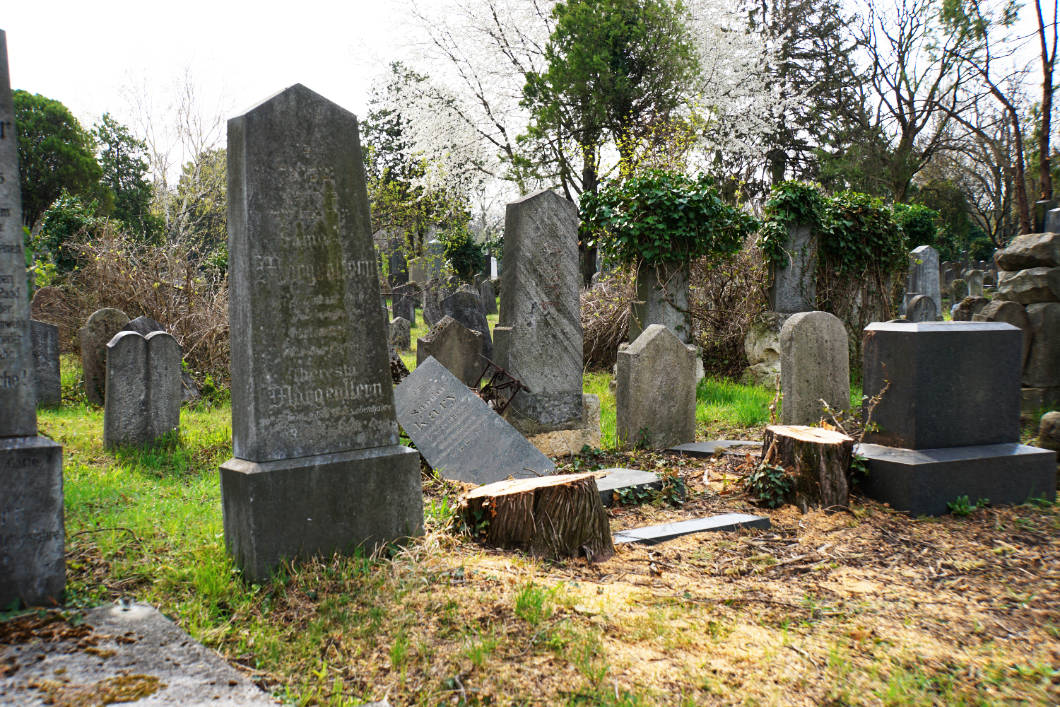
We go on and enter the old Jewish cemetery area. Here it looks like I already know it from some Jewish cemeteries. The graves are overgrown, tombstones have fallen over and only a few gravesites look well-kept. I like it a lot, it looks enchanted and actually I’m glad it’s not dark and foggy. This would be the ideal film location.
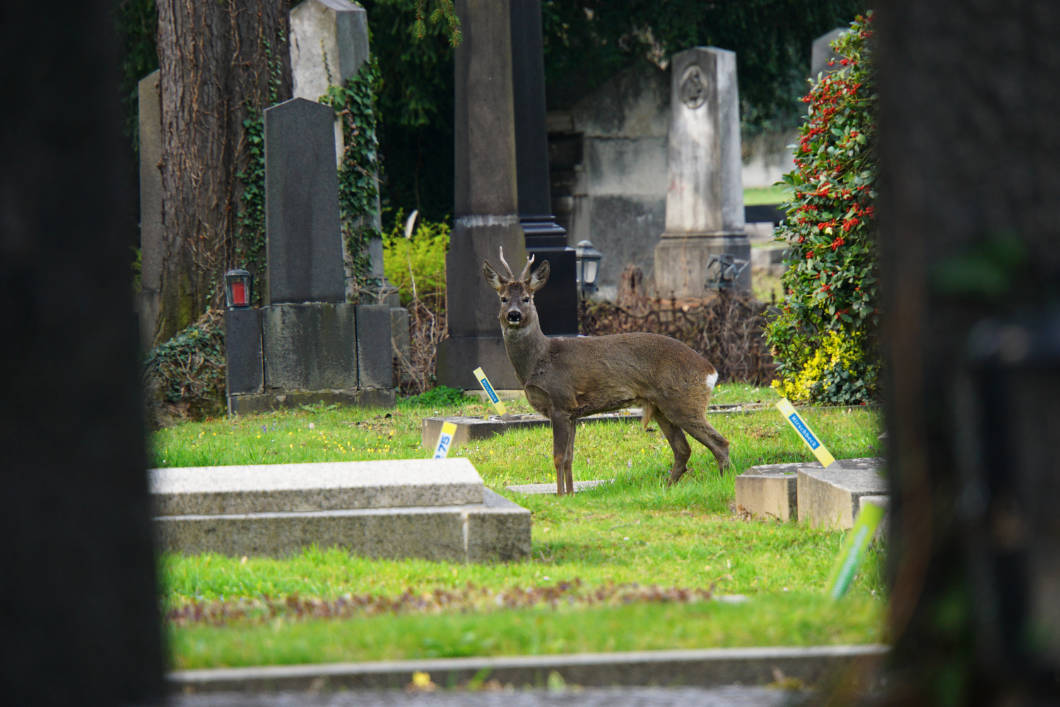
Yes, and then we experience the cemetery as a natural space. Not only squirrels scurry from tree to tree here. Deer also live in the central cemetery in Vienna. Suddenly they are standing here in the unclear area of the cemetery between the gravestones and grazing. Curiously they look up, but seem to know exactly that nothing can happen to them. Cautiously we walk on, so that the animals can eat in peace.
I could still roam around the huge grounds for hours, we have not yet discovered all the corners. We will definitely come back and explore further, but now the funeral museum beckons.
Funeral Museum at Vienna Central Cemetery
At the main entrance, the funeral museum is located in the basement of the mortuary 2. In the first moment, perhaps a strange thought to open a museum on the subject of funerals. But isn’t this a topic that really concerns everyone and that everyone has to deal with at some point in their lives? I didn’t really know what to expect, but honestly, the museum surprised me and I can really recommend the visit. I admit, the Viennese population has a special relationship to the topic of death. Are you familiar with the term “Die schöne Leich”? It doesn’t just mean an elaborate funeral, it has become an attitude towards life. Death is inevitable, so you can celebrate it! And that’s exactly what you can experience in the museum.
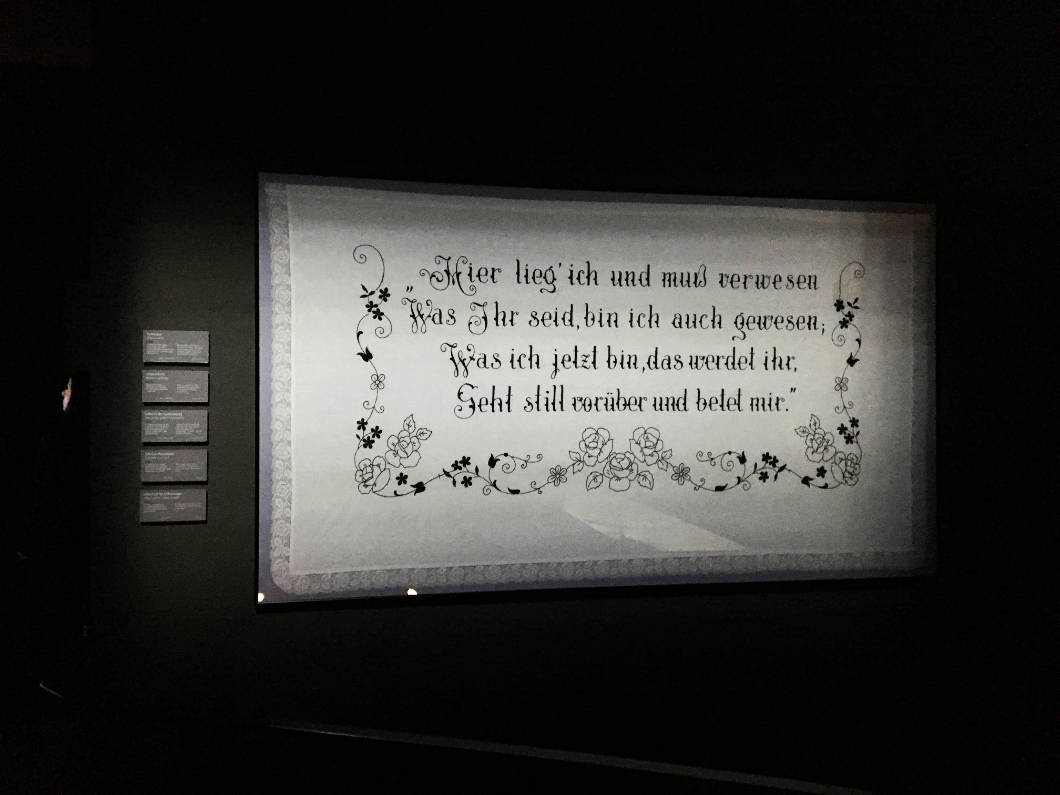
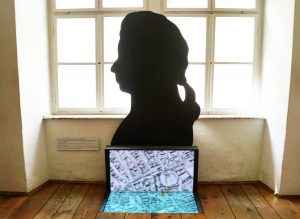
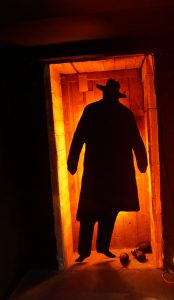
You enter a dark room of about 300 square meters and can discover a good 250 exhibits and lots of visual material. The dark atmosphere made the visit a bit oppressive for me at first, it was also very quiet in the room, involuntarily whispering as you wander through the exhibition. But the oppressiveness quickly turned into a certain fascination, which I notice when reading the information texts.
What can you see?
I expected mainly coffins and urns. Of course, there are also to see, but actually less than I expected.
For example, one can see mourning clothes from different eras, obituaries, contemporary historical documents such as bills and film clips of large funerals in Vienna.
But one also discovers bizarre exhibits. For example, there was a device that should give the perhaps not dead and accidentally buried alive people the opportunity to make themselves known.
I found the exhibition very interesting and varied. You should take your time, read the texts in peace – there is much to learn.
If you then finally walk through the museum store (yes, a funeral museum can also have a store), you can very well recognize the often special humor with which the subject of death is dealt with here. I really like this relaxed way of looking at the subject – isn’t the most important thing in life humor and not the fear of death?
Address:
Infopoint Central Cemetery in Vienna Main entrance gate 2 Simmeringer Hauptstraße 234 1110 Vienna
Funeral Museum at Vienna Central Cemetery Main entrance gate 2 Basement of the burial hall 2 Simmeringer Hauptstraße 234 1110 Wien
November 3 – end of February: 8 a.m. – 5 p.m. March, October 1 – November 2: 7 a.m. – 6 p.m. April – September: 7 a.m. – 7 p.m. May through August: Thursday to 8 p.m.
The side gates will be opened and closed up to one hour later for organizational reasons. If you are mistakenly locked in during a visit, notify the police (emergency call: 133 or 112). The latter has the key to the main gates.
Funeral Museum opening hours:
Monday – Friday: 9 am – 4.30 pm, March 1 – November 2: additionally Saturday 10 a.m. – 5.30 p.m.
Admission fees:
Cemetery: free of charge
Funeral Museum: Adults: 6,€- Discounts are offered.






Leave a Reply