Near the port of Paphos is the main entrance to a remarkable excavation site. The Paphos Archaeological Park is a cultural highlight for me during our trip to Cyprus.
In Paphos, around the lighthouse is the area of the ancient city of Paphos, whose ruins can be visited today. It was discovered more by chance when old mosaic floors were discovered during construction work. Little by little excavations were made and wonderful discoveries were made. The work is still going on today.
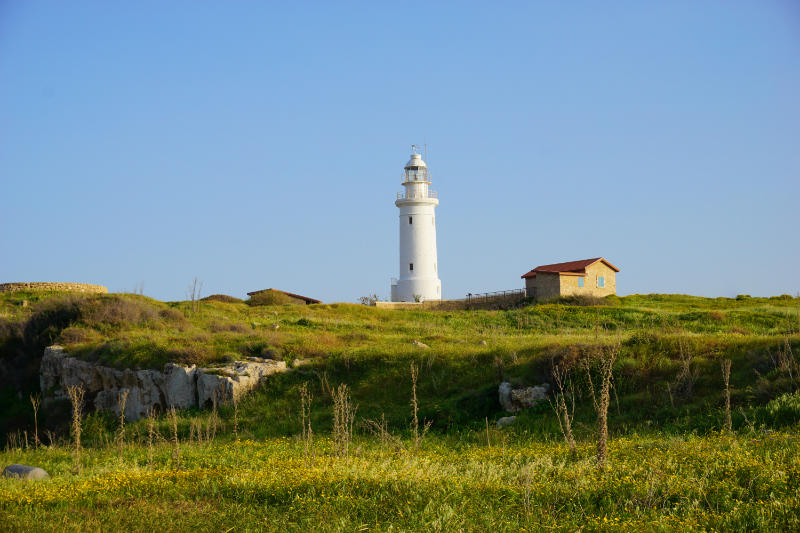
The origins of the UNESCO World Heritage Site probably date back to the 4th century B.C., and the remains to be visited date from the subsequent Roman period.
Paphos Archaeological Park – a tour
The first stop on our tour was the small visitor centre directly behind the entrance. Here you can get some general information about the excavation site and watch a short film. A board at the beginning of the tour showed us a possible way through the area.
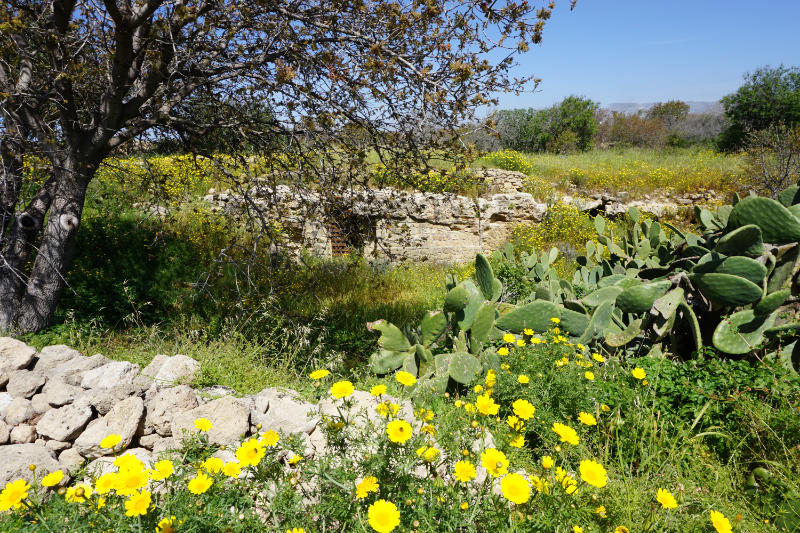
A tip in advance: there is little shade here, so protect well from the sun. There are vending machines at a few points. The prices are ok, but we were glad to have our water bottles with us.
We were here during the spring. Besides the excavation sites we could also enjoy the blossoming nature and I could watch birds.
The castle of 40 columns
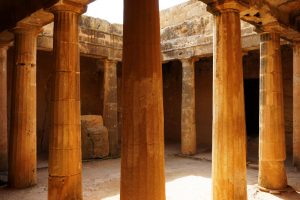
Our first destination was Saranta Kolones. This building was named after the 40 monolithic columns that were found there. These were reused when the fort was built. They were used, for example, as the base of the entrance to the outer courtyard or as doorsills.
A small ramp, which cuts through the approximately 3 metre thick outer wall, leads to the outer castle complex.
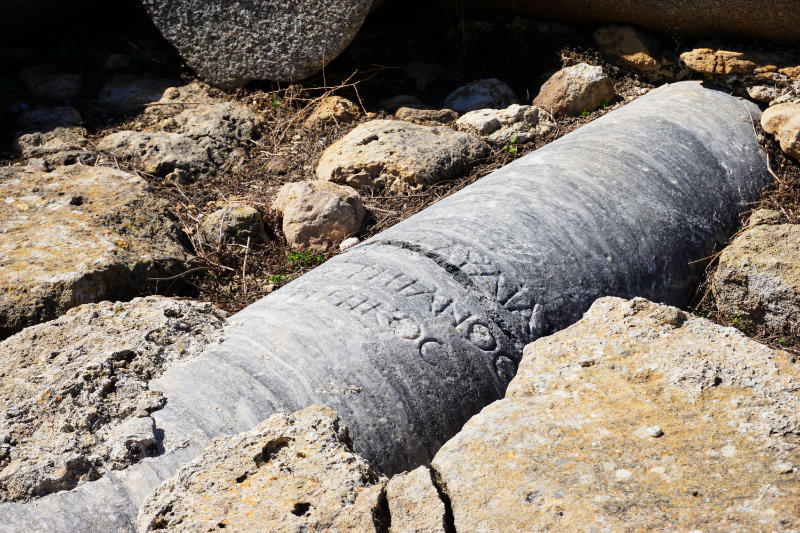
Today you can still see individual archways, remains of walls and of course columns.
This area of the excavation site is not particularly visited, although I found the remains of the archways particularly interesting (from an architectural point of view).

Odeon of Paphos
The Paphos Archaeological Park is very extensive. We walked towards the lighthouse, according to the plan there should be an interesting building here.
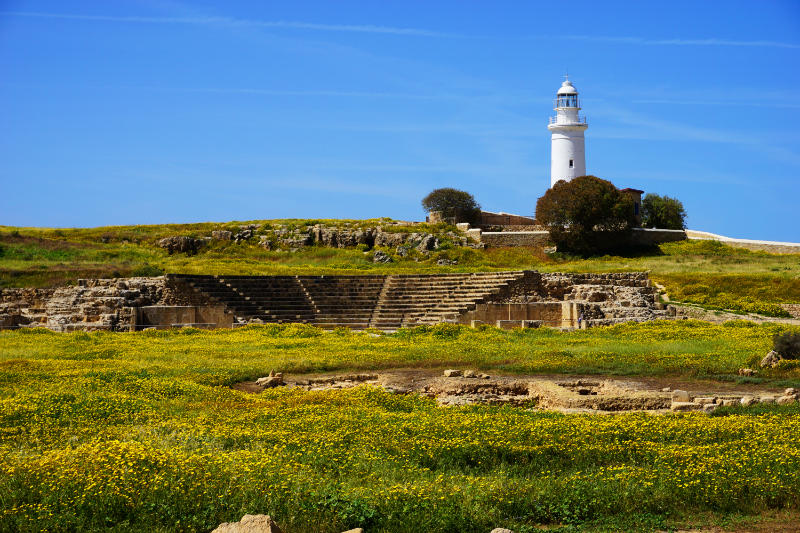
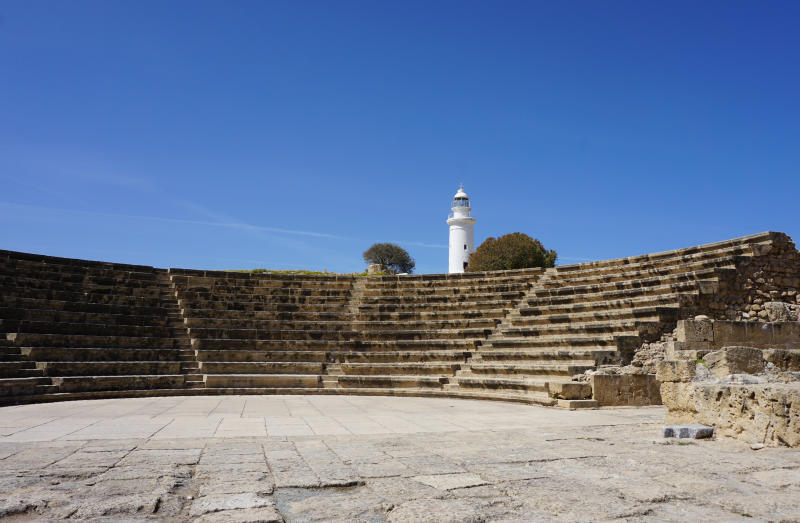
Directly below the lighthouse is the Odeon. An Odeon is a building where performances and competitions took place in ancient times. It was not roofed and usually had a semicircular floor plan.
The essentially reconstructed building consists of hewn limestone blocks.
Paphos Archaeological Park – Mosaics
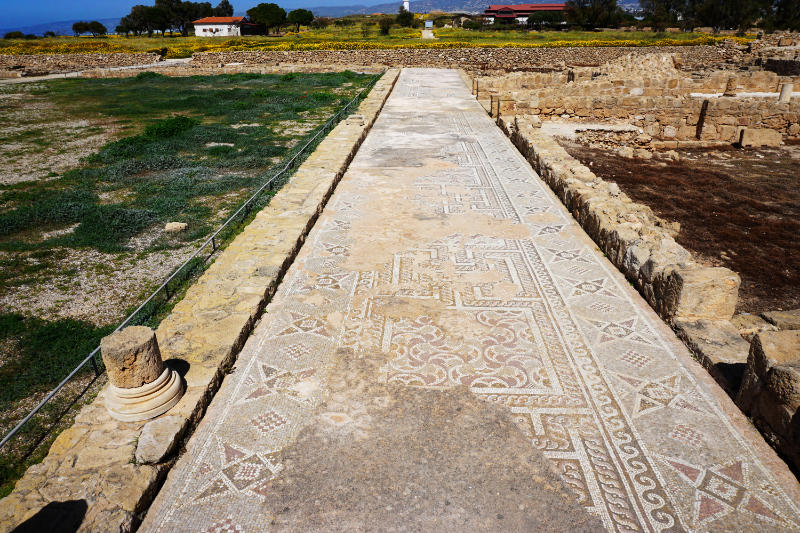
The highlights of the excavation sites are the mosaics discovered in the House of Dionysus, the House of Theseus, the House of Aeon and the House of Orpheus. When the houses were being built, the design of the floors with mosaics was widespread. Mosaics were worked into the still fresh mortar while it was still damp.
The mosaics are dated from the 3rd to 5th century AD. You will find beautiful mosaics with scenes from Greek mythology, but also pictures of everyday objects, animals or patterns. In the Villa of Aion, a smaller building, for example, floor mosaics have been found on which Zeus can be seen.
I have never seen such beautiful mosaics before.
Some mosaics are in a covered building, the house of Dionysus. These are particularly well preserved.
It is forbidden to take pictures here, but I discovered this only by chance – the sign was hidden behind a door.
Via footbridges you are going over the floor mosaics. You can see individual rooms very well, the exact function of most of the rooms is not known until today. However, some rooms could be identified as bedrooms, bathrooms, kitchen or reception hall.
In this house I was especially fascinated by the depictions of animals. The accuracy with which, for example, the fur was depicted and how lively the figures appear, simply impressive.
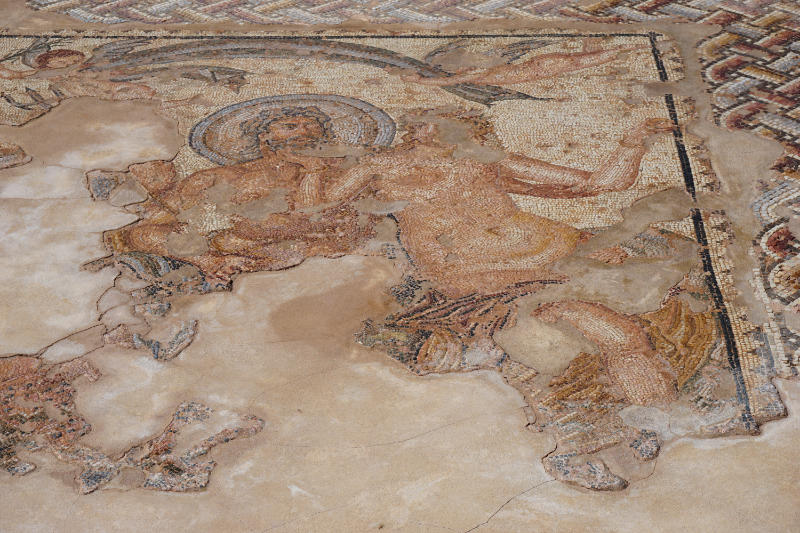
Some mosaics are in the open air. I was a little surprised that you can even walk over some of the pictures and how little is really cordoned off to protect these works of art.
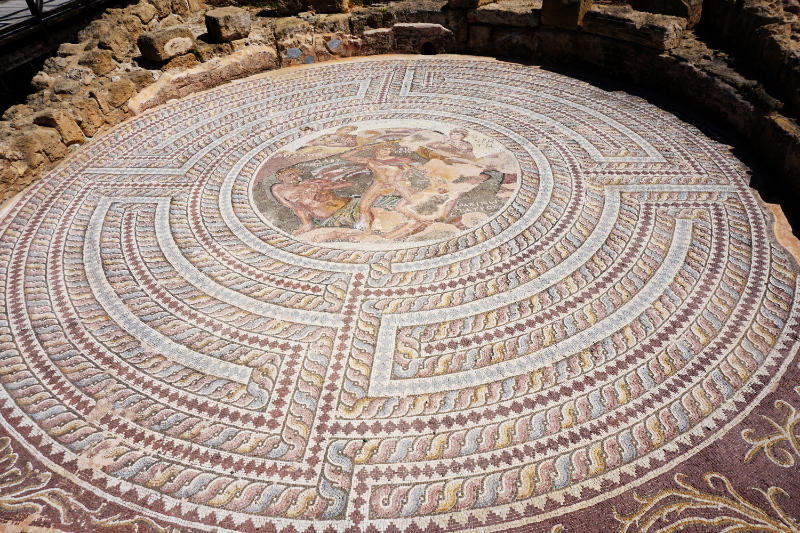
I was especially enthusiastic about a circular mosaic that can be seen especially well from a small viewing platform.
I was very impressed by the visit to the ancient site. I have visited several excavation sites during our journeys, but I have never before discovered such beautiful and impressive mosaics. One should take the time during a visit and have a closer look at the pictures. There are many subtleties and details to discover. For me the creators of these pictures were real artists!
Anschrift:
Paphos
Opening hours:
14 April to 15 September, daily: 08:30 – 19:30.
16 September to 15 April, daily: 08:30 – 17:00
closed: on some church holidays
Entrance fees:
Adults: 4,50€


Leave a Reply