• Skip to content
  • Home
  • Destinations
    • Europe
    • Asia
    • Africa
    • North America
  • Germany
    • Baden-Württemberg
    • Bavaria
    • Brandenburg
    • Berlin
    • Bremen
    • Hamburg
    • Hesse
    • Lower Saxony
    • Mecklenburg-Western Pomerania
    • North Rhine-Westphalia
    • Rhineland-Palatinate
    • Saxony
    • Saxony-Anhalt
    • Schleswig-Holstein
    • Thuringia
  • Home
  • Topic
    • Breweries, beer, beer tours
    • Wine, wine tasting, wine hikes
    • Hiking in Germany
    • UNESCO Sites in Germany
    • City passes
    • Airlines & Airports
    • River cruises
    • Cruises
    • Christmas markets
    • This and that
  • Search
  • Deutsch
  • English (UK)
Destinations > Czech Republic

Pilsner Urquell – Guided tour of the brewery

Plzen and Beer!!! Since 1842, the world-famous Pilsner Urquell has been brewed in Plzen. We set out on a quest for discovery during a tour of the Pilsner Urquell brewery.

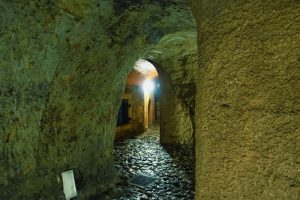
During our visit to the historic underground of Plzen, we had already learned a bit about the city and its beer.

Plzen gets a good beer It is hard to believe, but there was a time when Plzen had the worst beer in the region. At the beginning of the 19th century, the city’s citizens with brewing rights decided that this had to change. They wanted to build a new brewery and brew a modern, bottom-fermented beer there. However, the people of Plzen didn’t really have the expertise, so in 1842, the Bavarian Josef Groll was appointed as the first brewmaster of the “Bürgerliches Brauhaus” (Citizens’ Brewery).

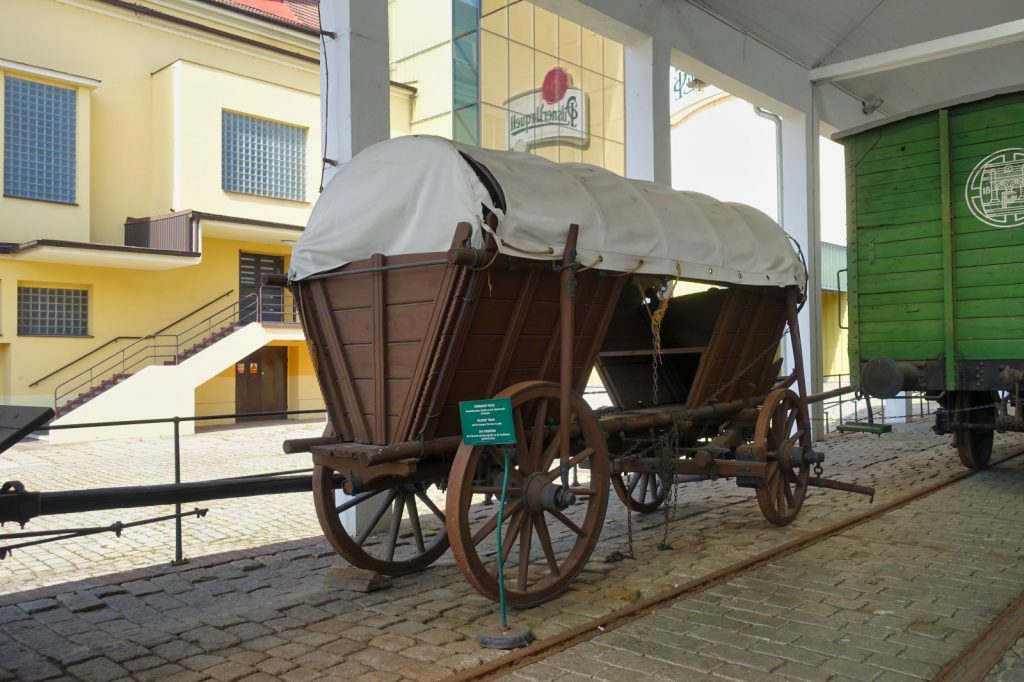
A historical Pilsner Urquell horse-drawn wagon with a white canvas cover is displayed on a cobblestone path under a shelter at the brewery in Pilsen.

Groll was quite successful. Shortly after his arrival in Plzen, the first golden Plzner beer was available. He brewed Pilsner Urquell, which has been registered as a trademark since 1859. The beer was a revolution among beers in its time. Refreshing, spicy-tart and with a beautiful color, it enchanted the people in Plzen.

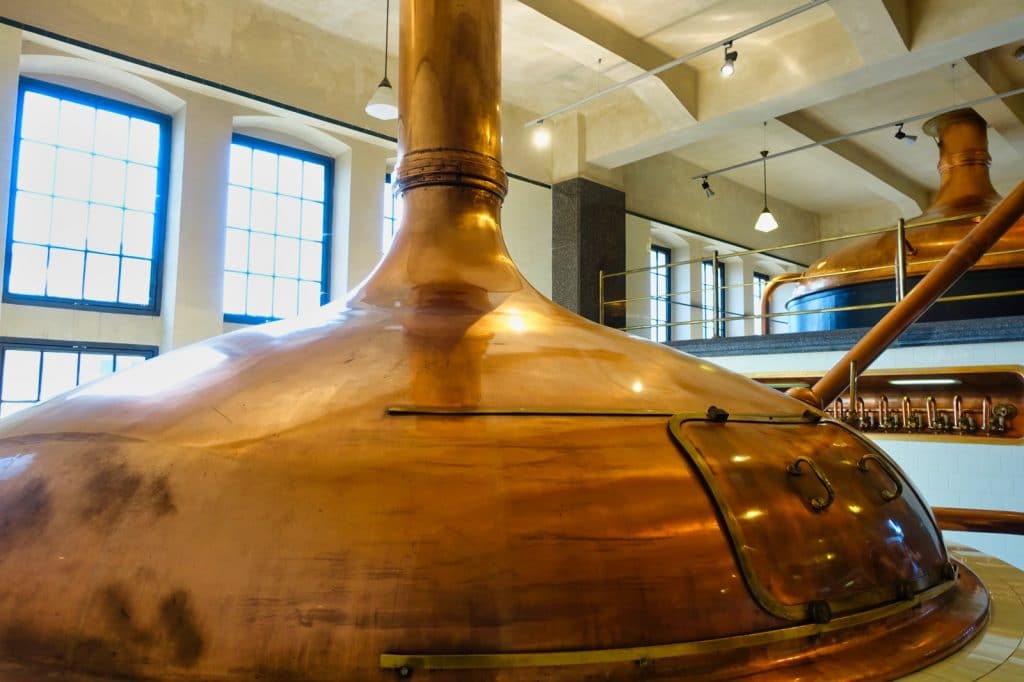
A close-up view of a large, polished copper Pilsner Urquell braukessel inside a bright, industrial brewery with large windows and high ceilings.

Only a little later, the first barrels of beer reached Prague. In the pub U Pinkasů (still exists today) it was served and enthusiastically received.

In 1873, the first barrels were shipped to the United States. A really risky venture. The beer could not be transported in refrigerated tanks, as is customary today. These did not yet exist. And so the barrels went on the road with the hope of not arriving with spoiled beer. It was a success.
The production volume grew and grew. In 1913/14, they brewed 1 million hectoliters a year for the first time.

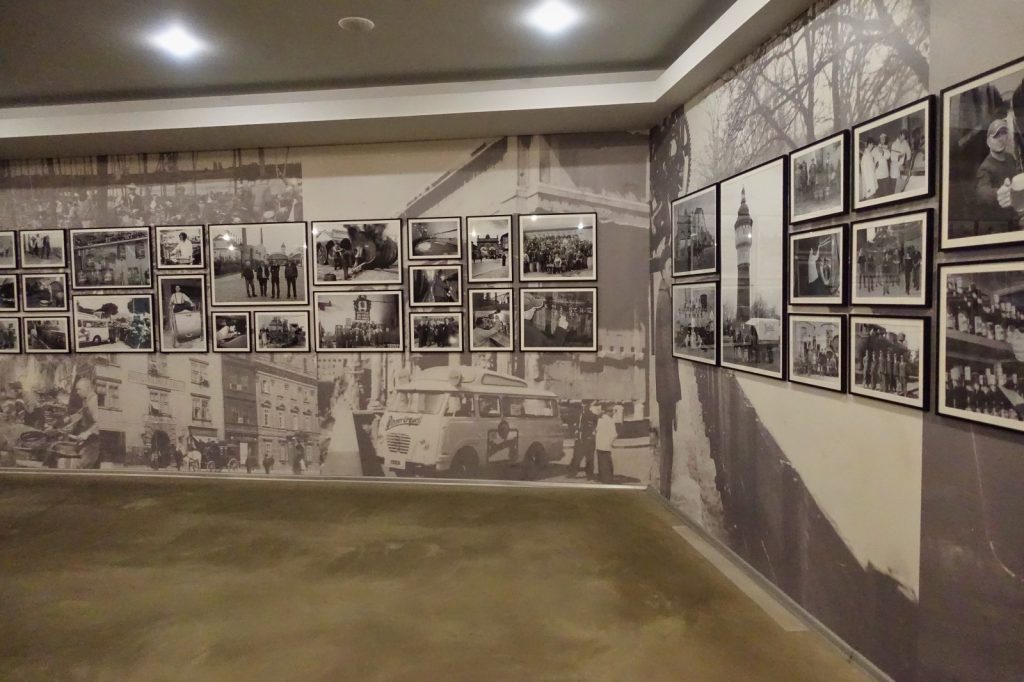
A view of a Pilsner Urquell history exhibition featuring walls covered in large monochrome murals and numerous framed black-and-white photographs documenting the brewery's past. The display includes images of workers, historical buildings, and vintage delivery vehicles, all set within a gallery space with a polished concrete floor.

In 1996, the Pilsner Urquell Brewery already exported the beer to 50 countries, and here, too, demand increases year after year. And of course it is not only sold in barrels, but also in the typical green bottles.

After several changes of ownership, Pilsner Urquell has belonged to the Japanese brewery group Asahi Beer since December 2016.

Pilsner Urquell brewery tour

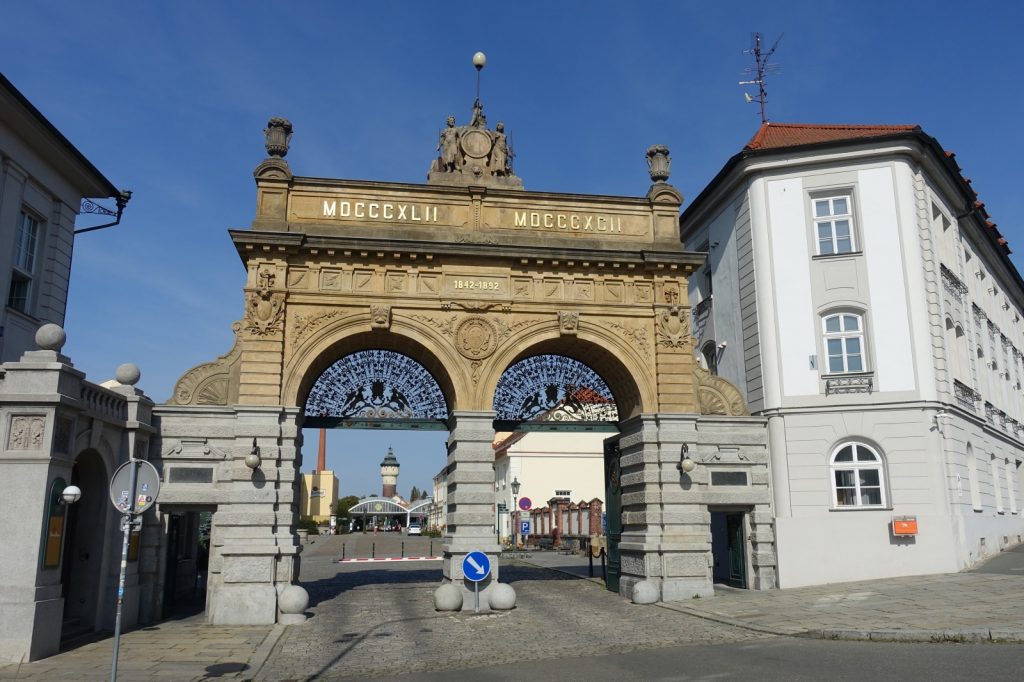
We enter the grounds of the Pilsner Urquell brewery through the large, impressive entrance gate. Beyond it stretches a vast open area that is freely accessible. This is also where the brewery’s modern visitor center is located, which serves as the starting point for the many guided tours.

A wide shot of the historic stone entrance gate to the Pilsner Urquell Brewery in Pilsen, featuring two large arches topped with ornate sculptures and Roman numerals.

We didn’t have to wait long before our tour in German began. Several tours in different languages (German, English, Czech) are offered here daily. These are often well-booked, so it is recommended to reserve tickets online in advance. Very important: be on time! The tours are tightly scheduled and start promptly.

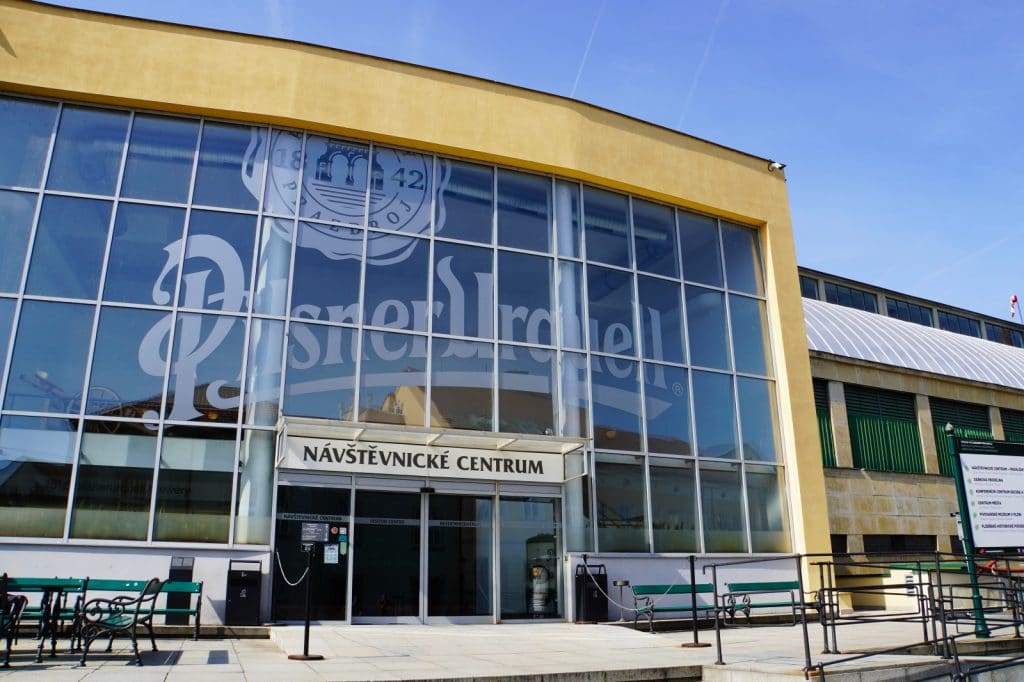
The Pilsner Urquell visitor center in Pilsen features a large glass facade with the brand's logo and a sign reading "NÁVŠTĚVNICKÉ CENTRUM" above the entrance. Outdoor seating with green benches and tables is arranged on the paved area in front of the modern yellow building.

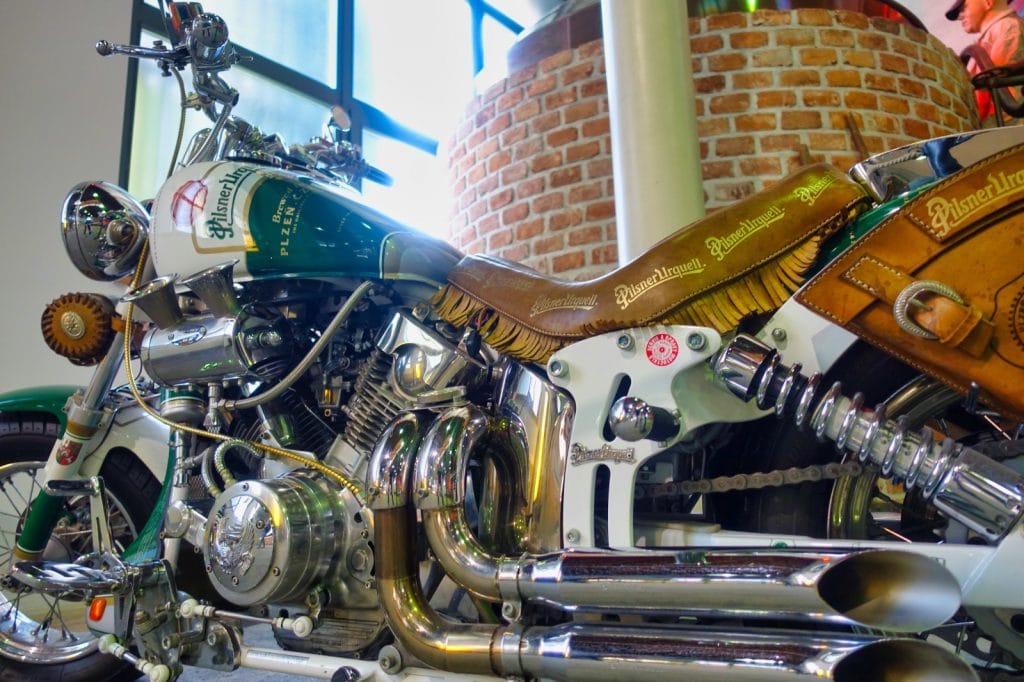
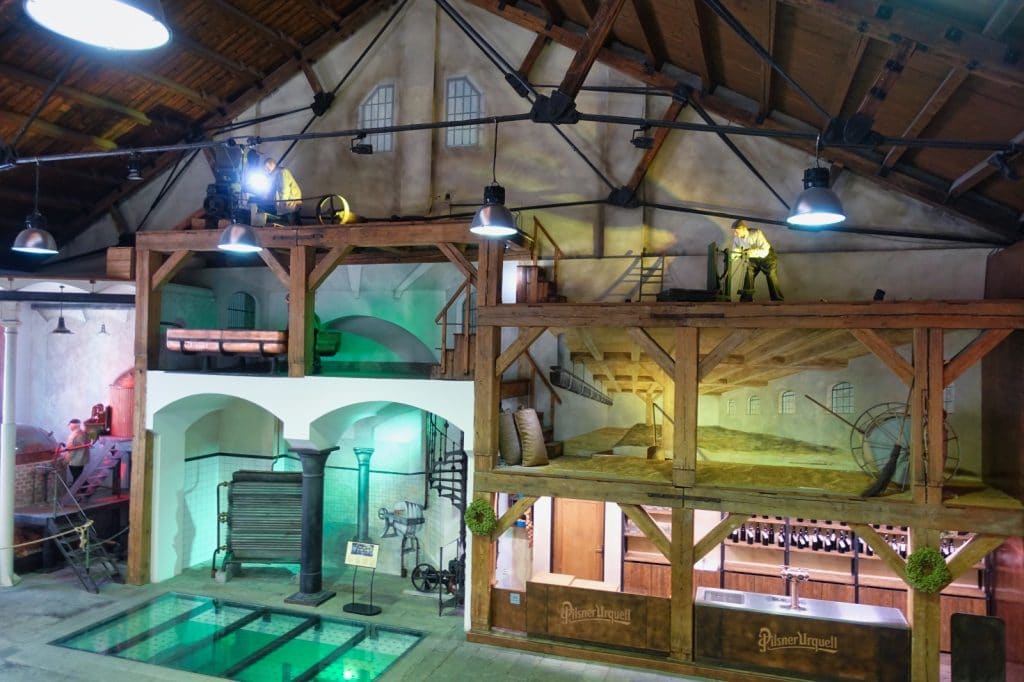
While you wait, you can look around the large visitor centre and, of course, watch a promotional film of the brewery. I found the motorbike and the replica of a house much more exciting.

A custom cruiser motorcycle themed for Pilsner Urquell, featuring a branded green and white fuel tank and fringed leather seat, is on display at the brewery's visitor center in Plzeň.
This exhibit at the Pilsner Urquell visitor center features a detailed, multi-level historical brewery model with mannequins and vintage equipment under a high timber-framed roof. The display includes cross-sections of brewing rooms, a spiral staircase, and a modern bar area at the base, all illuminated by industrial-style pendant lighting.

The actual tour begins on the upper floor of the visitor center. There is plenty of historical information to listen to before heading out together onto the brewery grounds. At a large factory gate, where an old horse-drawn carriage and a railway wagon are stationed, you learn more about the water tower located on the site.

A green and white Pilsner Urquell brewery bus is parked on cobblestone tracks under a large white canopy at the brewery in Pilsen. A vintage wooden horse-drawn wagon sits in the background next to a yellow building.

The Beer Bottling Plant

During the brewery tour, a shuttle bus took us to the bottling facility. In the entrance hall of the bottling plant, a large map is used to explain how the facility works.

This informational display at the Pilsen Brewery features a detailed 3D diagram of the new packaging hall, illustrating the complex machinery and automated production lines for bottling and canning beer. The board includes technical descriptions in multiple languages and a color-coded legend at the bottom to explain the various stages of the filling process.
And that’s just as well, because as soon as I enter the visitors’ gallery, I can hardly understand a word. Even though only one of the bottling lines was running and we were standing behind a nearly sealed glass pane, there was an incredible clattering noise. The bottles are transported on long conveyor belts where they are sorted, washed, filled, capped, and packed. I hardly know where to look first; so much is happening all at once.

An overhead view of the Pilsen brewery bottling plant shows rows of green glass bottles moving along a conveyor belt through a network of industrial pipes and stainless steel machinery.

Hier ist die Fortsetzung deiner Übersetzung:

In addition to the bottle filling station, there is also an area where cans are filled. This was just as exciting to watch. Here, the filled cans rushed across the conveyor belts at an incredible speed.

A row of golden beverage cans moves rapidly along a conveyor belt at the Pilsen brewery canning line, appearing as a yellow blur under industrial lighting. The stainless steel machinery and hanging chains of the production facility frame the fast-moving assembly line.

I found it very interesting that it’s not only Pilsner Urquell that is bottled or canned in this facility. For example, Kozel, Gambrinus, and Birell are also bottled here.

The Brewing Process

Next, we head to the old brewhouse. We ride several floors up in the largest passenger elevator in the Czech Republic and enter a panoramic cinema. During a film screening, the production of Pilsner Urquell beer is explained.

n 1842, while brewing the first Pilsner Urquell, Josef Groll used a method that has since become the standard in the world of brewing. The beer needed – and still needs – 35 days until the entire production and maturation process is complete.

An educational exhibit at the Pilsen Brewery museum features large, curved green walls with illuminated displays of barley grains and multilingual text under dramatic green and blue lighting.

This process is illustrated during the subsequent tour through a multimedia exhibition within the brewery. At the beginning, you learn about the ingredients and the production process.

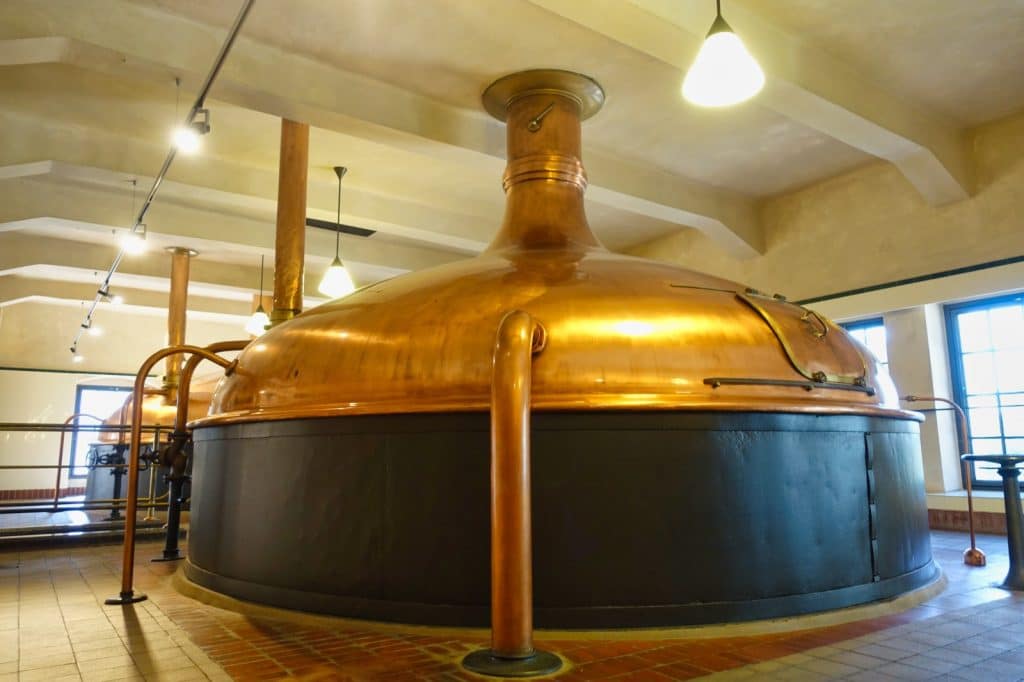
In Plzen, for example, they work with a malt obtained from a sweetish barley from Moravia. This is mixed with water in copper tanks to make beer wort. Part of the beer wort is boiled over an open fire in the so-called three-mash process. This process is one reason for the golden colour and typical taste.

A large, curved multimedia screen at the Pilsen Brewery exhibition displays a high-resolution, close-up image of golden barley grains being held in a person's hand.

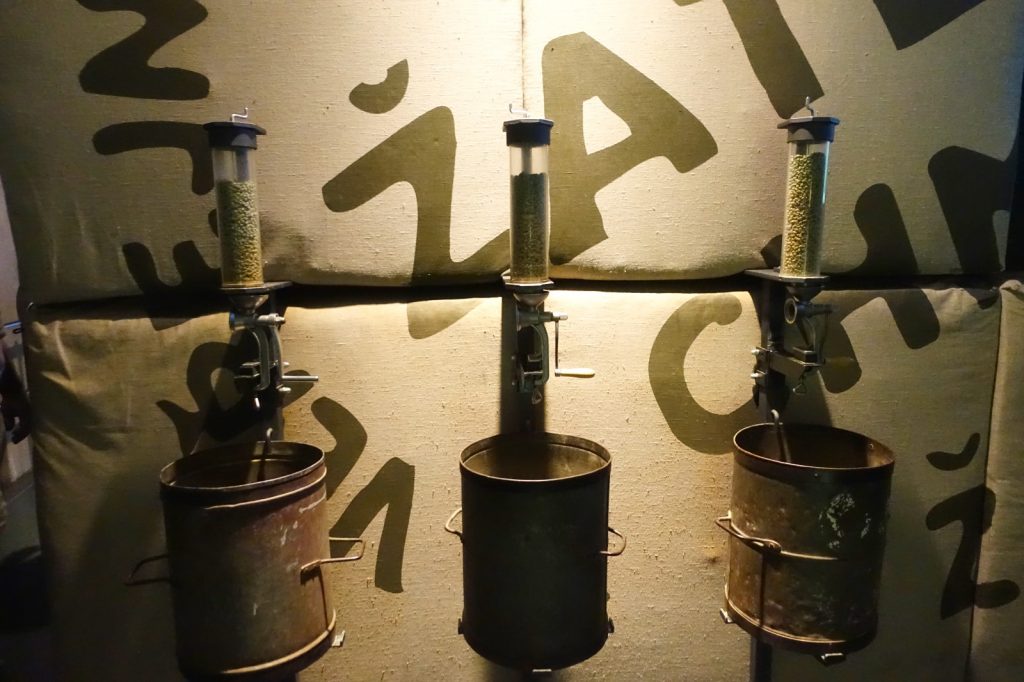
Typical of Pilsner Urquell is the use of Saarz hops. Groll already used only this type of hop, which comes from the small town of Žatec. The fields are not far from Plzen, so they brew with regional products. The hops are known for not tasting so bitter and having only a low acid content. Groll chose exactly these hops because he was convinced of the wort. He thus created a beer that tastes unmistakable: not too bitter with a light caramel note, tangy and refreshing.

A large, polished copper brewing kettle sits in the brewhouse of the Pilsner Urquell Brewery, featuring a traditional domed top and dark base under bright indoor lighting.

During the brewing process, the hops are added three times (triple-hopped). The brewing of the Pilsner beer takes one day. Following that, the beer is fermented for 10 days. After a 24-day maturation period, it can be bottled and sold.

To ensure this doesn’t remain just dry theory, things get a bit more hands-on in the following rooms. The ingredients are presented, and the brewing process is clearly illustrated. You can see brewhouses from three different centuries. They are particularly proud to be able to show the original 1842 brew kettle, in which the very first batch of beer was produced. Brewery employees made it possible for this kettle to survive two World Wars unscathed.

Path through the brewing process

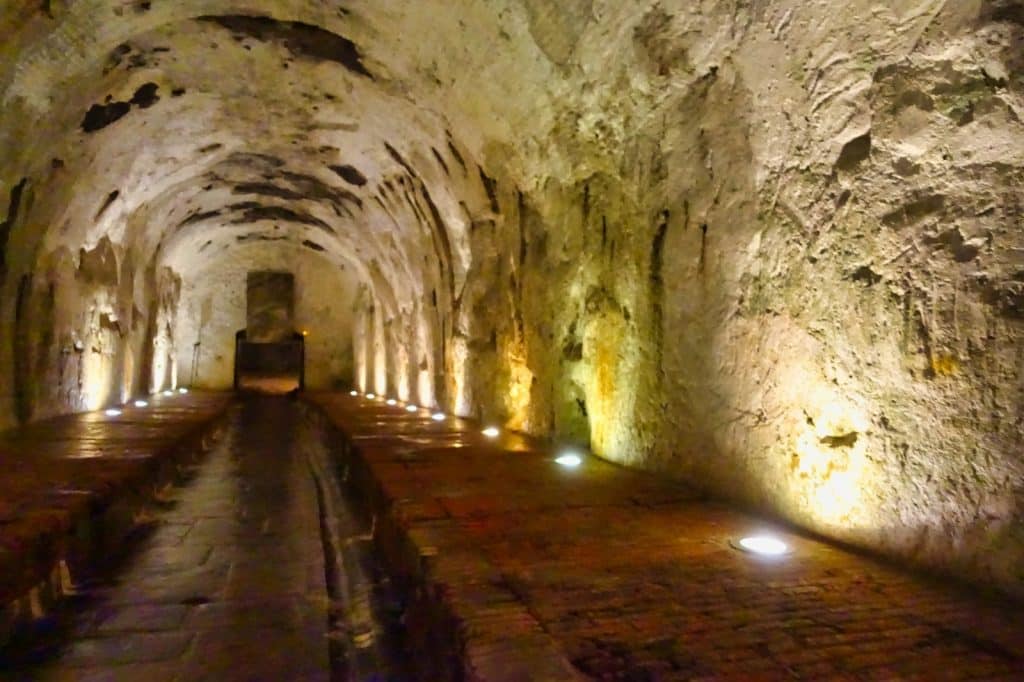
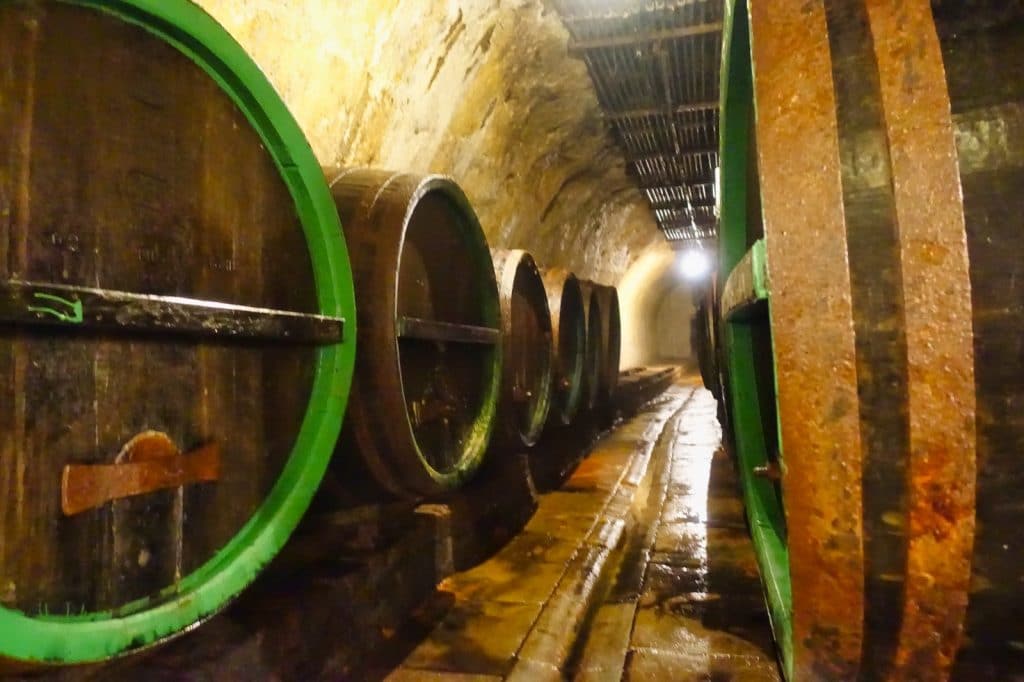
Afterwards, we headed deep beneath the brewery buildings. We walked through the historic brewery cellars. Here, you learn about the storage process, visit an ice cellar, and finally enter a room filled with massive wooden barrels.

A long, arched stone tunnel with uneven, white-washed walls and a brick floor is illuminated by small, circular floor lights in the old cellars of the Pilsner Urquell brewery.

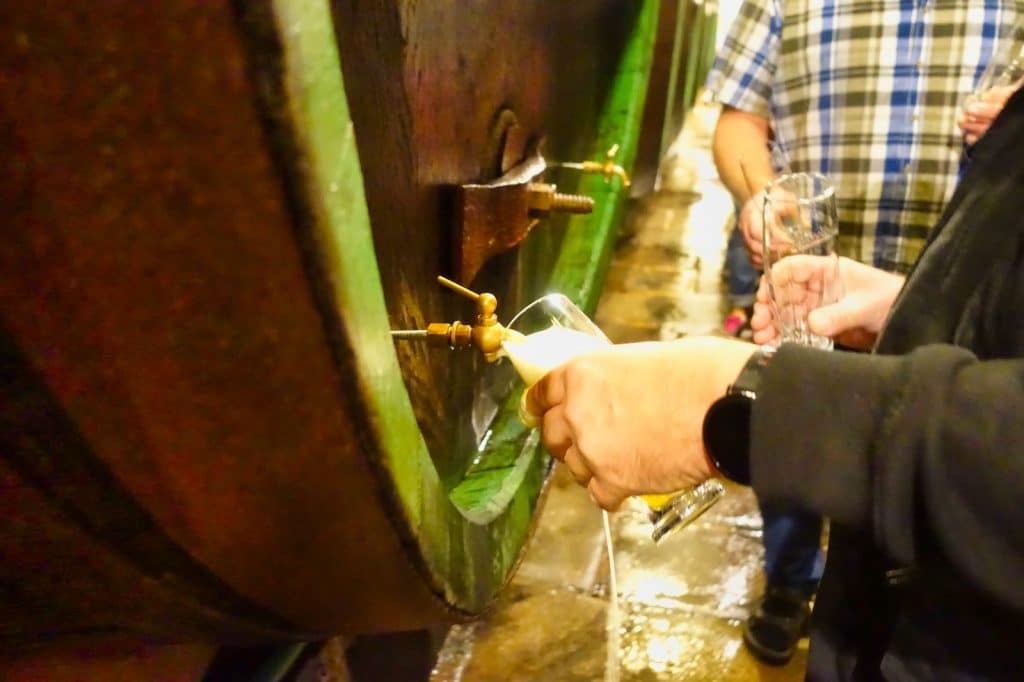
Now begins the part of the tour that everyone has actually been waiting for: a freshly tapped beer! Each participant takes a glass from a pallet, and then you have to be quick. A staff member opens a tap, and the beer begins to flow. Hand over your glass, walk around the staff member, take your full glass, and whatever you do, don’t break the chain. Not a single drop should hit the floor, and the tap should remain open if at all possible.

A person pours a fresh glass of Pilsner Urquell beer directly from a large wooden barrel in the brewery's cellar.

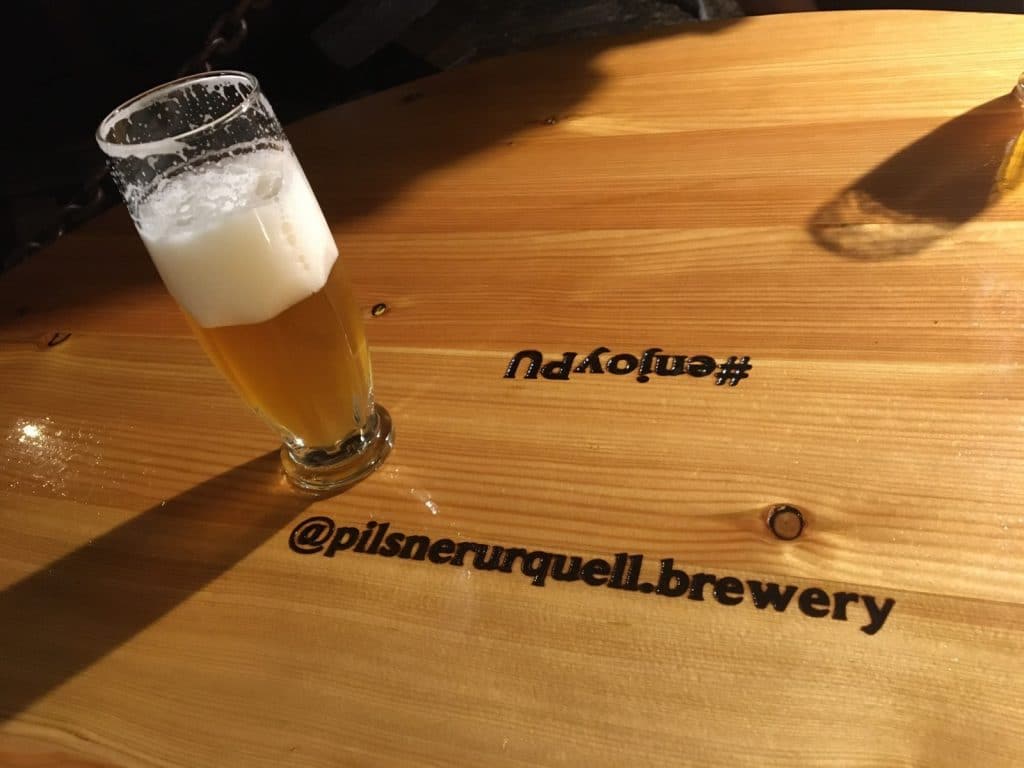
Holding our freshly tapped, unfiltered, and unpasteurized Pilsner Urquell, we stood around a table in one of the neighboring cellars. By now, it has become quite chilly, and there isn’t much time to enjoy the beer in peace. You can already hear the next group approaching. What a delicious flavor flowing down our throats! For me, this freshly tapped beer definitely tastes much better than the bottled version. After so much “beer history,” it was exactly the right way to conclude the tour.

A tall glass of Pilsner Urquell beer with a thick white head sits on a light-colored wooden table branded with the brewery's social media handle and hashtag.

On the way back through some cellar corridors, we learned a lot about barrels, barrel production and barrel cleaning.

A row of large, wooden Pilsner Urquell beer barrels with green-painted rims lines a narrow, dimly lit stone cellar tunnel.

We made our way back to the brewery grounds through the souvenir shop. By the way, the souvenir shop can be visited even without taking a tour. In addition to beer, there are numerous other products featuring the brewery’s logo available for purchase.

A Beer to Finish

After visiting the Pilsner brewery (or even before), it’s a great idea to have a beer or two and a bite to eat at the Na Spilce restaurant.

This interior view of the Na Spilce restaurant at the Pilsen brewery shows a spacious dining area with vaulted ceilings, wooden tables, and a large copper-colored bar counter.
The restaurant is located right on the brewery grounds. With its large dining rooms, there is plenty of space for many visitors. The service is fast and friendly, the beer flows in abundance, and the food is exactly what you would expect from a brewery tavern.
A half-full mug of Pilsner Urquell beer with a thick head of foam sits on a wooden table in a brewery taproom, next to a coaster and a branded holder filled with more coasters.

After our final beer, we left the grounds through the Jubilee Gate. The brewery erected it in honor of Josef Groll, exactly 50 years after the creation of Pilsner Urquell.

We thoroughly enjoyed the tour of the Pilsner Urquell brewery. It was very informative, our guide was easy to understand, and she made a real effort to answer any additional questions.

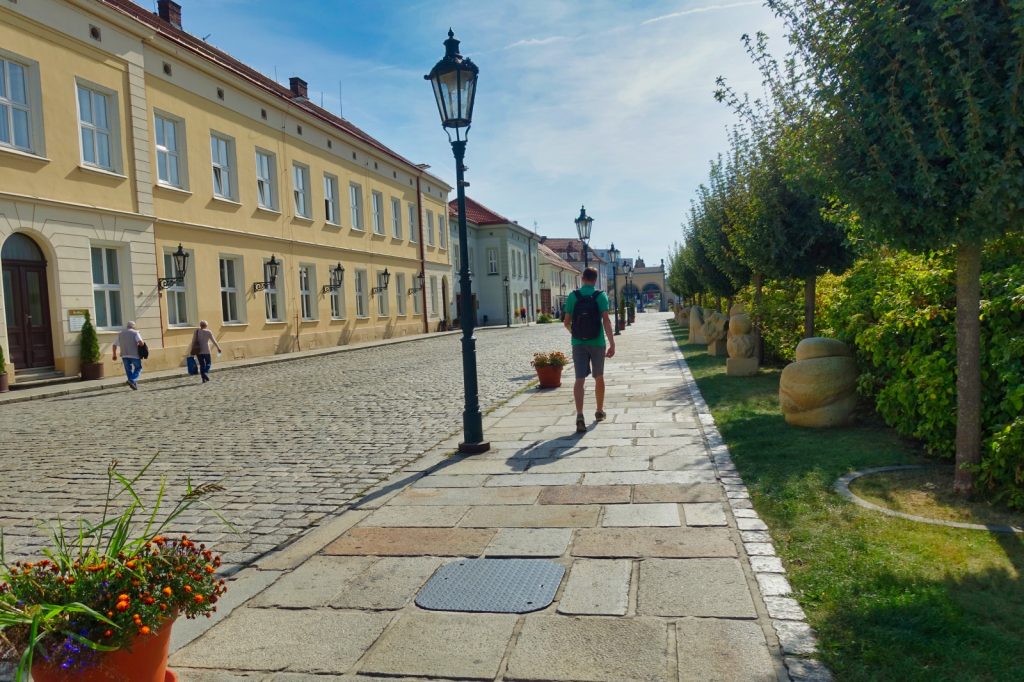
A person with a backpack walks down a stone-paved sidewalk within the public brewery grounds of Pilsner Urquell, lined with historic yellow buildings and manicured greenery.

Visitor Informations

Address

U Prazdroje 7,
301 00 Plzeň 3,

Website

Book your tour

Getting There

How to get there

By train
The brewery is only about a 5- to 10-minute walk from the main station (Plzeň hlavní nádraží).

Leave the station heading north (follow the signs for ‘Prazdroj’ or ‘Pivovar’). A footbridge will take you directly across the main road to the historic brewery gate.

By car
The brewery is located on the main road at U Prazdroje 7, 301 00 Plzeň.

By long-distance bus
Most long-distance buses (e.g. FlixBus or RegioJet) stop at the central bus station (Centrální autobusové nádraží – CAN).

Continuing to the brewery: From the bus station, take tram line 2 (towards Světovar) to the Hlavní nádraží (main station) stop. From there, it is only a few minutes’ walk.

Within Pilsen (public transport)
Tram: Lines 1 and 2 stop at Hlavní nádraží station.
Bus/trolleybus: Various lines stop at the Prazdroj stop, which is located almost directly in front of the entrance.

Parking

Parking

Parking is available in the paid car park in front of the main gate or free of charge in the visitor car park directly at the brewery.

Opening hours

Opening hours

May–September: 9.30 a.m.–6 p.m.
October–December: 10.30 a.m.–5 p.m.

The brewery is open all year round, including most public holidays. The only exceptions are 24, 25 and 26 December and 1 January.

Entrance fees

Admission prices

Adults: 430 CZK
Discounts are available.

Children under 3 years of age also require their own ticket. Admission is free for them.

Language

Language

The tours are offered in English, German and Czech. They always start at different times.

With the SMARTGUIDE app on your smartphone, you can follow the tour in English, German and Spanish.

Accessibility

Accessibility

The tour is accessible to all.

Clothes

Clothing

The temperature in the cellars is always around +5 °C. Warm clothing is recommended. The floor is damp in places and somewhat slippery – sturdy, closed-toe shoes are recommended.

Baggage service

Luggage storage

Lockers measuring 38 × 50 × 35 cm are available for a fee (deposit of 10 CZK). Larger items of luggage can be stored next to the reception desk at your own risk.

FAQ Frequent Asked Questions

FAQ

Do all participants get a beer during the tour?
Beer tastings are only available to visitors over the age of 18.

How much beer is served during the tasting?
During the tour, you will taste one glass (0.3 l) of unfiltered and unpasteurised Pilsner Urquell.

Can I leave the tour early?
Unfortunately, this is not possible.

How many participants are there per tour?
A maximum of 40 people can take part.

Disclosure: The brewery visit was part of a research trip to Pilsen.

  • share  
  • save  2 
  • share 
  • share 

Related Posts:

  • A traditional Czech dish from Pilsen Food Parkanu featuring tender roasted pork in a rich brown gravy, served with sliced potato dumplings and a side of sauerkraut.
    Traditional Czech food in Plzen
    Fancy some traditional Czech food in Plzen? There are several…
  • Plzen Brewery Museum
    Plzen Brewery Museum - on the trail of the history…
    The Brewery Museum in Plzen is one of the city's…
  • Braukessel in der Brauerei Plasy
    Plasy Brewery - Beer from the Pilsen region
    A microbrewery reopened in 2015 is located on the grounds…

Reader Interactions

Leave a Reply

Your email address will not be published. Required fields are marked *

  • Impress
  • Privacy Policy
  • Photo credit
  • About us

Plzen
  • Plzeň Zoo
    Adventure at Plzeň Zoo
  • drink pink! Sourbeer - Sonne im Glas Festival Pilsen
    “Sun in a glass” festival in Plzeň
  • Visit to the beer SPA in Plzeň
  • A traditional Czech dish from Pilsen Food Parkanu featuring tender roasted pork in a rich brown gravy, served with sliced potato dumplings and a side of sauerkraut.
    Traditional Czech food in Plzen
  • Plzen Brewery Museum
    Plzen Brewery Museum – on the trail of the history of brewing
  • The exterior of the Courtyard by Marriott hotel in Pilsen, featuring a peach-colored facade with a central grey section and a modern glass entryway.
    Courtyard by Marriott Pilsen
  • Schloss Manětín
    Manětín Castle – one of the most beautiful Baroque castles in the Pilsen region
  • Rabštejn nad Střelou
    Rabštejn nad Střelou – a visit to the smallest town in Central Europe
  • Braukessel in der Brauerei Plasy
    Plasy Brewery – Beer from the Pilsen region
  • Brauerei Raven in Pisen
    Raven Brewery – the somewhat different beer from Pilsen
  • Mariánská Týnice
    Mariánská Týnice impressive architecture
  • Kloster Plasy
    Plasy Monastery – Visit to the Cistercian Monastery
  • Kloster Kladruby
    Kladruby Monastery and Castle – Santini’s Monastery Church
  • Große Synagoge Pilsen
    The jewel of Plzen: the impressive Great Synagogue
  • Wohnzimmer der Familie Vogl
    A special apartment tour in Plzen
  • Spaziergang in Pilsen
    A stroll in Plzen – small and big discoveries
  • Susanne beim Marionettenspiel
    Back to childhood – visit to the Puppet Museum
  • Wärmebild von Patrick
    Techmania Science Center – Science made easy for everyone
  • Engelskopf
    2 things not everyone knows about Plzen
  • Platz der Republik in Pilsen
    In the middle of Plzen – the republic square
  • Zlatka Krava
    Drinking beer in Plzen
  • An interior view of a historic shop exhibit at the Pilsen Ethnographic Museum, featuring a long dark wood counter, vintage apothecary drawers, and two large wooden fish sculptures suspended above the display. The room is filled with period artifacts like scales, glass jars, and a red coffee grinder, with a wall covered in colorful vintage advertisements and posters.
    Ethnographic Museum of the Plzen Region
  • DEPO2015 Hof mit Turm
    DEPO2015 – Cultural and Creative Centre in Plzen
  • Kellergänge unter Pilsen
    Plzen Historical Underground
  • A close-up shot of Nougatknödel in Pilsen, featuring two golden, sugar-dusted dumplings filled with rich chocolate nougat, served over a creamy white sauce with chocolate drizzles.
    Cheap food in Plzen
  • Westböhmisches Museum in Pilsen - Zeughaus
    Museum of West Bohemia in Plzen
  • Wandmalereien in einer Kapelle
    Museum of Religious Art of the Plzen Diocese
  • Alte Synagoge Pilsen
    Old synagogue hidden in a Plzen backyard
  • General Patton
    Patton Memorial Plzen
More about Plzen