Observation tower in Copenhagen: Rundetaarn, Rundetårn or Round Tower
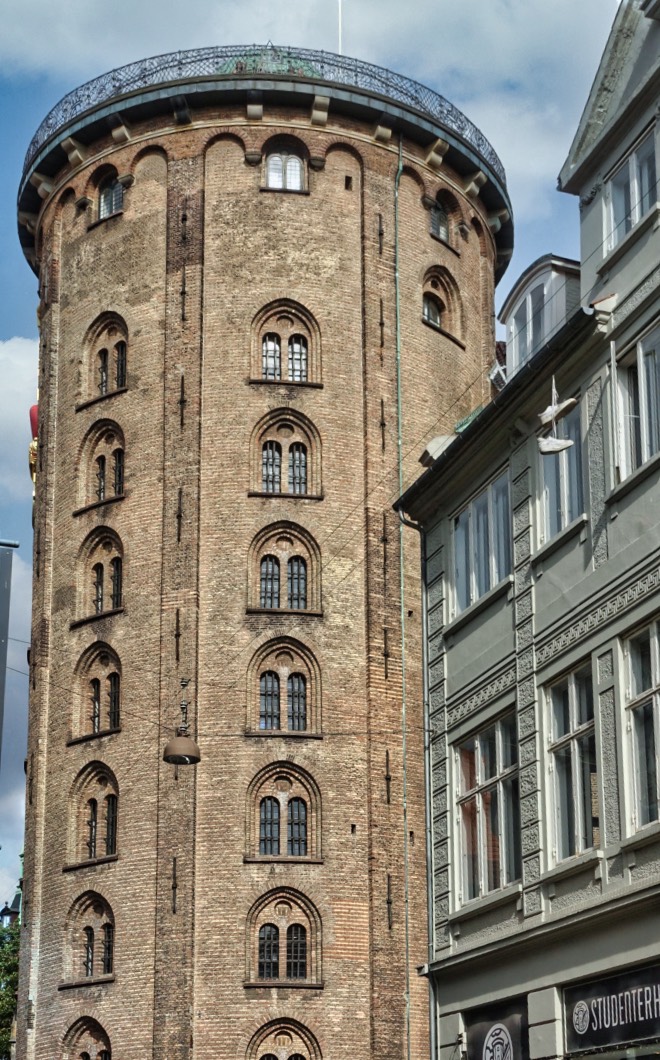
Rundetårn, the Round Tower, is located in the city centre of Copenhagen. Today, the Round Tower of Copenhagen is one of the city’s tourist attractions, but it was originally built for astronomical purposes.
King Christian IV had the tower built between 1637 and 1642. The Rundetaarn or Rundetårn is circular, 15 metres in diameter and 38.8 metres high. It is directly connected to the old university library and the later built Holy Trinity Church.
Round Tower Copenhagen – my ascent
I love discovering observation towers. Especially with old towers, the ascent is something special. Sometimes it’s adventurous and narrow and sometimes very unusual. I find the climb up this tower in Copenhagen really extraordinary.
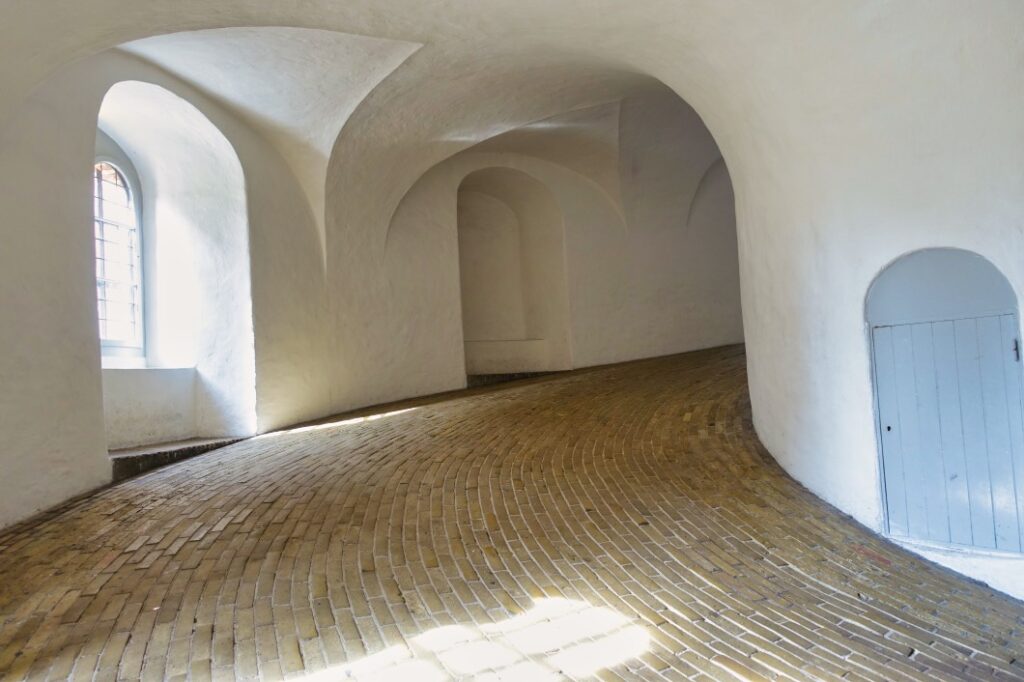
A spiral walkway winds 209 metres around the centre of the tower. There are no steps, so it was possible for horse-drawn carts to transport material up. The so-called riding staircase needs a full 7 ½ turns before it reaches the last steps to the viewing platform.
So we set off to tackle the snail walk to the top of the tower. When you reach about the middle, you can leave the tower through a door into the adjacent building. This is where the library hall is located. The large and bright room was used by the university until 1861. Today, exhibitions and events take place in the room.
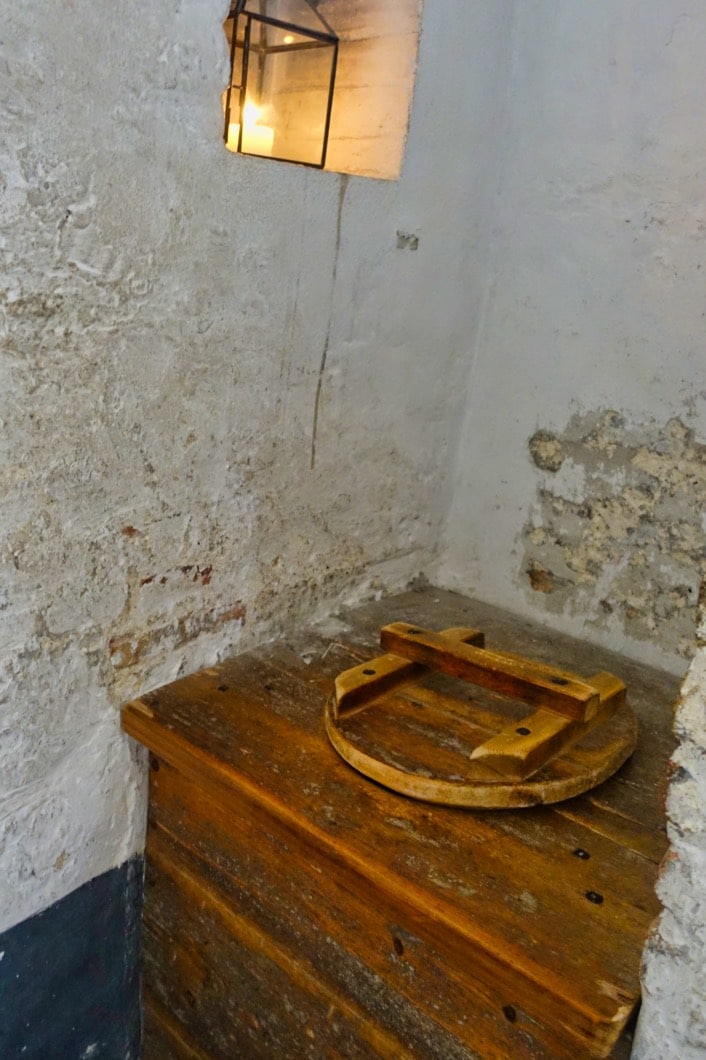
Back in the snail corridor I discover a smaller door that can be opened. Behind it I discover a small latrine that is no longer used. This and another latrine at the top of the tower were intended, among other things, for the astronomers who worked here. Via two downpipes, the excreta went into a small pit under the tower. While visiting these toilets, it was customary to smoke – perhaps to mask the smell that came up through the downpipes? In any case, it can be read that the sewage pit did not need to be emptied for about 50-60 years. Then, from 1902, the complex was connected to the sewage system.
The path in the snail passage winds further upwards. Another door gives us another opportunity to step into the adjacent burrow. We come to the bell-ringer’s floor. Behind a glass pane are some historical objects and we can take a look at the roof construction.
But we are drawn further up. Shortly before we reach the steps to the viewing platform, I discover another door in the middle of the tower. Here you can look into the hollow core of the tower from a glass floor. It’s about 25 metres down – not a view I can really enjoy. What I do find interesting is the information that this is Denmark’s geographical zero point. It was from here that people began surveying the country in the 1760s.
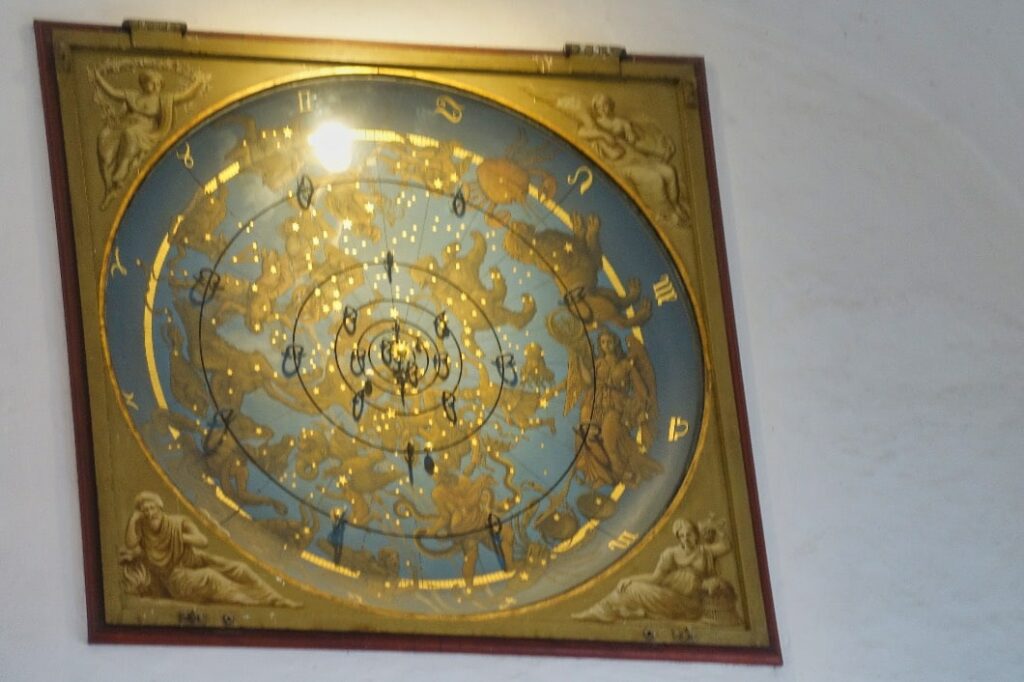
Before we climb the last steps, I take a look at the planetarium hanging in the snail aisle. Here, the solar system is presented in a beautiful way.
High above Copenhagen – on the observation deck
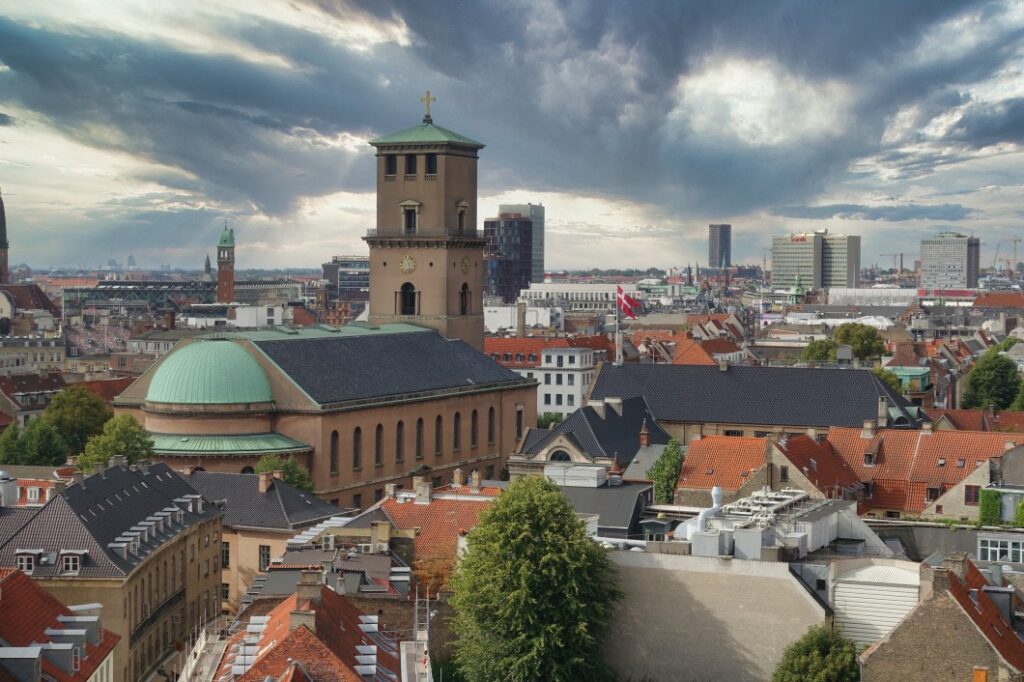
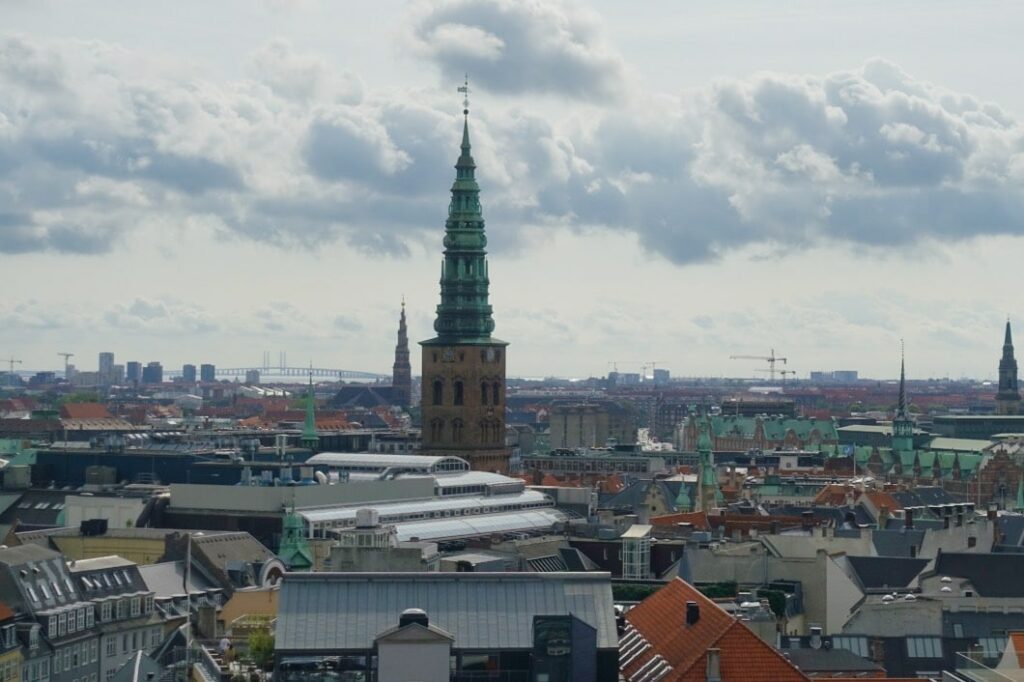
The last few metres to the viewing platform you have to climb a few steps (about 30). Then you step through a door onto a platform that gives you a 360-degree view of Copenhagen.
Almost 35 metres above the ground, you stand behind a wrought-iron grille dating from 1643. From time to time, you discover the letters RFP and the monogram of Christian IV. The letters stand for the king’s motto “Regna Firmat Pietas” which probably means “Piety strengthens the kingdoms”.
The view of the city is really worth it. I definitely walked around several times and always discovered something new. And because the autumn sun’s rays did provide some warmth, I really enjoyed people-watching on the bench running all around.
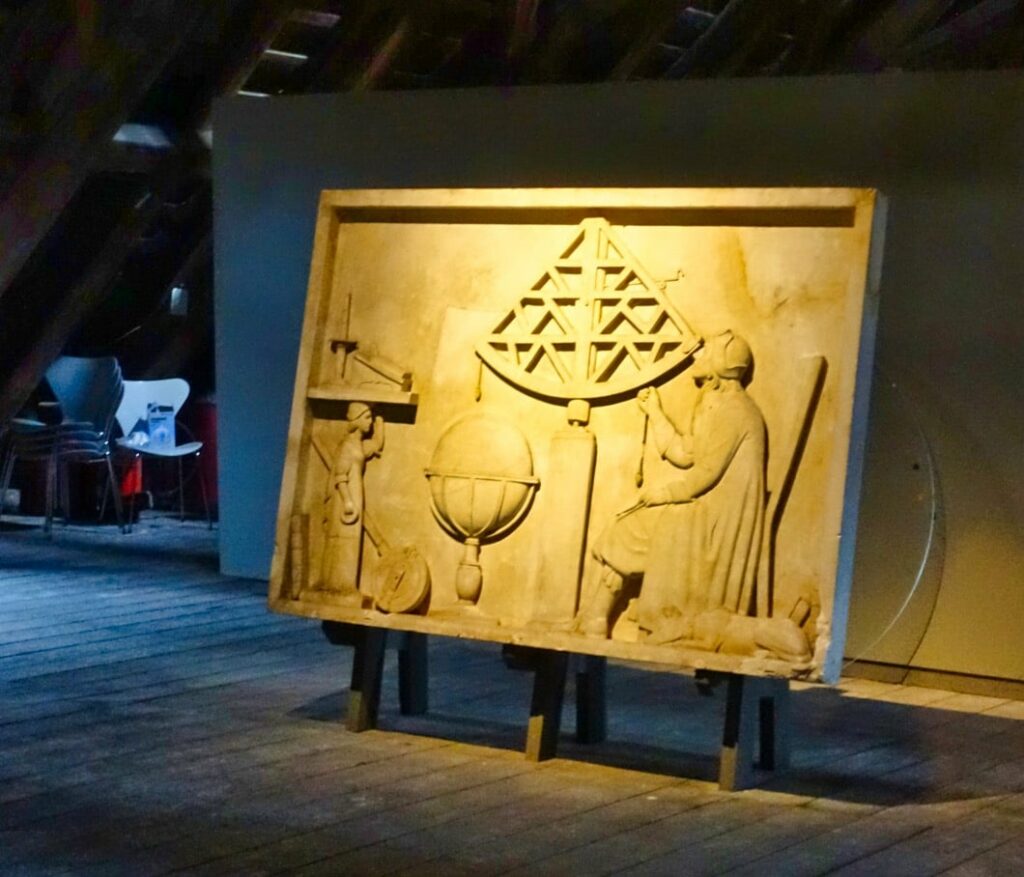
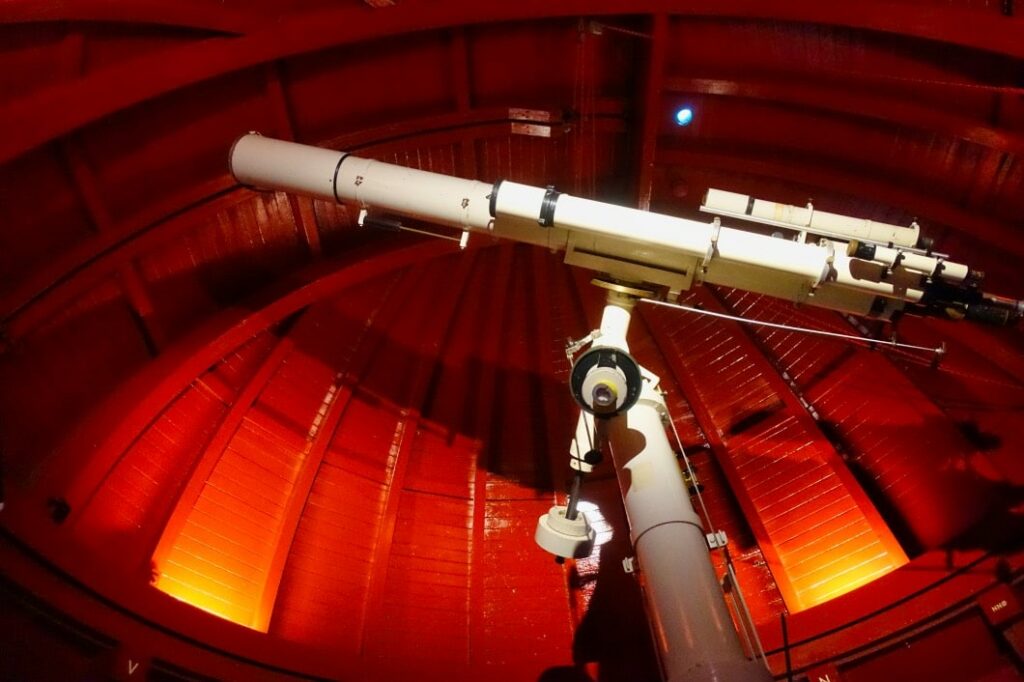
From the platform, a narrow staircase leads to the tower’s observatory.Here you will find the oldest observatory in Europe still in working order, dating from 1929. Unfortunately, I couldn’t make out too much in the very dark room, but the equipment is certainly worth seeing.
We spent quite a while walking up and down the tower – for me, a must-see place in Copenhagen.
Address:
Købmagergade 52A 1150 København K
Opening hours:
April – September daily 10 – 20 h October – March daily 10 a.m. – 6 p.m. additionally Tuesday and Wednesday until 9 pm closed: 24.12., 25.12., 1.1. On 31.12 the tower closes at 3 pm!
Admission fees:
Adults: 40 DKK Discounts are available. Note: Payment can be made in DKK, Euro (notes only, no small change) or credit card.


Leave a Reply