The Harz Mountains are really excellent for a weekend getaway. Wernigerode is located in Saxony-Anhalt in the district of Harz directly on the northern flank of the low mountain range.
The city area consists of the old town with the historic town centre, the new town and some incorporated villages and districts. The highest point of the city area is the summit of the Brocken at 1141.2 metres.
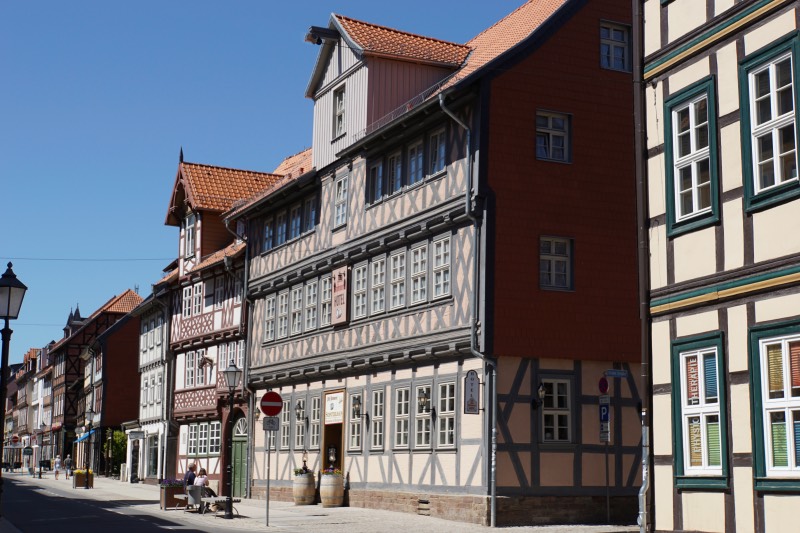
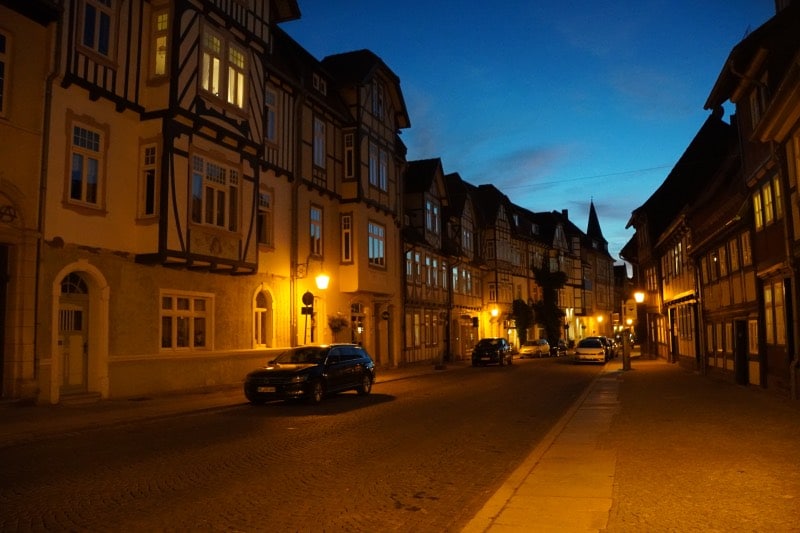
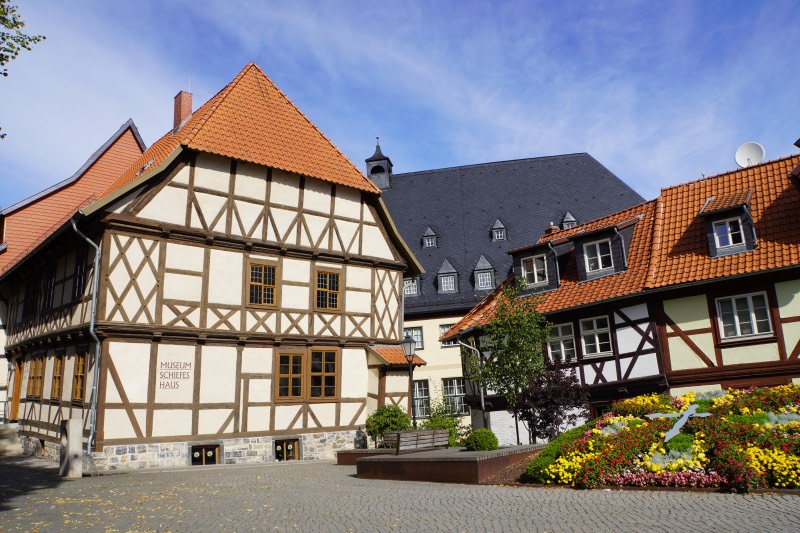
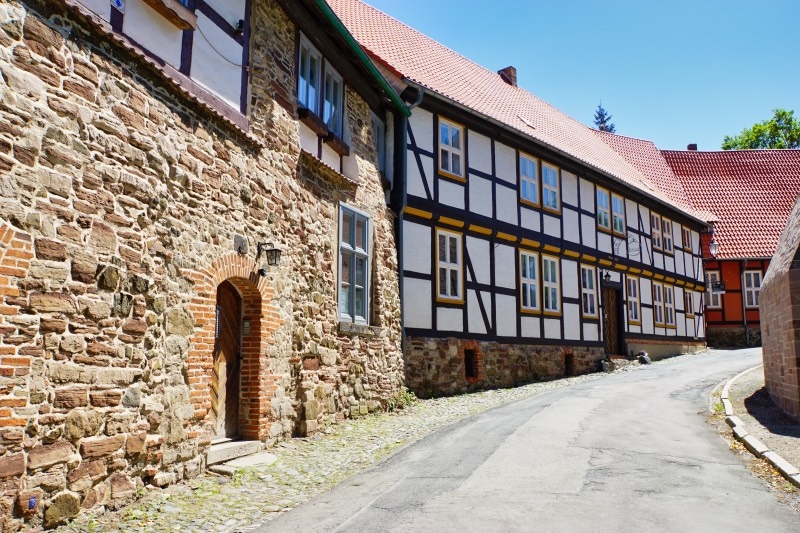
Wernigerode is very touristy. The historic town centre with its beautiful Lower Saxon half-timbered houses and the castle high above the town attract visitors all year round. Exploring the Harz Mountains from Wernigerode is just as appealing as just discovering the town. From here you can set out on hikes in the surrounding area, take the Harz narrow-gauge railway or hike the 100-kilometre Harzer-Hexen-Stieg, for example.
We spent a weekend in the city and had a look around.
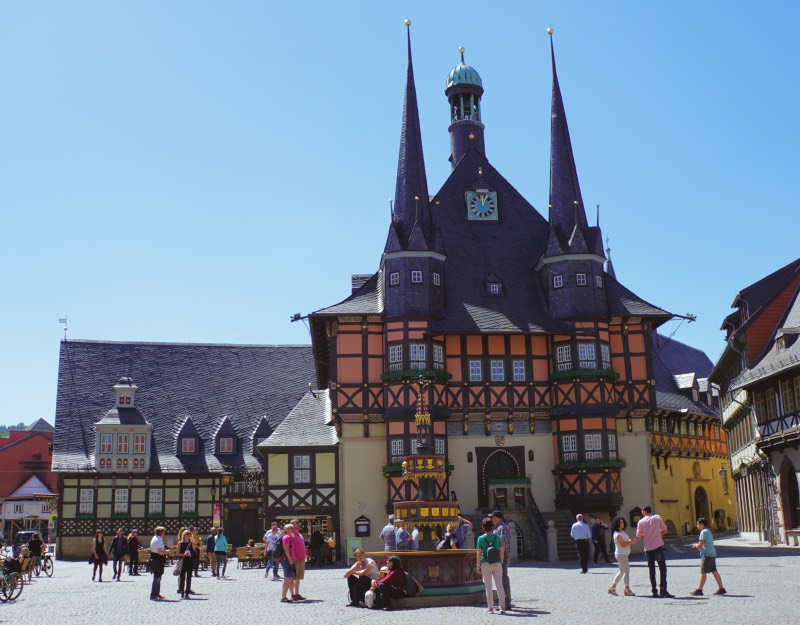
The market square with the town hall
The market square is one of the most impressive squares I have seen so far. The town hall on the south side is the dominant building on the square.
The building was first mentioned in 1277 as a “playhouse and court house”. At that time, it was still a smaller solid building, which was only later extended with a half-timbered building. The original pointed-arched entrance door can still be seen on the ground floor of the solid building. With the addition of the storey, the building was extended by a large flight of steps and a high gable. The result was a representative building that could hold its own with the patrician houses around the square.
Wernigerode’s old town hall was destroyed in a fire in 1528. The town then acquired the building on the market square and converted it into a town hall.
Until today, some structural changes have been made both inside and outside the building, but these have not detracted from the beauty of the building. Today, the cellar of the building houses the Ratskeller. The main room has an octagonal floor plan spanned by a cross-graded vault.
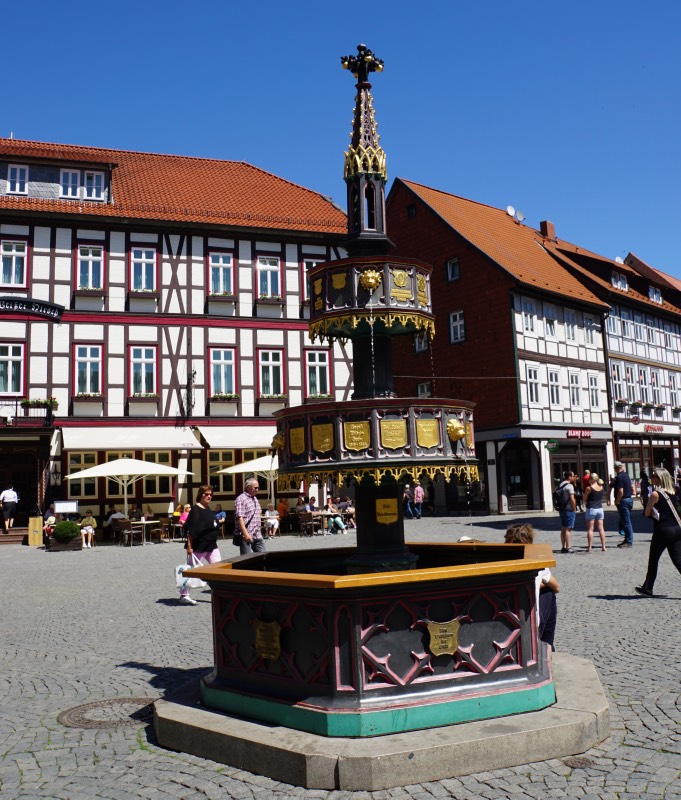
There is a beautiful fountain in front of the town hall on the market square. The so-called benefactor fountain is meant to commemorate the people who have worked for the good of the city. The neo-Gothic fountain has been on the market square since 1848 and today you can see numerous signs with names on it.
There are, for example, coat of arms plaques at the upper edge of the pool referring to names of members of the count’s dynasty and noblemen of the town. At the middle edge of the basin there are signs with names of citizens and in 1991, for example, the plaque with the name of a colonel who saved Wernigerode from destruction by the Allies was added.
A little tip: There is a webcam on the roof of a house that broadcasts a livestream. So if you want to wave to your loved ones – I tried it and Patrick was able to follow my tour of the square live at home.
The smallest house in Wernigerode
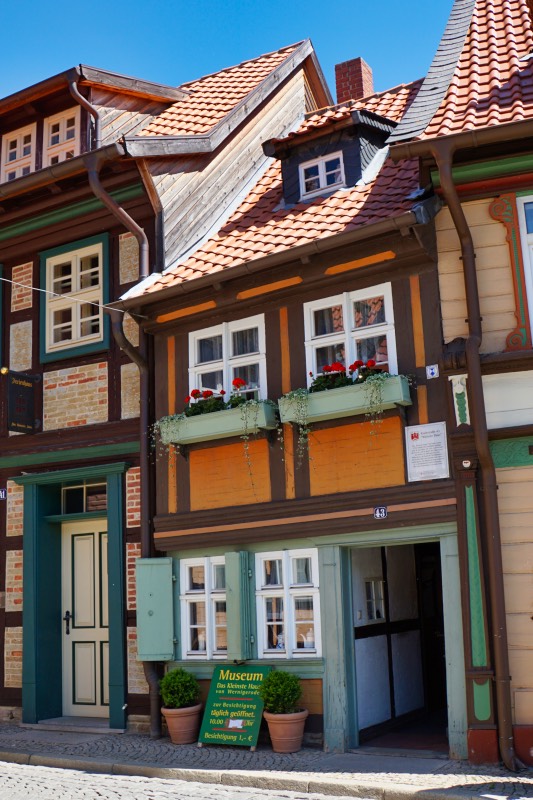
In Kochstraße, just a few metres from the market square, is the smallest house in the city.
The house was built in the middle of the 18th century in half-timbered style. Standing in front of it, one can already believe that it is a “doll’s house” enclosed between two “normal” buildings. The eaves are 4.20 metres high, the entire building 2.97 metres wide. Even the entrance door is only 1.70 metres high, so most visitors who want to see the museum inside have to duck their heads when they step inside.
The house was inhabited until 1976. In addition to the entrance area, there is a kitchen on the ground floor, a living room upstairs and a bedroom in the attic. I have read that supposedly up to 11 people lived there at the same time.
May-October Wednesday-Sunday: 10-15 h School holidays 10-16 h
Admission fees:
per visitor: 1,-€
The Leaning House
Wernigerode is not only small, it is also crooked! The “crooked house” stands in the Klintgasse. In 1680, when it was built, the house was still standing straight. The building was a fulling mill for the cloth-making industry and the current of the millrace washed around the foundation walls. Over time, the east façade sank further and further and today the slope of the house is almost twice as great as that of the Leaning Tower of Pisa.
Today, the house houses a museum and a gallery.
Address:
Klintgasse 5 38855 Wernigerode
Opening hours:
Tuesday – Sunday: 11-17 h
Admission fees:
per visitor: 1,-€
The pleasure garden of Wernigerode
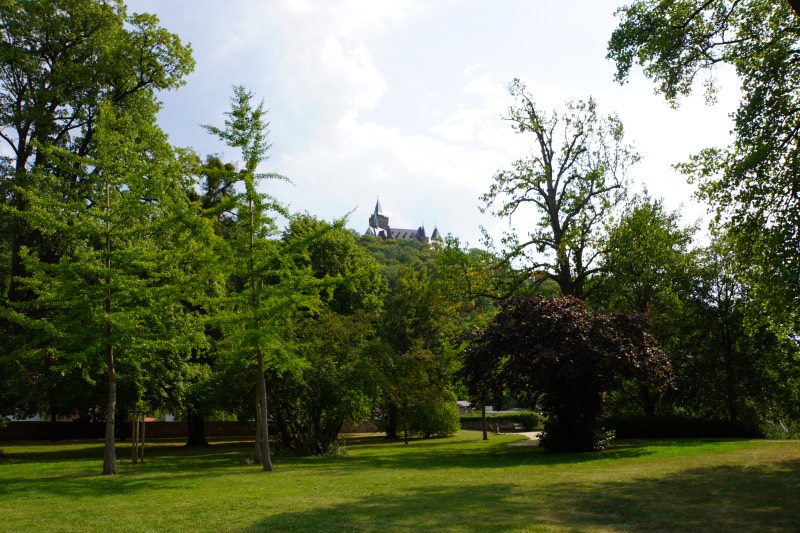
A pleasure garden belongs to a castle, and so in Wernigerode there is also a pleasure garden with an orangery below the castle. The pleasure garden in Wernigerode was created in the 16th century. It is located on a terrace between the castle hill and the town. Count Christian Ernst zu Stolberg-Wernigerode had the orangery built in the pleasure garden in the 18th century. He had the pleasure garden transformed in the French style and needed winter quarters for his orange trees and other subtropical plants.
By the end of the 18th century, the southern flair in the pleasure garden was already over. The plants were sold and the building was used as a concert hall and summer residence for the ruling family. From 1826, the orangery was used as the count’s library, one of the most important private collections with over 100,000 volumes and valuable Bibles. In 1929, parts of the Bible collection were sold and after the Second World War, the Soviet occupying army confiscated the holdings. Today, you can take a walk in the well-kept green area or simply make yourself comfortable on a bench.
Wernigerode Castle
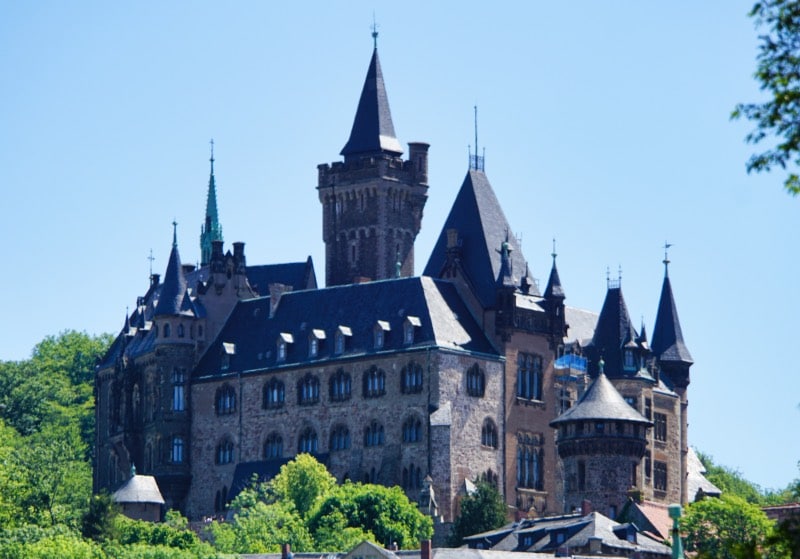
High above the town and clearly visible from almost everywhere is Wernigerode Castle. If you want to get up there, you can take a small tram or walk up. For example, the Bimmelbahn departs at regular intervals from one of the large car parks in front of the old town.
We walked up the rather steep but not difficult path to the castle and through a large gate we could then enter the castle grounds.
Things to know about Wernigerode Castle
Before the castle became a palace, there was a castle in Wernigerode. The first castle was built around 1110 and 1120 above the settlement of Wernigerode. At that time, a ring-shaped complex with a circular wall was built around the hilltop castle. Trade and military routes crossed below the castle and numerous traders and craftsmen settled in Wernigerode under the protection of the castle.
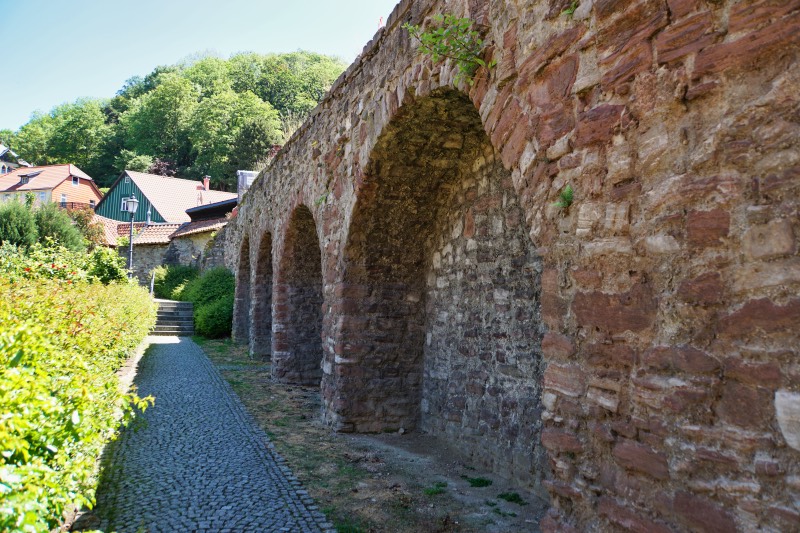
From the 14th to the 16th century, the protection of the castle was improved. The wooden palisades were replaced by a stone curtain wall. Ditches, ramparts, walls, gates and kennels were built, and the castle became almost impregnable. It was not until the development of heavy firearms and the resulting changes in warfare that the castle fortifications were defeated in the Thirty Years’ War. After the defeat, the rulers disappeared, the castle stood empty, it was looted and it slowly fell into disrepair. Only after the war did the counts decide to restore the castle. They had the castle complex converted into a baroque residential palace. And so Wernigerode now had a castle and no longer a fortress.
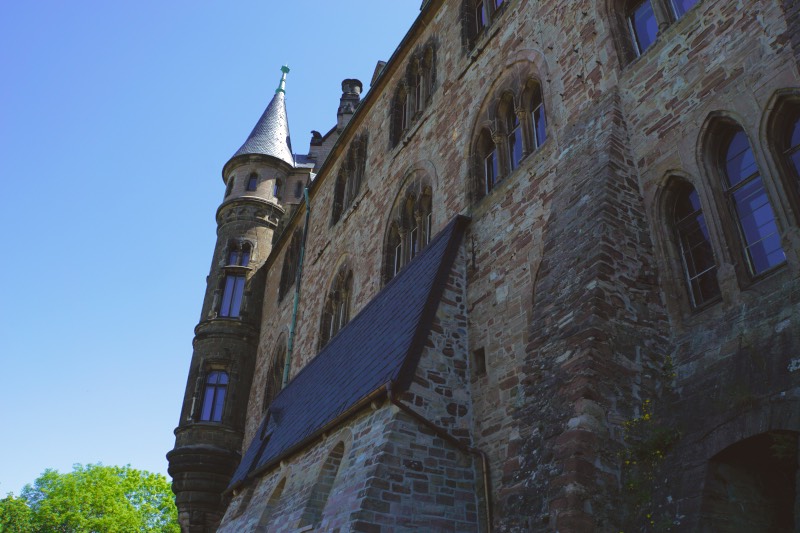
Successive generations of the ruling family changed, rebuilt and rebuilt again, and gradually a representative magnificent palace with a picturesque inner courtyard and a palace church came into being. There were about 250 splendidly designed rooms in the palace, connected to each other by countless doors and staircases.
In 1929, the Prince of Stolberg-Wernigerode family gave up the castle as their residence. In the years to come, the castle could be visited on guided tours. The family was expropriated in 1945. In December 1946, Soviet military personnel destroyed the historical weapons, armour and paintings depicting people in uniforms in the castle.
After the city received the castle back, a museum was created in the rooms, which can be visited.
Visit to the castle
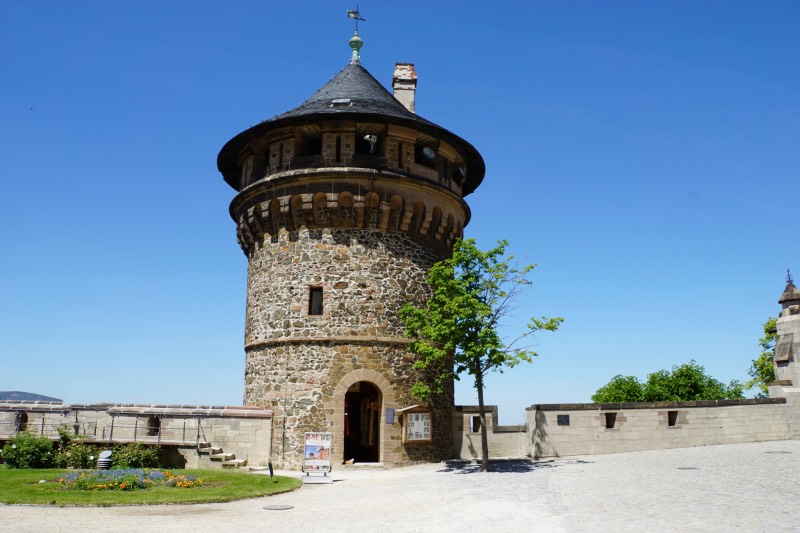
After entering the castle complex through the large entrance gate, you can follow a small road that winds its way up around the castle.
On one side you walk along the mighty walls of the castle, on the other side there are beautiful half-timbered houses. When you reach the end of the street, you step through a metal gate into a square. Here a fountain splashes and flowers bloom.
If you step up to a wall, you have a wonderful view over Wernigerode and the surrounding area.
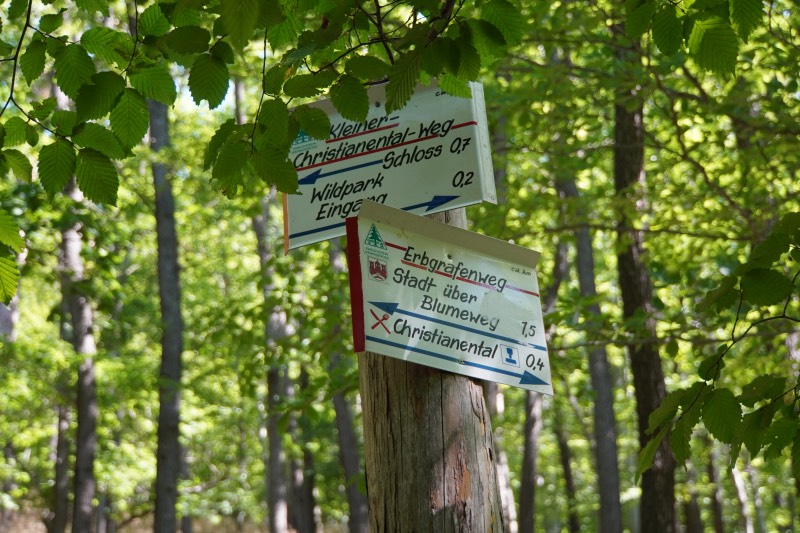
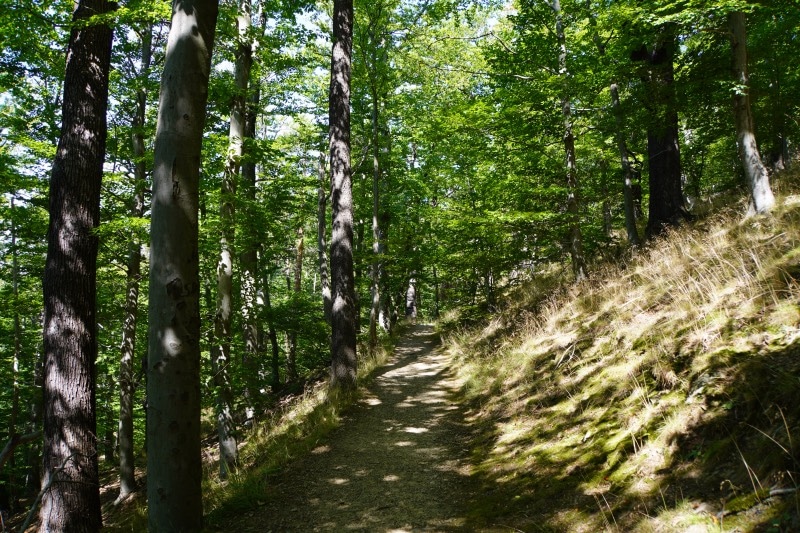
From the terrace, you can visit the castle and the museum for a fee. We just enjoyed the flair of the terrace and then set off on a short hike over the Agnesberg. The hiking trail leads to the Christianental Game Park and is very well signposted.
Christianental Wildlife Park
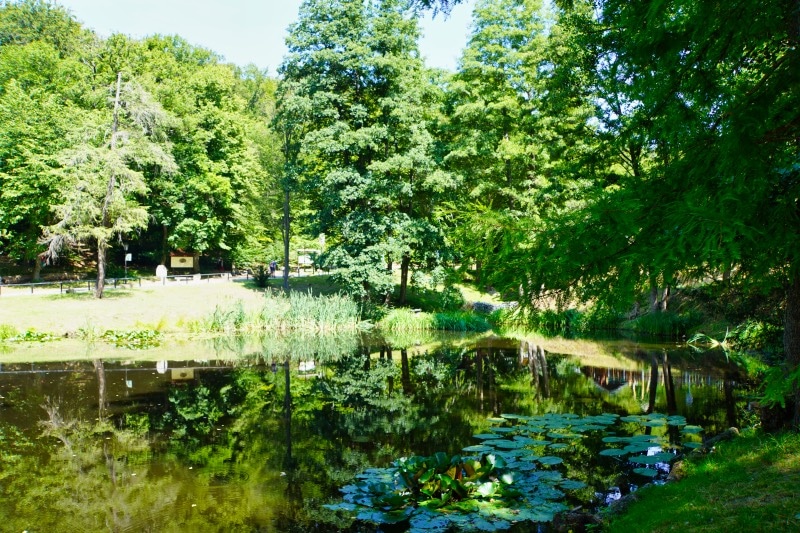
Christianental is located between Agnesberg and Fenstermacherberg. You can reach it on foot via a well-signposted hiking trail or you can take the Bimmelbahn from Wernigerode to the wildlife park.
The valley was originally part of the animal park of the county of Wernigerode with a pleasure house (today the inn).
The visit to the wildlife park is really inexpensive at €1 per person. When we were there, there wasn’t even a ticket booth, we just put the money in a little tin.
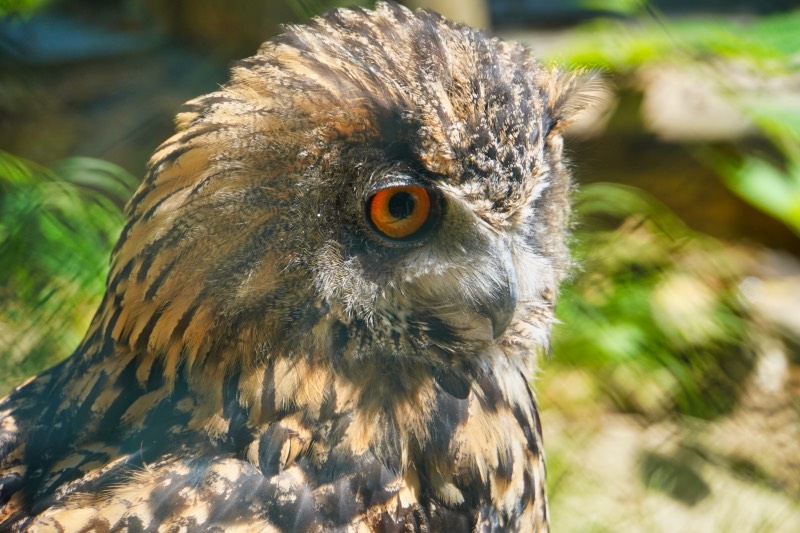
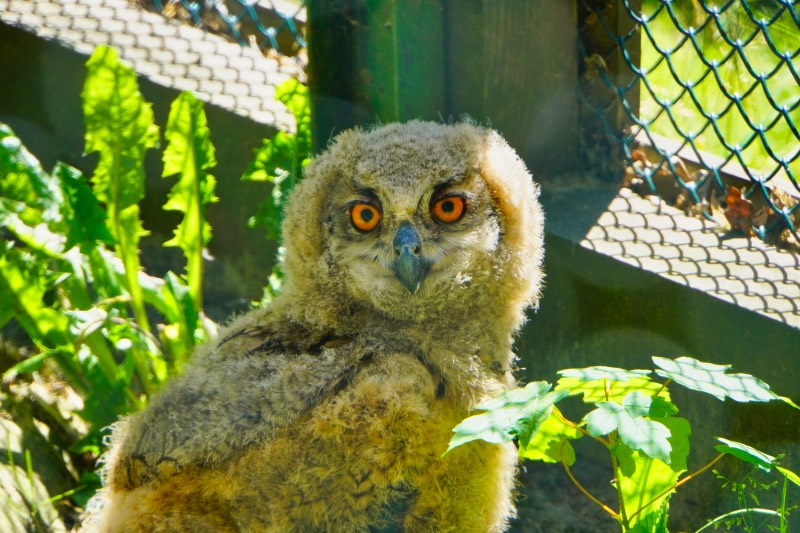
The grounds are wonderfully maintained and in some of the enclosures you can see animals that are typical of the Harz Mountains. I was thrilled by the owls – they still had fluffy young ones – but also the birds of prey, wild cats, raccoons, martens, red deer, fallow deer and wild boar were really good to watch.
The wildlife park is a great destination not only for families!
Address:
Christianental 43 38855 Wernigerode/Harz
Opening hours:
all year round
Admission fee:
per person: 1,-€
Zwölfmorgentalschanzen
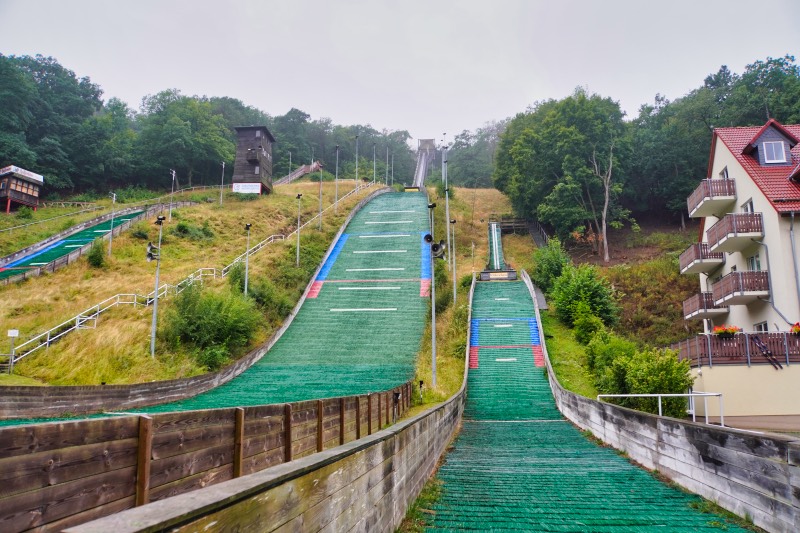
It is not far from the historic town centre of Wernigerode to the Zwölfmorgental. After a short walk you can reach several ski jumps here.
In 1909, skiers built a small ski jump here, which marked the beginning of the region’s ski jumping era. Until the Second World War, people jumped from a hill in the Biben Valley, which was also used after the war until it was too dilapidated.
In 1963, the first new mat ski jump was inaugurated in Wernigerode, followed by other ski jumps of different sizes. Today, there is a hotel next to the four ski jumps and a little further back in the valley there is a ski lift and a downhill slope, which is also covered with mats.


Leave a Reply