Citytrip to Dresden
If you ask about Dresden, an epithet often comes to mind: “Florence on the Elbe.” A grand name that evokes images of art, splendor, and Mediterranean lightness on the banks of a majestic river. Dresden is so much more than just a historic postcard motif. It is a city of contrasts, where baroque elegance meets vibrant, creative, and trendy neighborhoods.
The city’s historic center was almost completely destroyed in the Second World War. The most important buildings have been rebuilt, and this is where the heart of Dresden beats. A tour here is like a journey back in time to the era of August the Strong. The Frauenkirche (Church of Our Lady) shines in new splendor after its reconstruction and stands in the middle of the city as a world-famous symbol of peace and reconciliation. The ascent to its dome rewards you with an unforgettable panoramic view.
Just a few steps away is the baroque Zwinger Palace. Stroll through its courtyards, admire the Nymphenbad (Nymphs’ Bath), and visit the world-famous art collections, such as the Gemäldegalerie Alte Meister (Old Masters Picture Gallery) with Raphael’s Sistine Madonna. Directly opposite gleams the magnificent Semperoper, one of the most beautiful opera houses in the world.

Cross the Augustus Bridge and you enter another world. The Dresden Neustadt district is the creative, unconventional counterpart to the historic Old Town. Colorful facades adorned with graffiti, Gründerzeit-era buildings, and a labyrinth of courtyards characterize the scene. The highlight is the Kunsthofpassage (Art Courtyard Passage), where you can wander through five imaginatively designed courtyards. By day, independent boutiques and cafés beckon, while at night, a vibrant bar and club scene comes to life.
The Elbe is more than just a river; it is the soul of the city. Enjoy the skyline from the water on a trip with a historic paddle steamer – the oldest and largest paddle steamer fleet in the world.
City trip to Dresden – what to discover
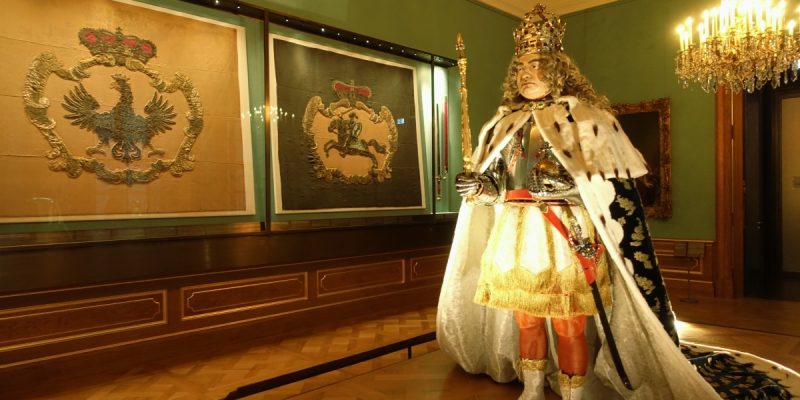
In the heart of Dresden's city centre lies the Renaissance building of the Residenzschloss. It is home to some of the city's most beautiful and interesting museums, and here you can visit the world-famous Historic Green Vault.
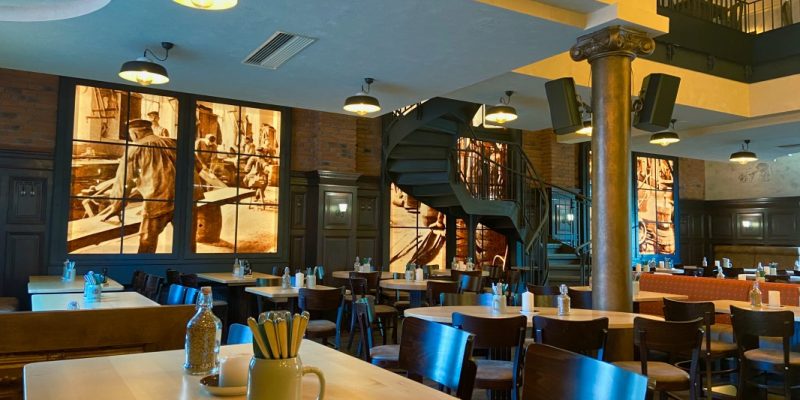
The former machine house of the "Aktienbrauerei zum Feldschlösschen" is located in Budapester Straße. Here you can not only drink the beer of the Dresden brewery, but also enjoy good hearty food.
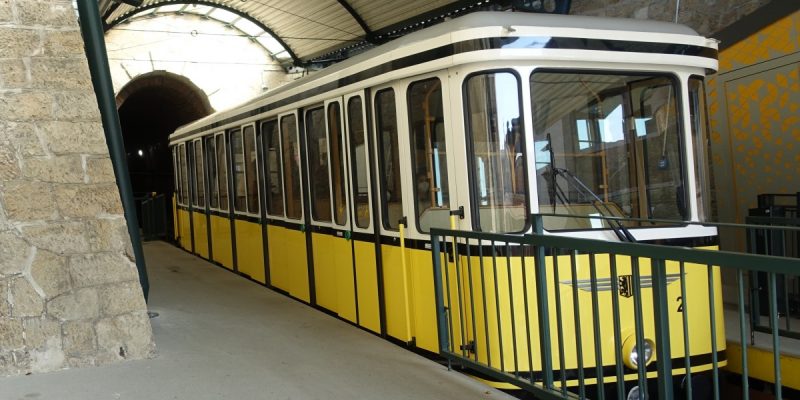
Dresden not only has an aerial tramway, here a funicular railway also runs up the Loschwitz slope of the Elbe.
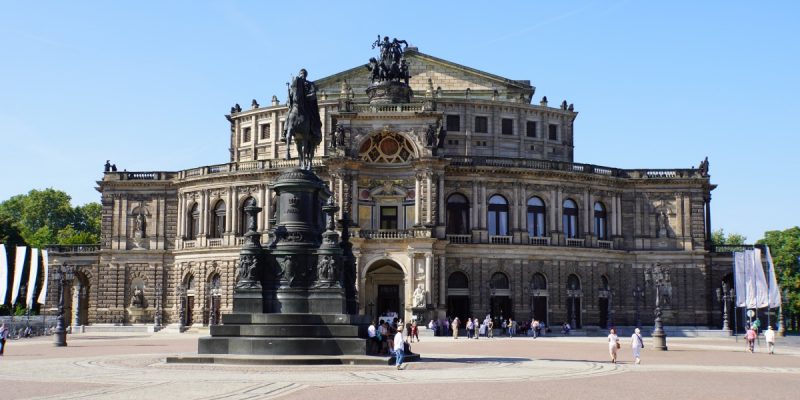
The Semper Opera House, an opera house that many visitors to the city on the Elbe know from the outside, is located on Theaterplatz in the historic city centre of Dresden. You can also take part in guided tours of the building.
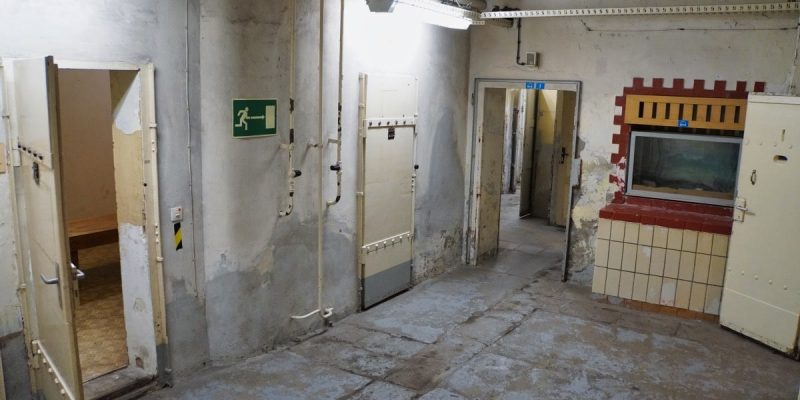
A little off the beaten track, in the Neustadt district, is one of the most impressive and depressing places I have visited so far, the Bautzner Strasse Dresden Memorial, a former "Stasi" prison.
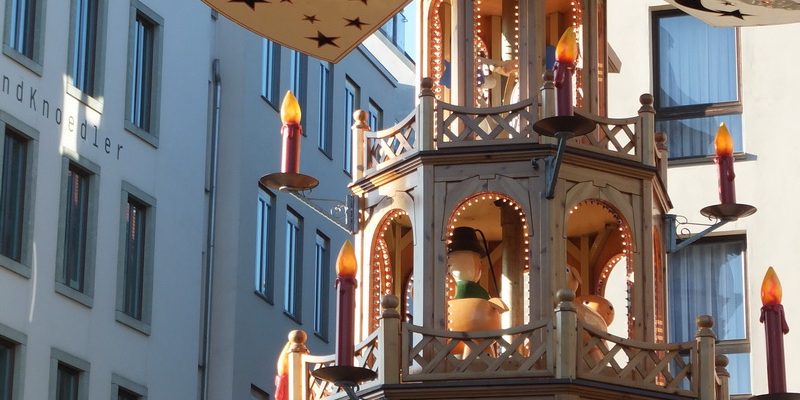
Every year around the end of November the oldest Christmas market in Germany opens its gates; the Striezelmarkt in Dresden. We went on an excursion to this traditional Christmas market in Dresden.
We went for a little stroll through Dresden, a metropolis on the Elbe. We’d like to share our impressions. Especially when it gets dark the scenery becomes fascinating.
Dresden is home to the Frauenkirche (Chruch of Our Lady). The original name “Unserer Lieben Frauen“ (Our beloved ladies) got shortened over the years to become the term that is used today: Frauenkirche.
The Neustädter Markt (Neustädter market) is in the inner New Town of Dresden. It is the intersection of Hauptstraße (Main Road), Augustusbrücke (Augustus Bridge), Köpckestraße and Meißner Straße.
Every time we had visited Dresden I was magically drawn to it - the Procession of Princes. It really is a shame that a piece of art like this is so well hidden in Dresden.
Right in the heart of Dresden is what might be the most well-known building of the Baroque period – the Zwinger Palace Dresden. It is a must-see for every visitor and it is pretty in every season.
The bridge “Blaues Wunder” (literally: blue miracle; figuratively: German idiom for a great surprise or shock) is a peculiar bridge. It is a suspension bridge.
The three Elbe Castles are located on the Elbe hillside in Dresden. They are called “Albrechtsschlösser” by the public and are part of the World Cultural Heritage Elbe Valley (2007 – 2009). Each of the three castles is nice to look at.
The world’s oldest mountain overhead railway can be found in Dresden. It was opened on the 6th of May 1901 and runs between Loschwitz and Oberloschwitz. The cart climbs the elevation gain of 84 meters in only four minutes and 30 seconds.
Book a tour
Find an accommodation
Hotel am Schwanenhaus
Boutique Hotel am Schillerplatz
Townhouse Dresden
Maritim Hotel Dresden
ACHAT Hotel Dresden Altstadt
Travel information about Dresden
Arrival
By plane
Dresden International Airport is located about 9 kilometers north of the city. Many charter flights depart from there during the vacation season and regular direct flights within Europe.
There is an S-Bahn station below the airport, from which trains run regularly to Dresden’s main train station. Furthermore, bus lines 77 and 80 also travel to the airport.
The nearby airports in Prague, Leipzig and Berlin-Brandenburg offer further international flight connections.
By train
Dresden has two long-distance train stations, Dresden – Neustadt and Hauptbahnhof. These are served by ICE connections and regional traffic.
Both stations are located at about the same distance from the old town. It is possible to take the streetcar to the old town.
Dresden Mitte station is served only by S-Bahn trains and regional traffic.
By bus
So far, providers of inter-regional bus services stop at the south side of the main station. However, there is no longer enough space and a ZOB is being planned.
Dresden is regularly served by several providers from Germany and the Czech Republic.
Regional buses stop almost exclusively in front of the main entrance to the main station.
By car
The Saxon city is easily accessible via the freeways. Coming from the west and south, it is best to take the A 4; coming from the north, take the A 13 to the A 4. Those arriving by car from the direction of Prague should take the A 17.
By bike
The Elbe cycle path runs along the banks of the Elbe.
On the way in...
On foot
The historic city center is best explored on foot. The distances are not too great.
Public transport
In Dresden, buses and streetcars of the Dresdner Verkehrsbetriebe run at fairly frequent intervals. With many lines you can reach all tourist relevant destinations of the city.
In addition, 3 S-Bahn lines connect the surrounding area with the city. With these you can reach, for example, Meißen and Saxon Switzerland.
Information about fares and ticket variations can be found here.
Mountain railroads
The two Dresden mountain railroads are part of the public transport system. The bottom stations are located at Körnerplatz. The funicular and the suspension railroad are among the most popular tourist destinations in the city.
Elbe ferries
The ferries across the Elbe are also part of the public transport system. They cross the Elbe at three points in the city area: Johannstadt-Neustadt, Niederpoyritz-Laubegast and Kleinzschachwitz-Pillnitz.
By car
Dresden is a big city, where it can get crowded on the streets, especially during rush hour.
In the city center you will find enough paid parking spaces. Just outside the city center, free Park&Ride parking is available.
By ship
The White Fleet offers excursions on the Elbe. Especially popular are the trips with the paddle steamer.
By bike
The expansion of bicycle lanes has been pushed in recent years and so you can find more and more separate bike lanes in the city.