We had read a lot about the medina of Marrakech before our trip to Morocco – not always positive, but many interesting facts that made us curious.
We quickly agreed that we would like to have a guide by our side during our tour, who would take us past the tourist hotspots to somewhat secluded corners.
There are countless offers for tours, we chose a 6 hour tour from the tour offer of “From Bremen to Morocco”. In advance I discussed my ideas with Nadine and she found exactly the right guide for us.
Super punctual we started on our first day to our tour through the medina of Marrakech. From now on, it was six hours on foot through the narrow and winding streets of the old town. If I had been lost somewhere, I think I would still be standing there today looking for the way.
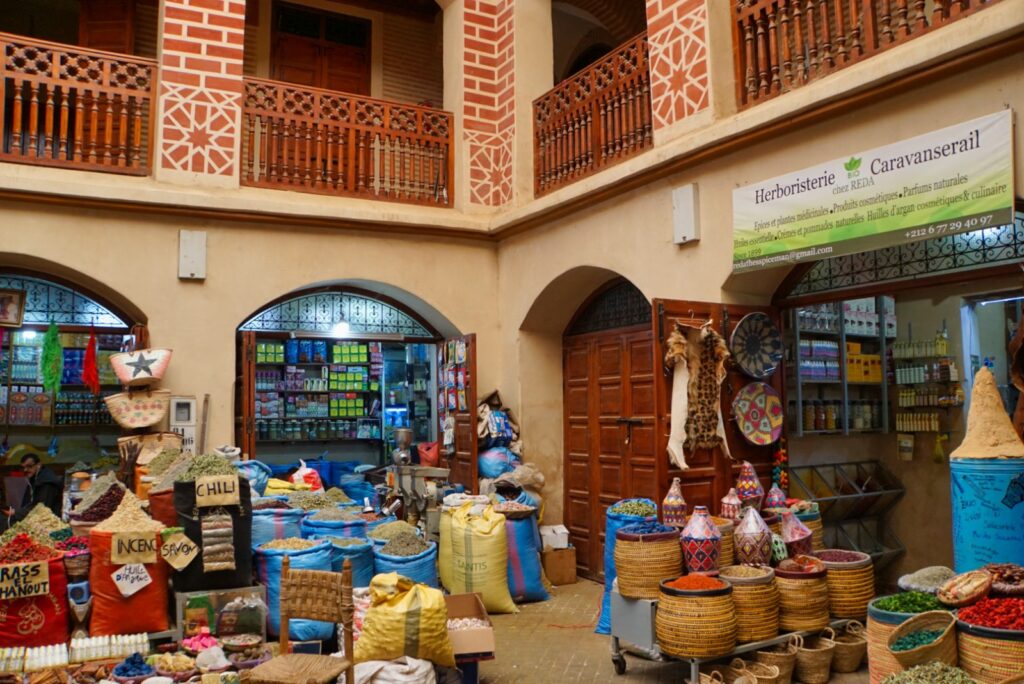
Where exactly we walked along, I can not exactly trace. But we have seen interesting corners, alleys, places. We have learned a lot about Marrakech and with each step through the maze of alleys I have lost my “fear” of the unknown more and more. It was for me just the right introduction to this bustling and lively city and made our wanderings in the following days much more relaxed.
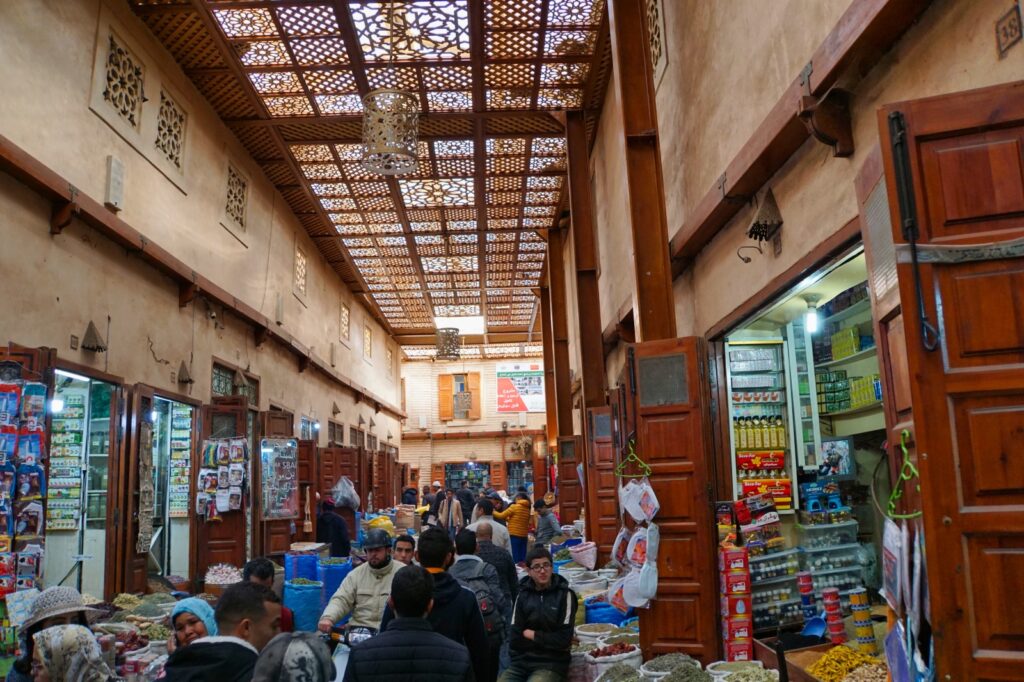
Many of the places we saw we did not photograph. Because it is really so, as you read everywhere, often the photographing is not seen gladly. Thanks to our guide, it was nevertheless possible in some places without any problems. What we also noticed very positively, we were relatively little addressed and pushed to “purchases”. The local guide blocked this excellently or asked us if we were interested. So the tour was very relaxed.
View into a caravanserai
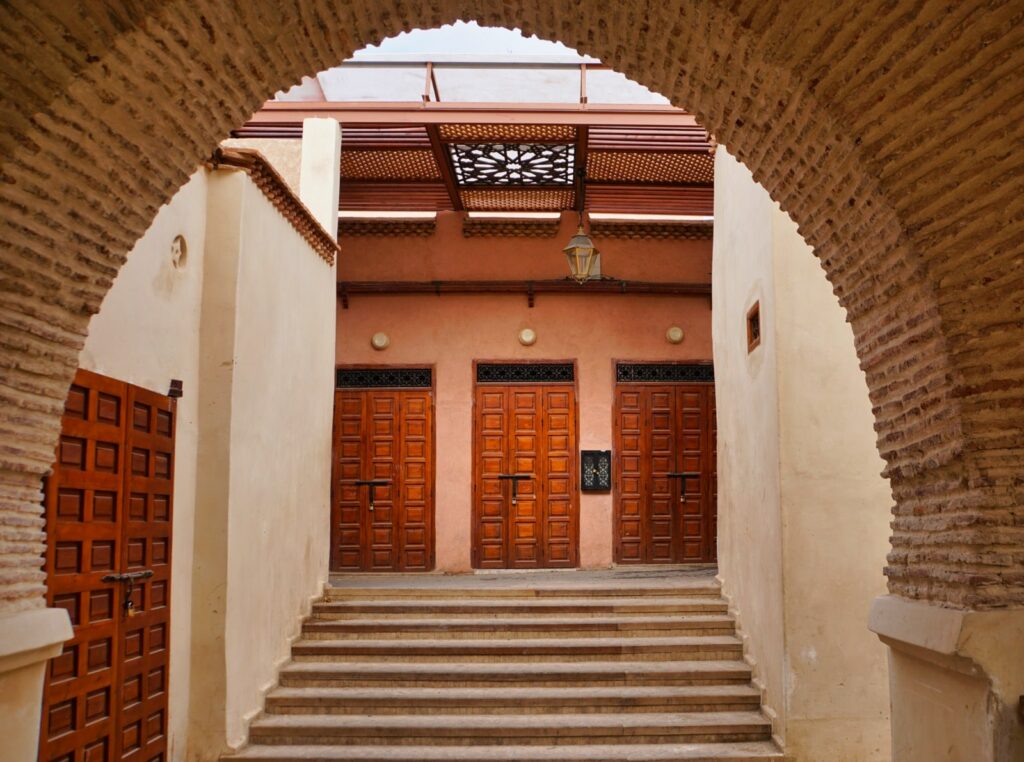
In the middle of a narrow alley we entered a courtyard through a gate. We were standing in a former caravanserai, an inn on a caravan route. This is where the merchants of Marrakech used to stop. They could spend the night there with their pack animals, store the goods and also sell them.
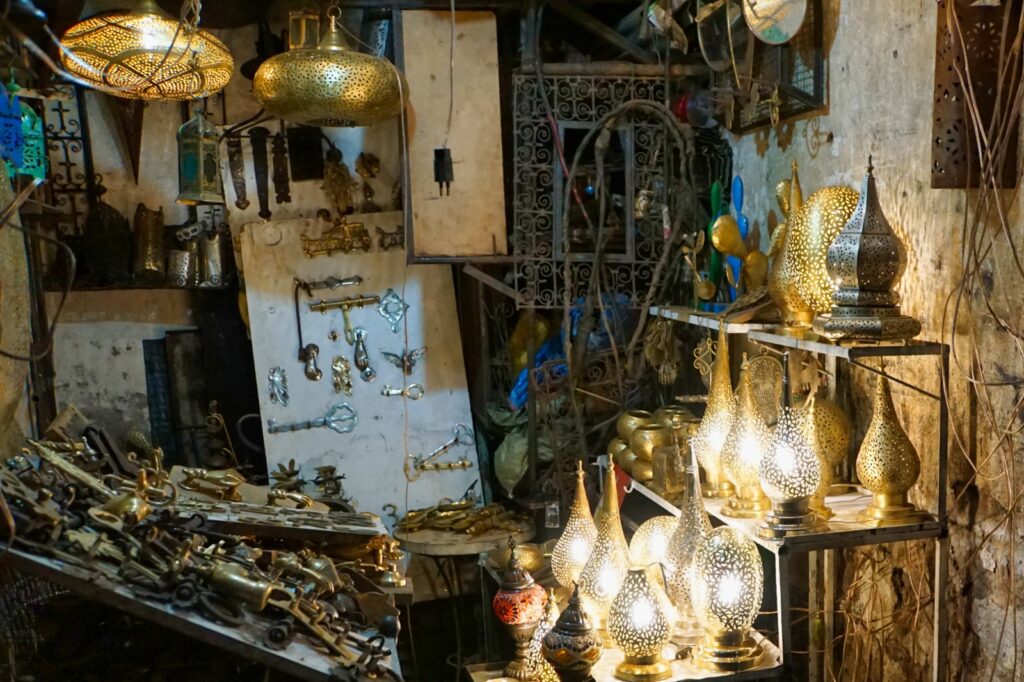
Today, of course, the often one- to two-story building complexes are no longer used to house caravans. Many of the courtyards are now craftsmen’s yards. We have seen here not only leather manufactories, but also lamp producers.
View under a hamam
Hamams are very common in Marrakech. This is a public bathhouse with a steam bath/sauna and the possibility of a massage. You enter the building separately for men and women.
Our guide, who of course could only report from the “men’s side”, told us about his typical walk into a hamam. First you take off your clothes and then you enter 3 rooms one after the other with different temperatures and humidity. Each room also takes you further into the centre of the building. There you can be massaged, soaped, rubbed … washed off with warm water and then go into a relaxation room.
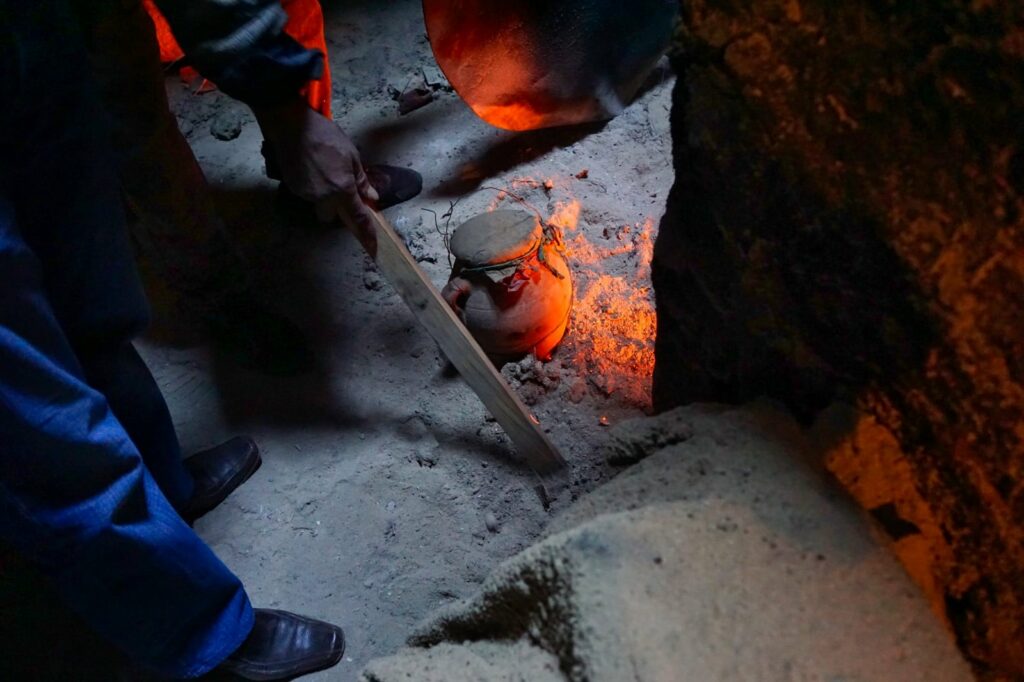
We stopped in front of an inconspicuous doorway. Here there is a staircase leading down and we reached under a hamam. There is the oven for heating the hamam.
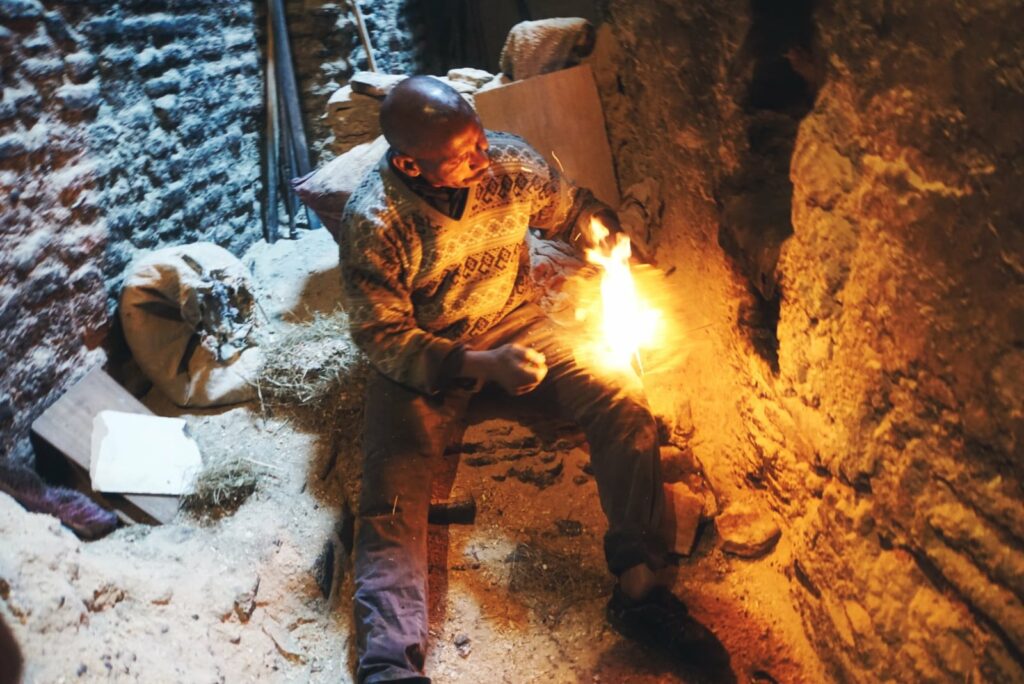
We descend the stairs and meet the stoker who is responsible for keeping the oven going. A typical Moroccan dish, tangia, is also prepared here for the surrounding restaurants. In an urn-shaped clay pot, all the ingredients are prepared simultaneously in the embers of the oven. The meat stews for several hours and becomes wonderfully tender. Patrick tried a tangia in a restaurant a few days later and was thrilled.
Unfortunately, I did not visit a hamam during our time in Marrakech. I admit that my poor language skills prevented me from doing so. I would have loved to visit a small hamam that wasn’t frequented by tourists, but I wouldn’t have got very far there with English. However, I am determined to make up for it.
Out and about in the souk
The souk is the commercial quarter of the city and in Marrakech I had the feeling that most of the medina consisted of the souk. But, that was certainly because we walked through so many corridors, alleys and quarters that I completely lost my orientation.
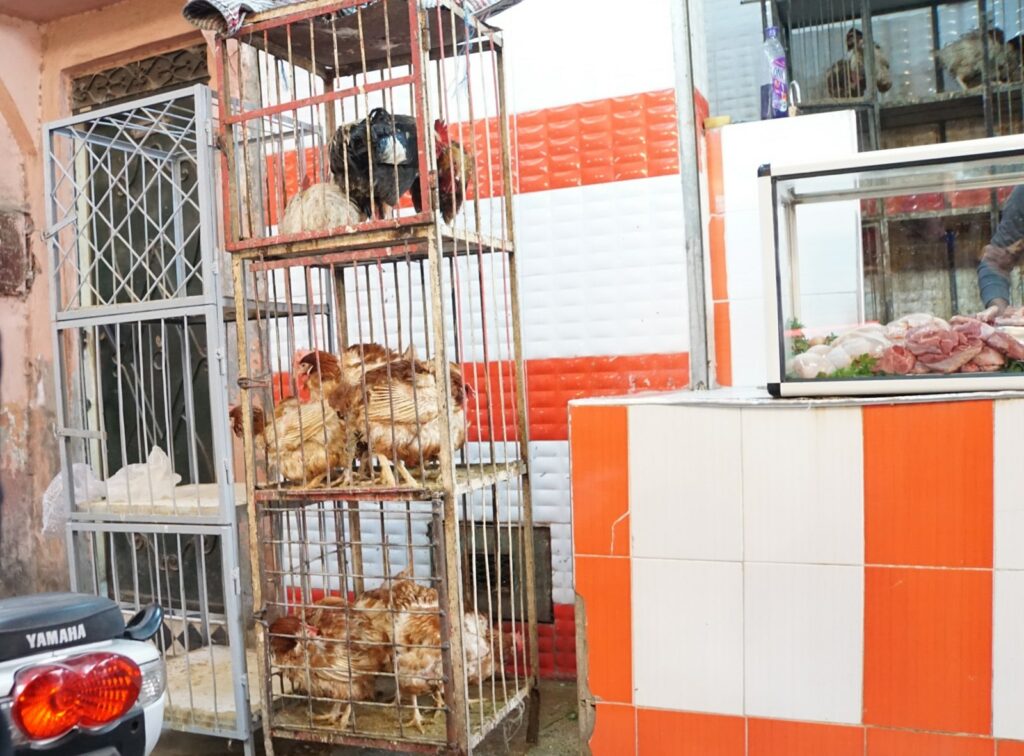
Our guide took us through the food souk. Here you can get everything you need for your daily needs: Fruit, vegetables, baked goods, fish and meat were the main products we could discover. There were stalls where you could buy the live chicken and two stalls away was the butcher who slaughtered the animal and removed the feathers. At other stalls there were oranges, which simply taste much better freshly harvested than in our supermarket.
Another area of the souk is divided into individual crafts. So we passed through areas with metalworking, leatherworking, instrument makers or clothing.
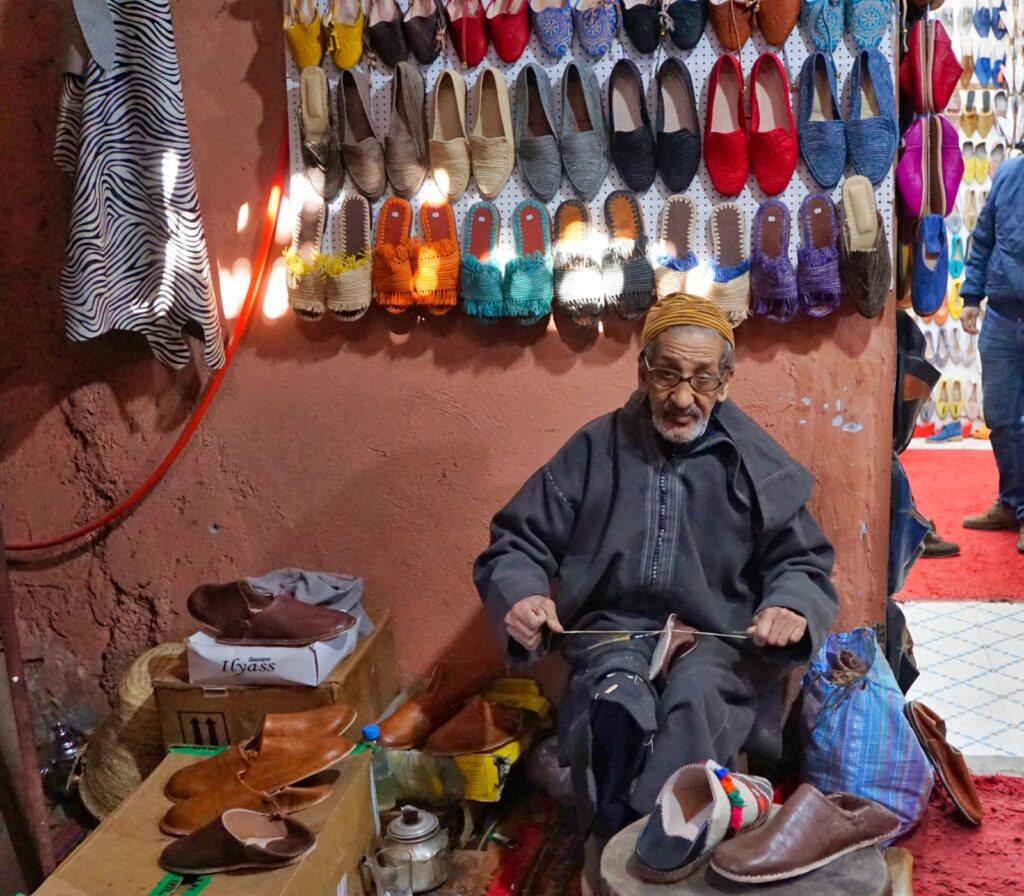
In one corner, traders were selling shoes. Here, Moroccans showed how they made them. To this day, I am not quite sure whether this was not just a tourist show. There were so many identical shoes in the shop that it looked like factory-made goods. Later, however, in other parts of the old town (very remote areas), we kept seeing small handicraft workshops where shoes were produced. So who knows, maybe it was handmade after all.
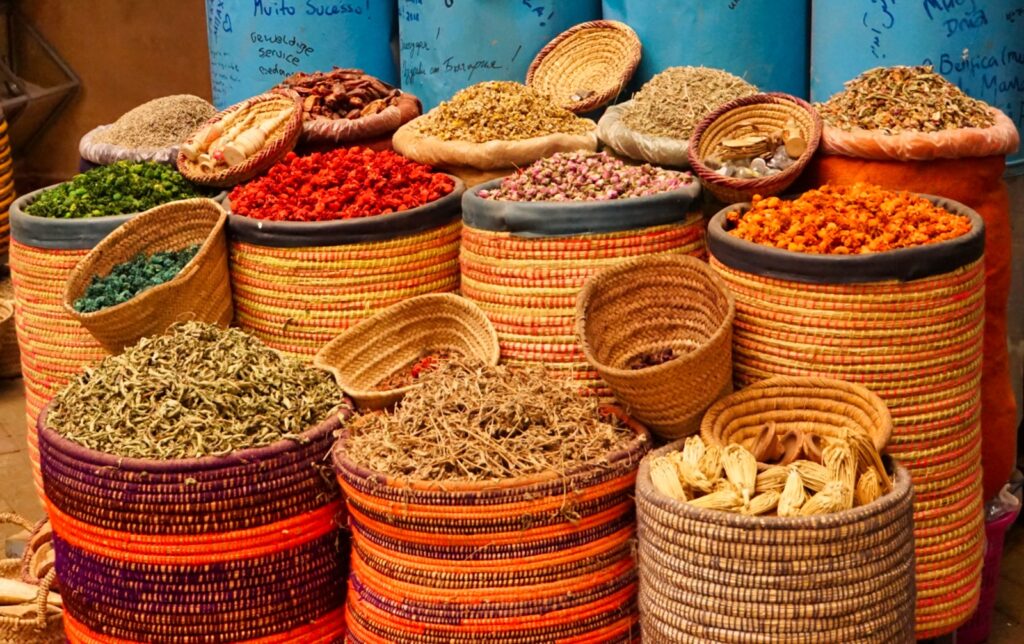
When we came around a corner, we were standing in an area that our guide described as a “magic place”. Here you could buy herbs, powders or other magical ingredients that are used for secret love spells, herbal teas… for example. Well, if you believe in it…
But what I learned during our visit to the souk:
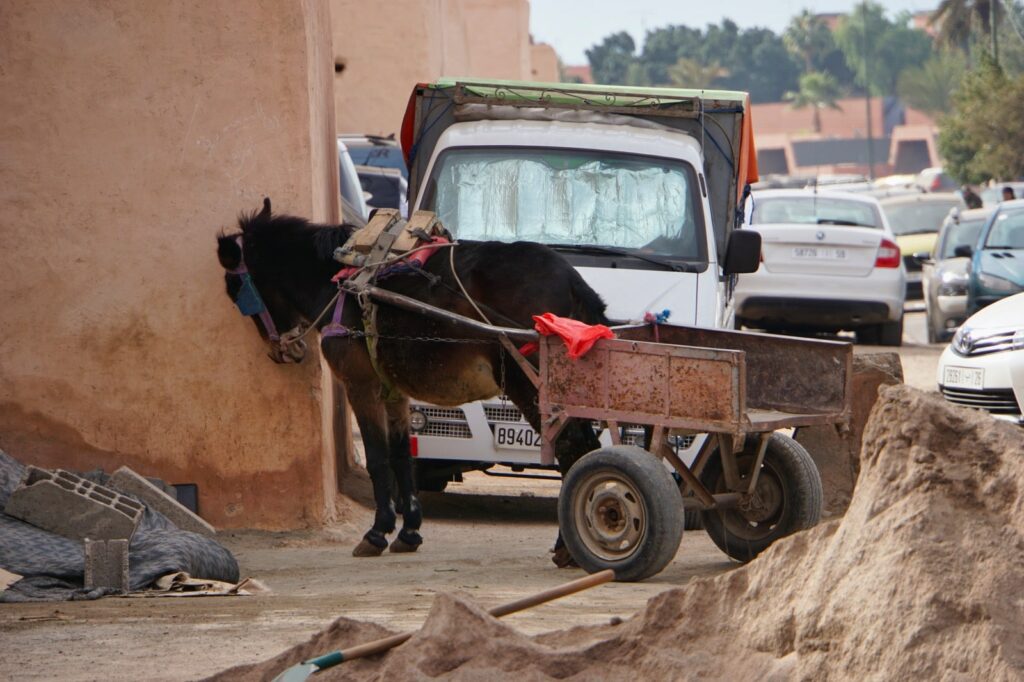
- Always walk on the far right, otherwise you will be knocked down by donkey carts, speeding moped riders or cyclists.
- Always say “non merci” in a friendly manner and smile, then you will be left alone.
- bargaining is part of the game if you want to buy something!
Djemaa el Fna – the tourist hotspot
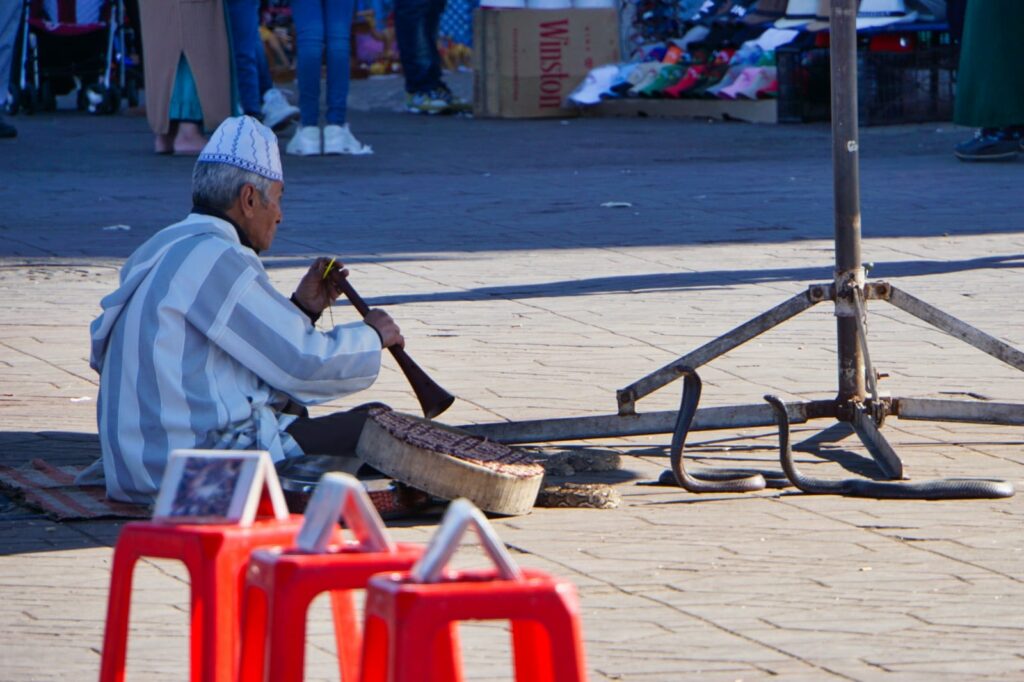
We could not completely avoid the central market place Djemaa el Fna during our tour. So we briefly walked through the square. What draws the vast numbers of tourists here during the day is honestly incomprehensible to me. People stand around snake charmers and look at monkeys in tiny cages. But it is even worse that tourists are put on the animal’s arm and of course are only allowed to take a photo for a “donation”. For us, this is a terrible place, which we avoided as much as possible during our time in Marrakech.
In the evening, the square turns into a huge “restaurant”. Numerous food stalls attract visitors, it smells wonderful and most of the food looked really good. Each stall has a number and young men try to lure visitors to a particular stall. You really have to take it with humour and not feel harassed when you are approached every 2 metres while walking around. Just smile and say you remember number XX and everyone is happy.
What else we noticed in the medina of Marrakech:
- The best way to discover the medina of Marrakech is on foot. You are not allowed to drive on many of the small streets and in addition, the way the locals drive really takes some getting used to.
- The old houses in the medina are adobe buildings with walls about 2 metres thick and without large openings to the street side. The houses open inwards to a small courtyard. Today, unfortunately, people no longer build in the traditional way, although they are the ideal construction method for the hot summer temperatures.
- In the old Jewish quarter of the medina, the buildings are changing. The houses have balconies and windows facing the street. There is also a synagogue in the quarter.
- The medina of Marrakech is currently being renovated piece by piece with public funds. The aim is to create a uniform image on the outside – the plaster and the entrance doors are being aligned. If you walk through the already renovated area, the streetscape looks much “tidier” and “neater”. However, I find that the charm of many streets is also lost.

Leave a Reply