On the move in the Wadden Sea with the crab cutter
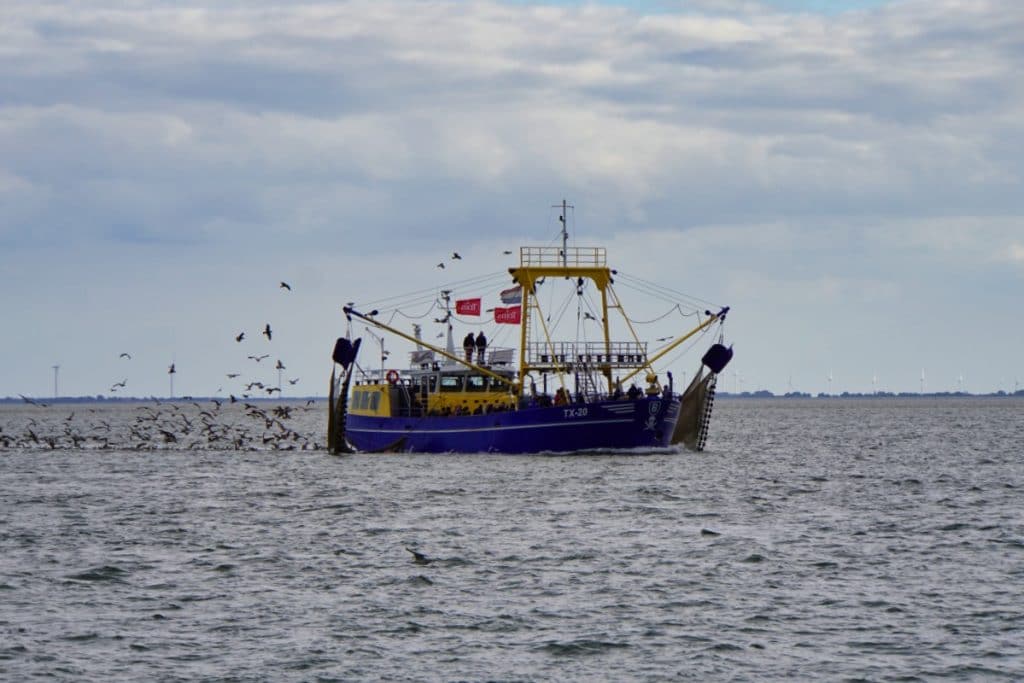
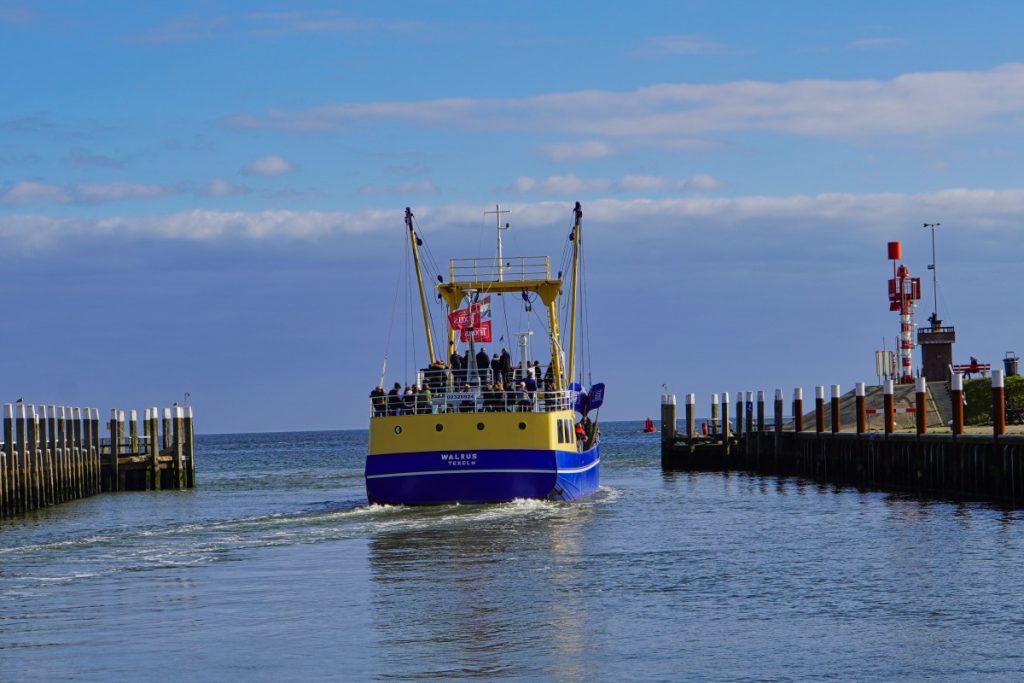
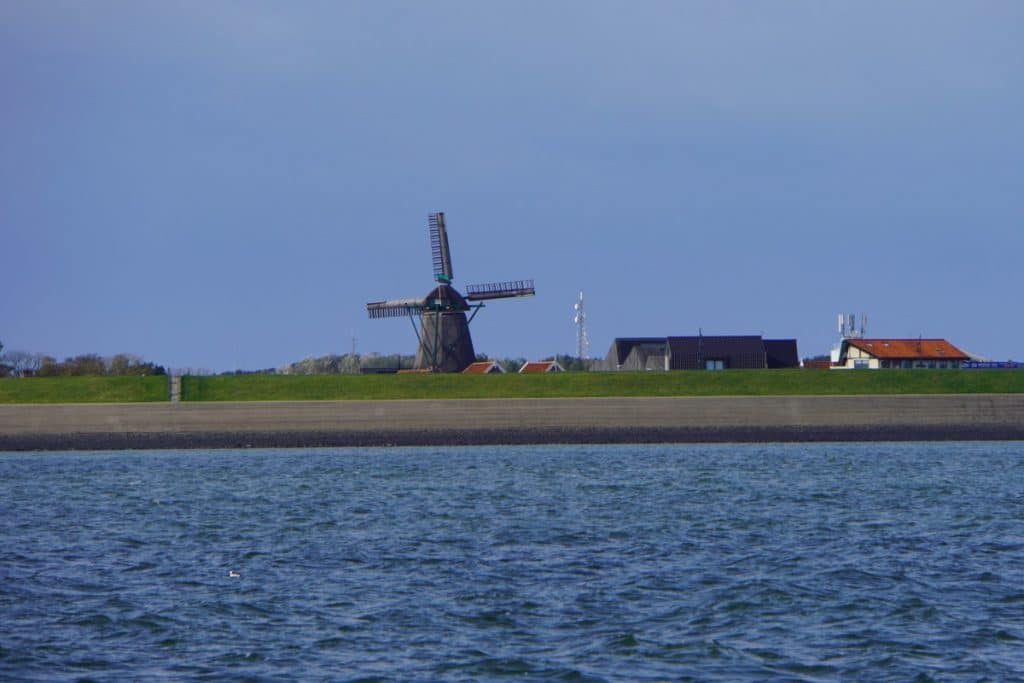
The fishing boats are moored in the harbour of Oudeschild on Texel. Some fishermen were out early and have already finished work, others are waiting for their customers to take their crab cutter for a trip into the Wadden Sea.
With one of these cutters we go out into the Wadden Sea to go crab fishing, an experience we will certainly not forget in a hurry.
Shrimping in the North Sea
Crab fishing is one of the oldest cultural techniques of North Sea fishing, in which the North Sea shrimp is caught. In common parlance, this is also called North Sea crab or shrimp.
The North Sea shrimp can be caught from the White Sea in the north of the European part of Russia to the Atlantic coast of Morocco. Smaller occurrences can also be found in the Baltic Sea, the Mediterranean Sea and the Black Sea. The North Sea shrimp is one of the most widespread shrimp species on sandy and muddy coasts.
The North Sea shrimp loves to live in areas with strongly changing salinity levels. If the water gets colder, it retreats to deeper water layers.
On the crab cutter
The North Sea crab has been caught in nets in the Wadden Sea since about the 17th century. For many years they were used as cattle feed and fertiliser. It was not until the beginning of industrialisation that it became possible to market the perishable product in more distant regions.
The fishing technique with boats and trawl nets only spread with the beginning of commercial crab fishing. Before that, the animals were caught with horses, for example, which pulled the nets behind them. Since the end of the 19th century, crab trawlers with beam trawls and bottom trawls have been going out to catch crabs.
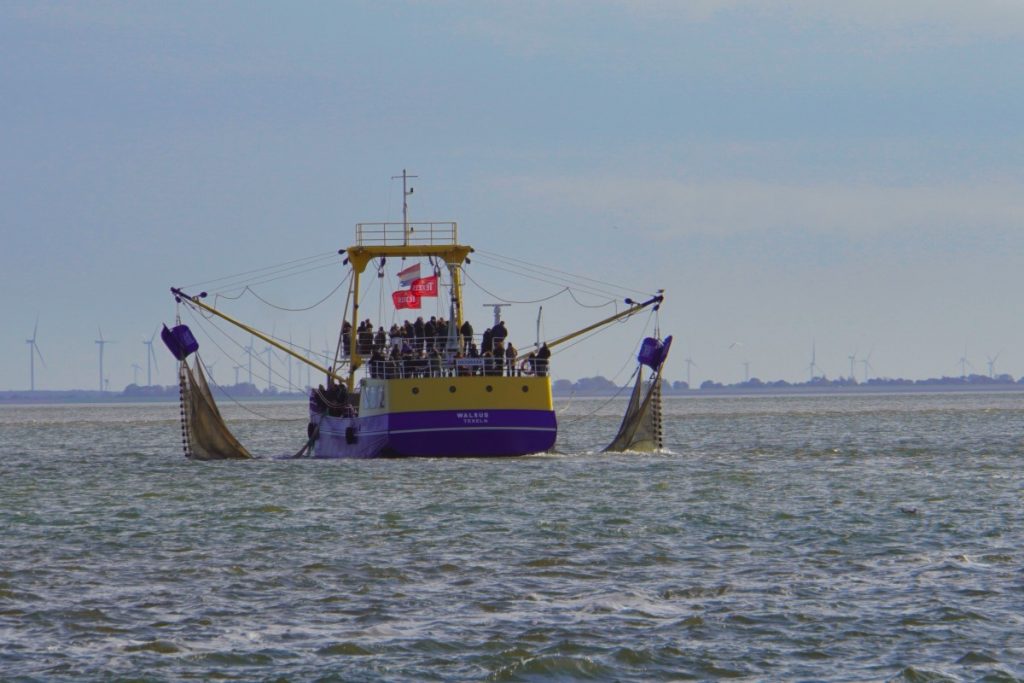
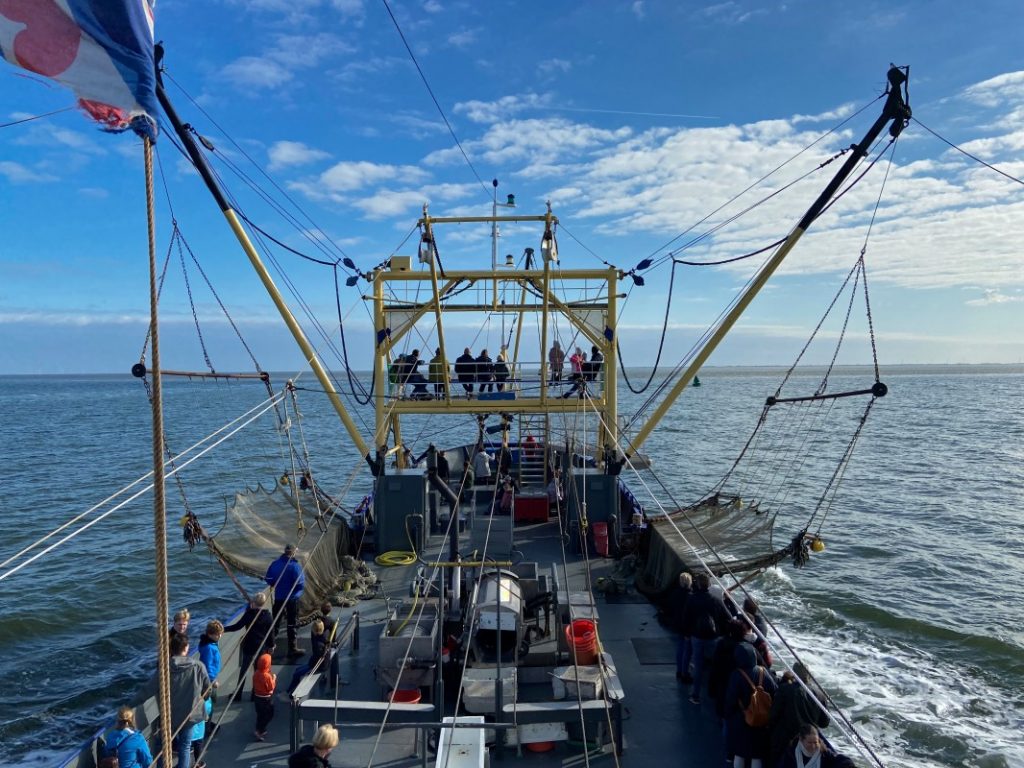
We were able to take a ride on a typical crab cutter as it is used in the Wadden Sea. This type of ship is flat-bottomed so that it can also sail at low water levels.
The TX 10 “Emmi”, with which we were travelling, has a draught of 0.50 metres. The ship is 41 metres long and just over 8 metres wide. This makes it one of the larger shrimp cutters; the typical shrimp cutters used by German fishermen are only about half that size.
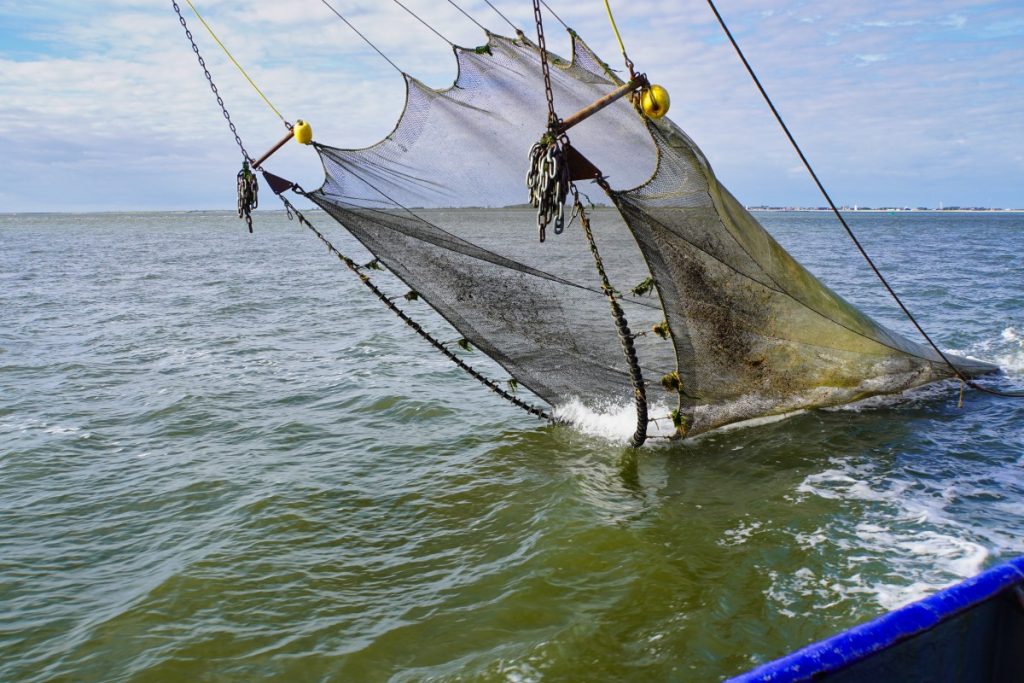
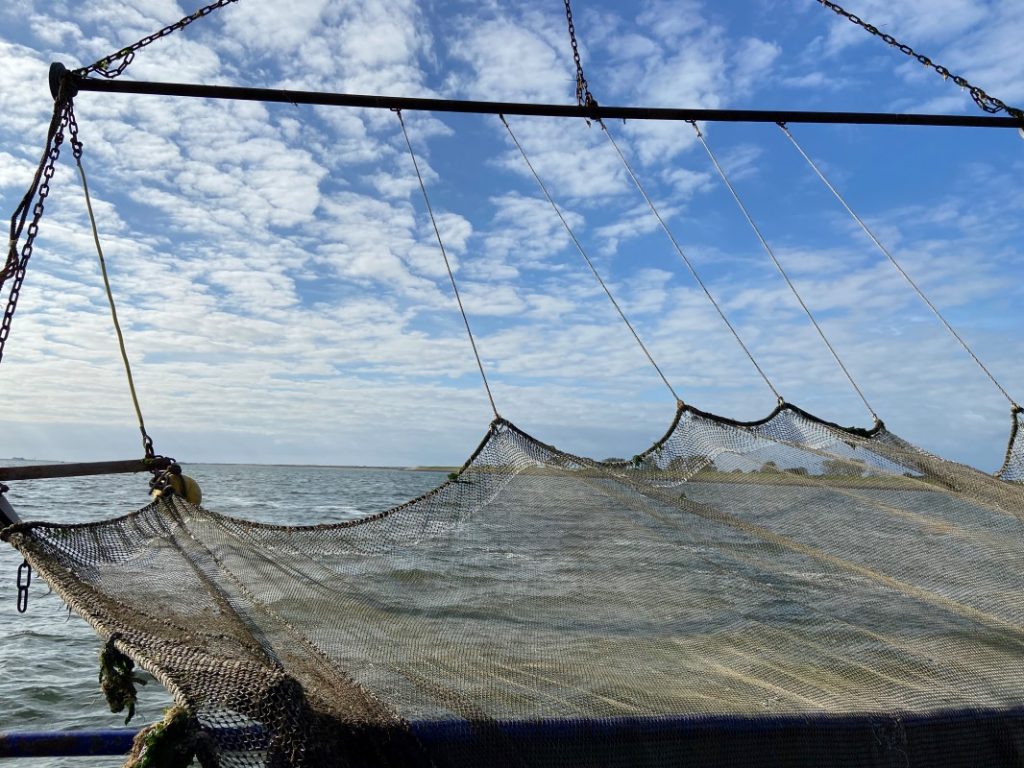
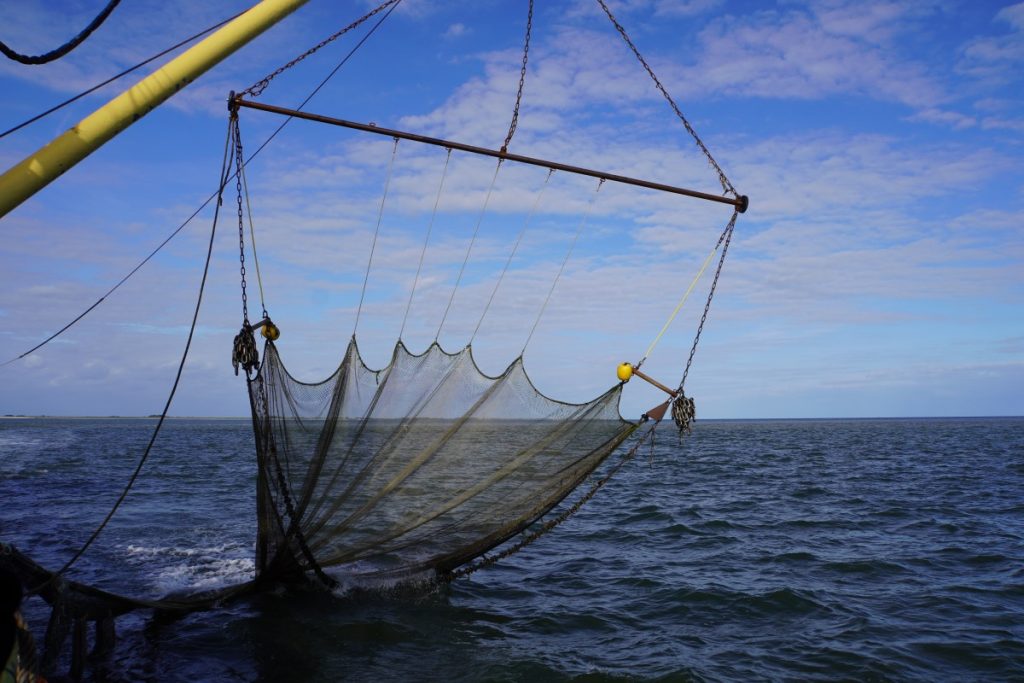
Two large outriggers hang from the side of the ship. The fishing nets are attached there, which are lowered into the water during the journey. Large rollers are attached to the nets, which then travel over the seabed. They scare up the crabs, which then enter the bottom net (kurre). During our trip, the two nets were lowered into the water twice, an impressive process that is much easier than it used to be with the help of today’s technology. Casting and hauling in the nets by hand must have been enormous physical work.
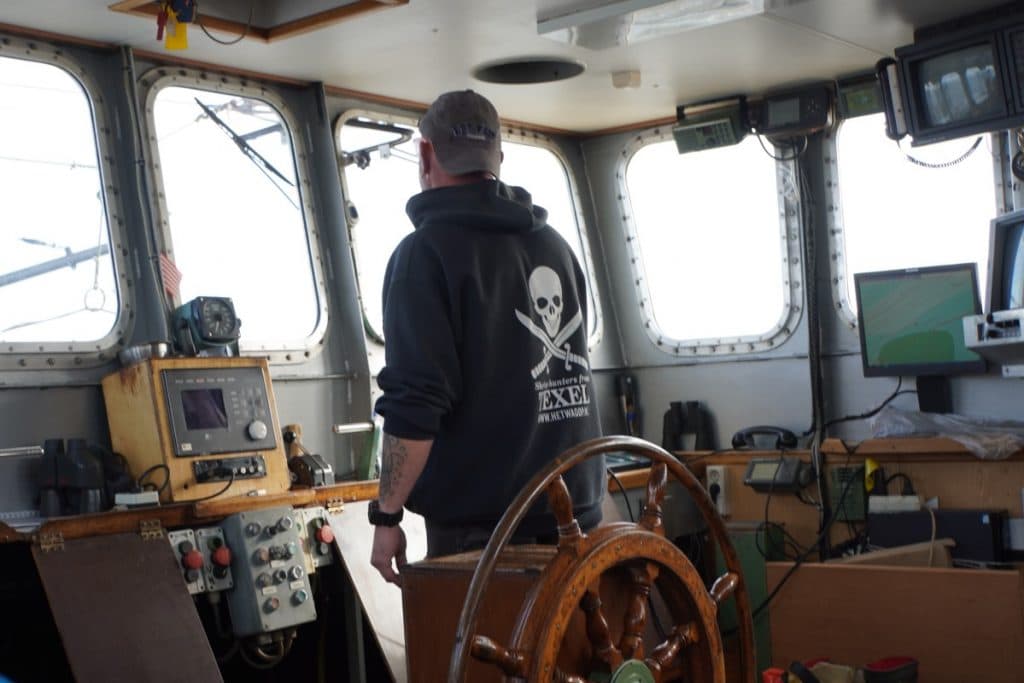
On the TX10, Captain Frido is the boss on board. He not only steers the ship, but also likes to explain a lot about what is happening on board. There are no language problems, because he talks in Dutch, English and German. You shouldn’t take every word seriously, the captain is known for his jokes. If you like, you can also visit Captain Frido in his wheelhouse. There he is happy to answer questions about the ship and crab fishing.
During the trip, which lasts about 2 hours, you can move around freely on board. The viewing platforms high above the ship are particularly popular, offering a great view over the ship. There is the possibility to buy something to drink and of course the ship also has toilets. My favourite place during the trip was at the bow of the ship. The Wadden Sea was quite calm, there was hardly any swell, and at the bow you could look out into the distance in complete peace.
Crabs on board
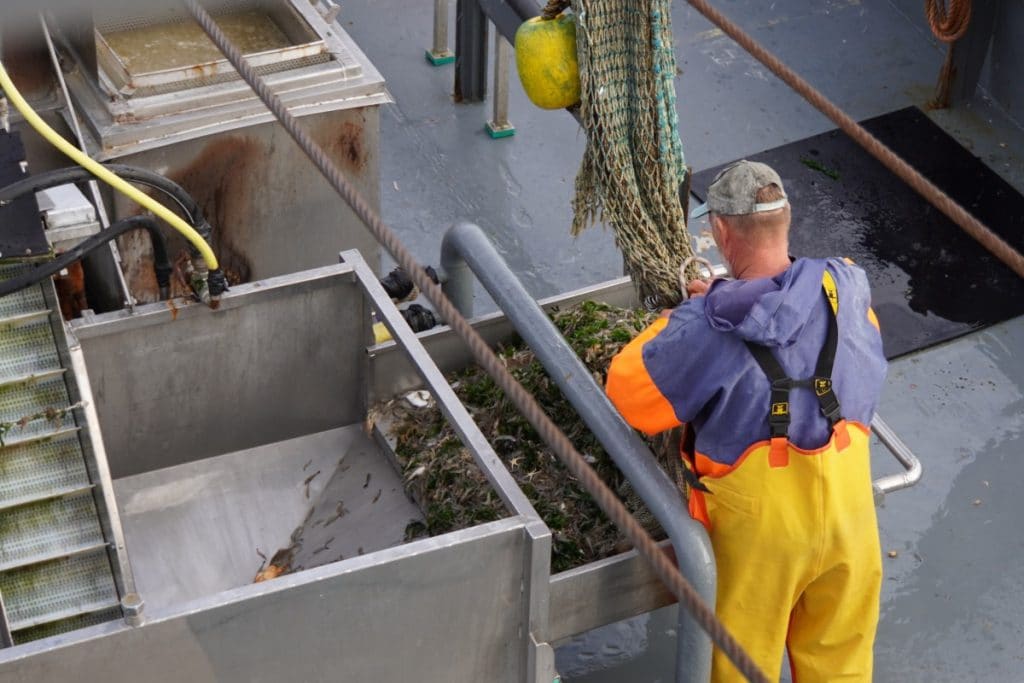
After a while, the cast nets were pulled back on board. To prevent visitors on board from standing in the swinging area, one had to step back behind safety markings. Then the nets swung dripping on board with a manageable catch.
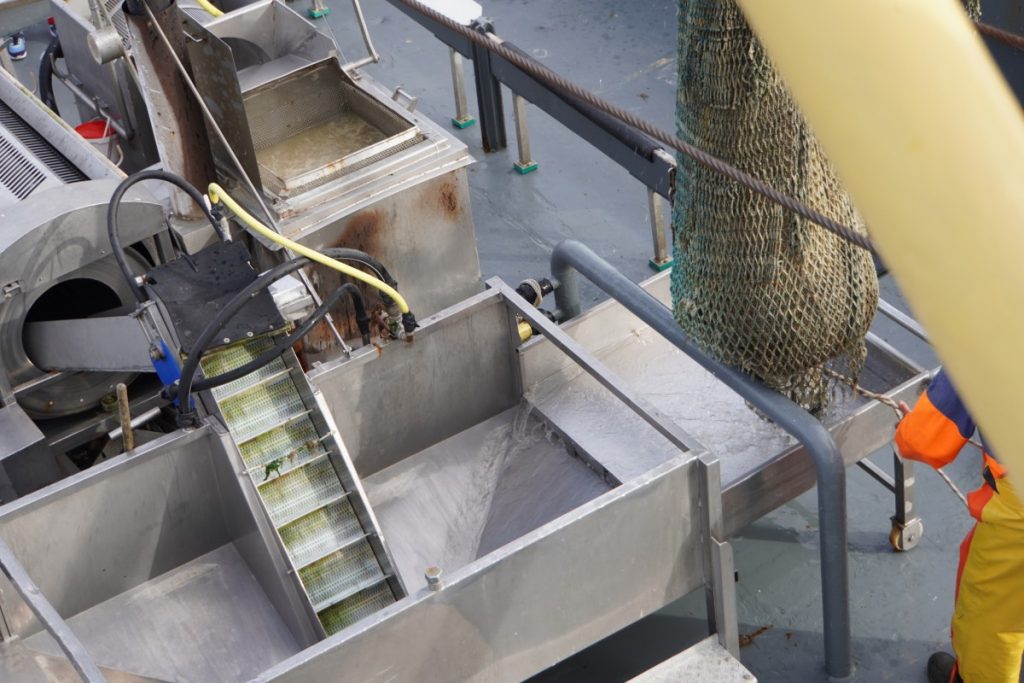
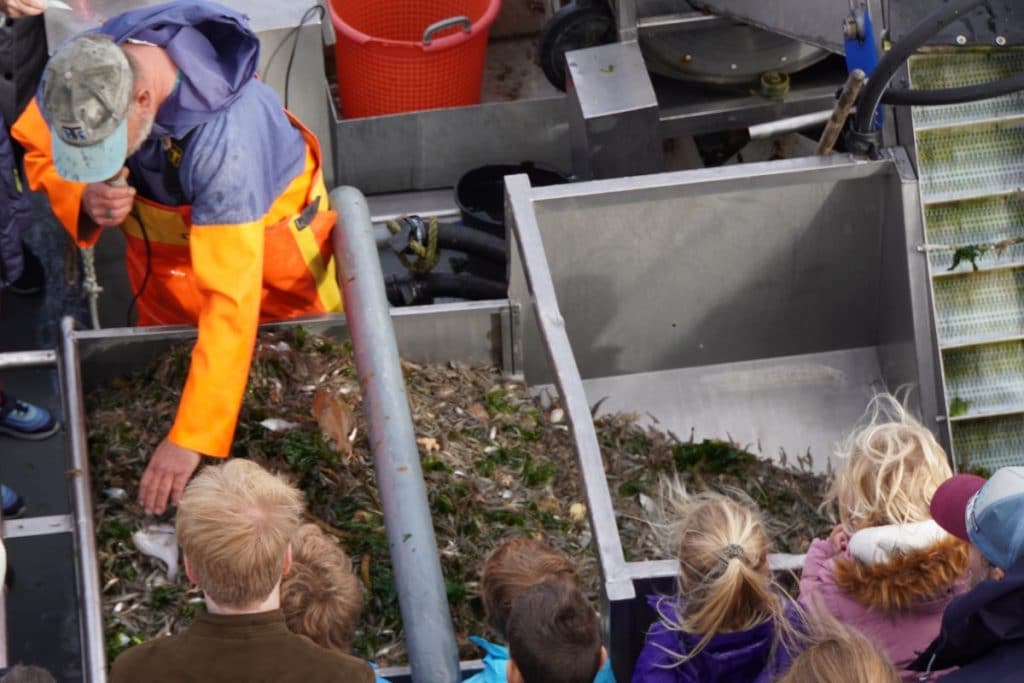
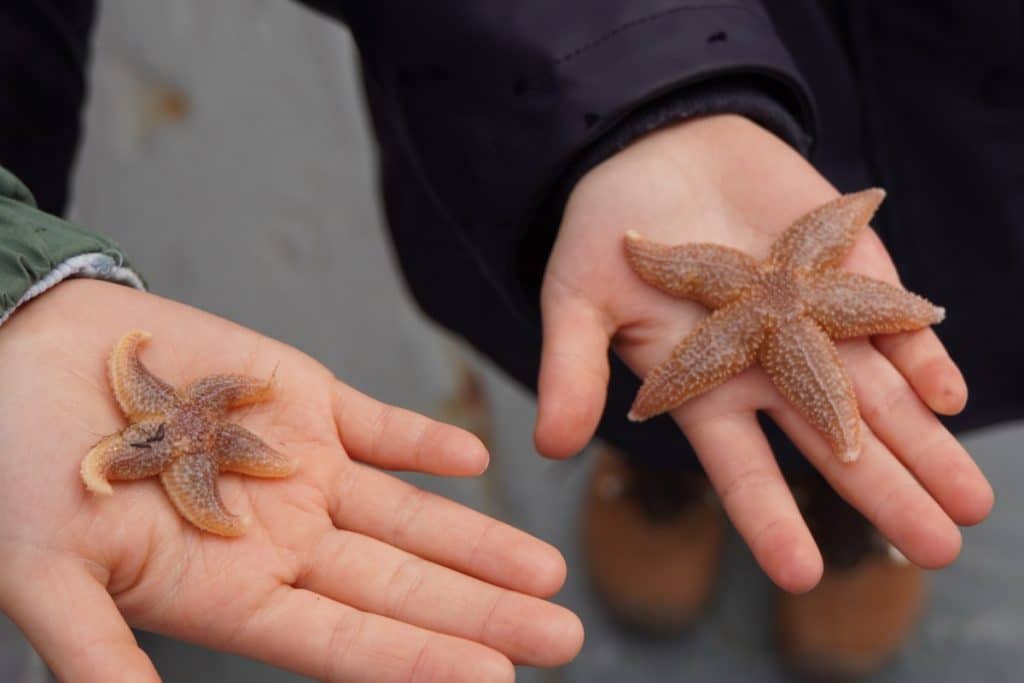
The crew emptied the catch via two catch basins and then one could approach the basins and take a closer look at the catch. Of course, not only crabs had been caught in the nets, but also a lot of by-catch. For us, a little lesson began about the creatures in the Wadden Sea off the island of Texel: flatfish, crabs, pipefish, lots of green stuff, starfish,… and of course the desired crabs.
For the children on board, an exciting and “hard” job now began. A sorting machine separated the crabs from the by-catch and the children were allowed to throw this back overboard. Countless starfish and fish ended up back in the sea (but they were also tipped back out of large vats in between). Let’s hope that at least some of the by-catch survived and did not end up in the net again.
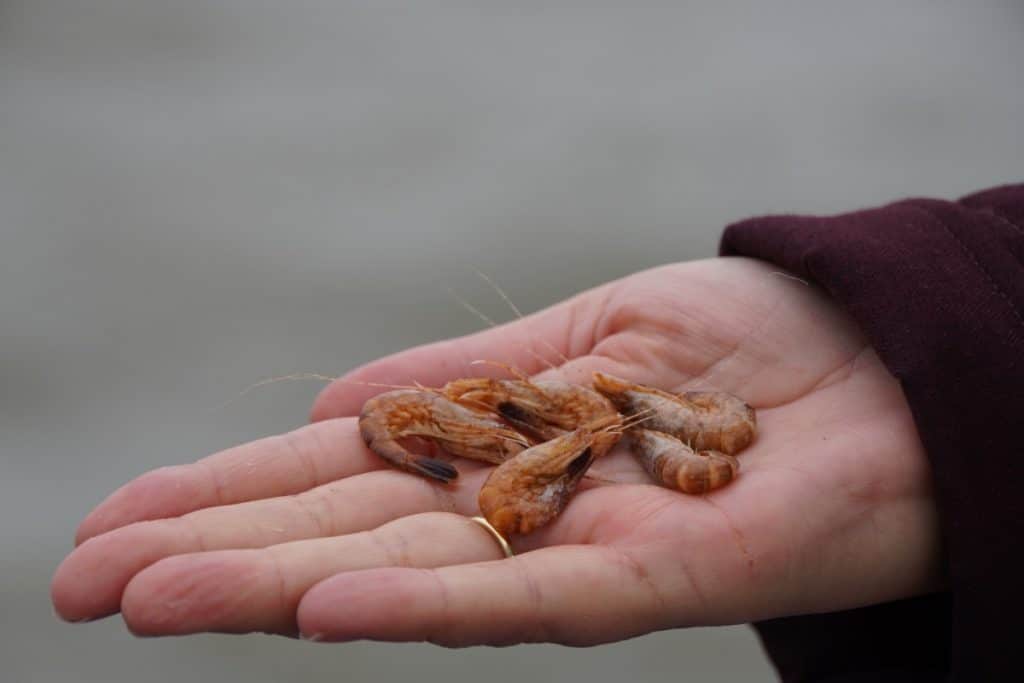
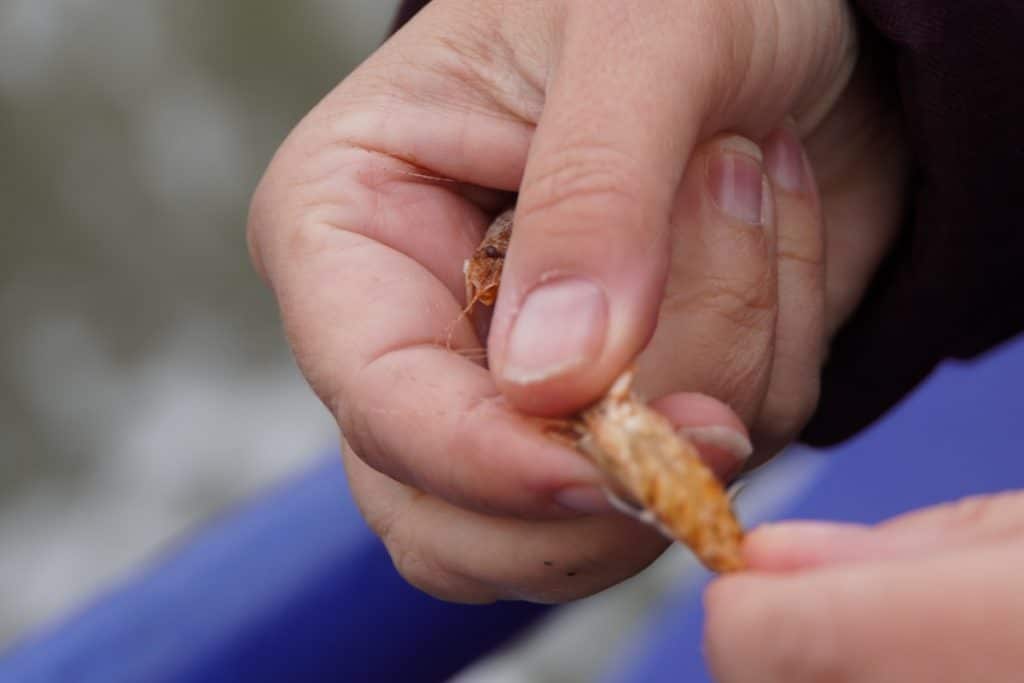
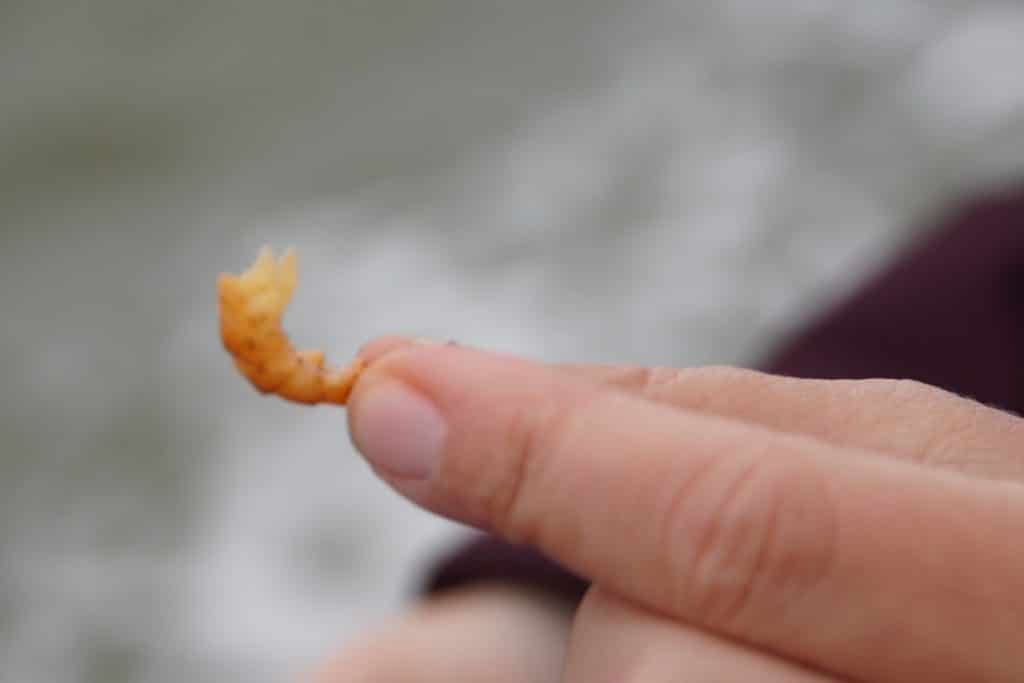
The separator transported the crabs into a large pot of boiling seawater. After a while they were cooked and now everyone was allowed to eat crabs. The animals were very small, reddish-brown and looked nothing like the crabs we know from the shops: no pink colouring and much smaller. Of course, you had to shell them, and with the size of the animals, that wasn’t particularly easy. The shells fell overboard and many a seagull tried to get hold of the remains. The taste was a delight, slightly salty and of course slightly fishy, delicious! That’s when you realise how artificial some of the crabs from the freezer or from the fishmonger, who often sells his goods kilometres away, taste.
After about 2 hours, the trip with the crab cutter was over and we pulled into the harbour of Oudeschild. Those who wanted were allowed to take a bag of freshly cooked crabs before leaving the ship.
For us, it was a great adventure to travel by ship and experience crabbing first hand. Above all, the thought of the excellent taste of the crabs will definitely keep me from buying frozen crabs for a little longer. Fresh crabs are simply unbeatable!





Leave a Reply