A visit to Warsaw definitely includes an exploration of the city’s history. The POLIN deals with the history of Polish Jews and was a real experience for me.
Many may now think – ok, another museum that deals with Jewish history in the time of National Socialism. But it is far from that. Here you travel much further back in time and learn a lot about the more than a millennium old history of Polish Jews.
The museum building
I arrive at the POLIN building and the construction impresses me so much. The dark glass outer walls are divided by a gap. This is supposed to describe the crack in the history of Polish Jews.
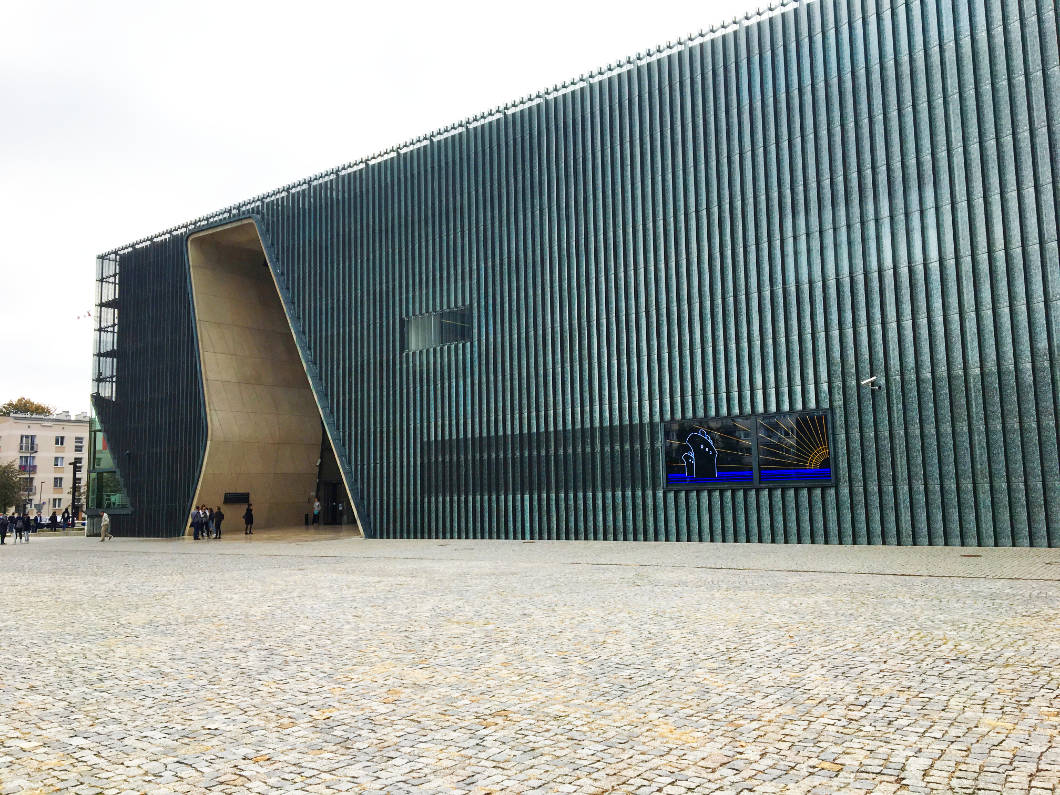
On the glass panes I discover the word POLIN and another word in Hebrew. This is also supposed to be POLIN, which translates as “Poland” or “Here you rest”.
The building stands on a historical square. This part of the city used to be inhabited mainly by Jews and was turned into a ghetto during the Second World War.
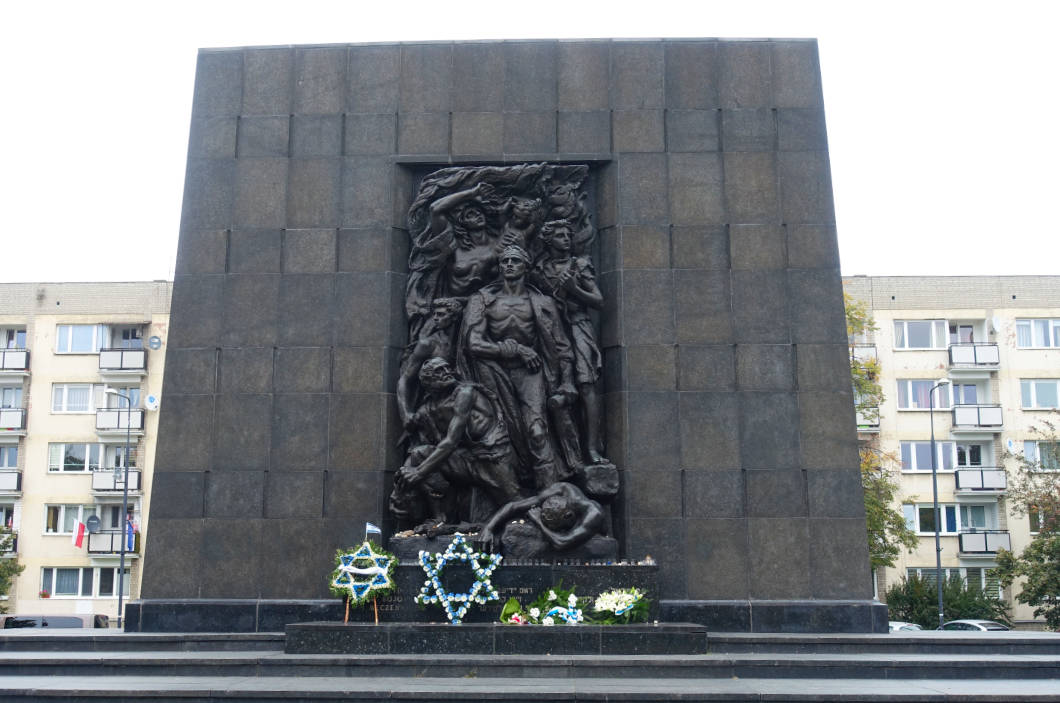
Even in front of the building you can discover some interesting places. For example, there is an impressive monument – the “Monument to the Heroes of the Ghetto”.
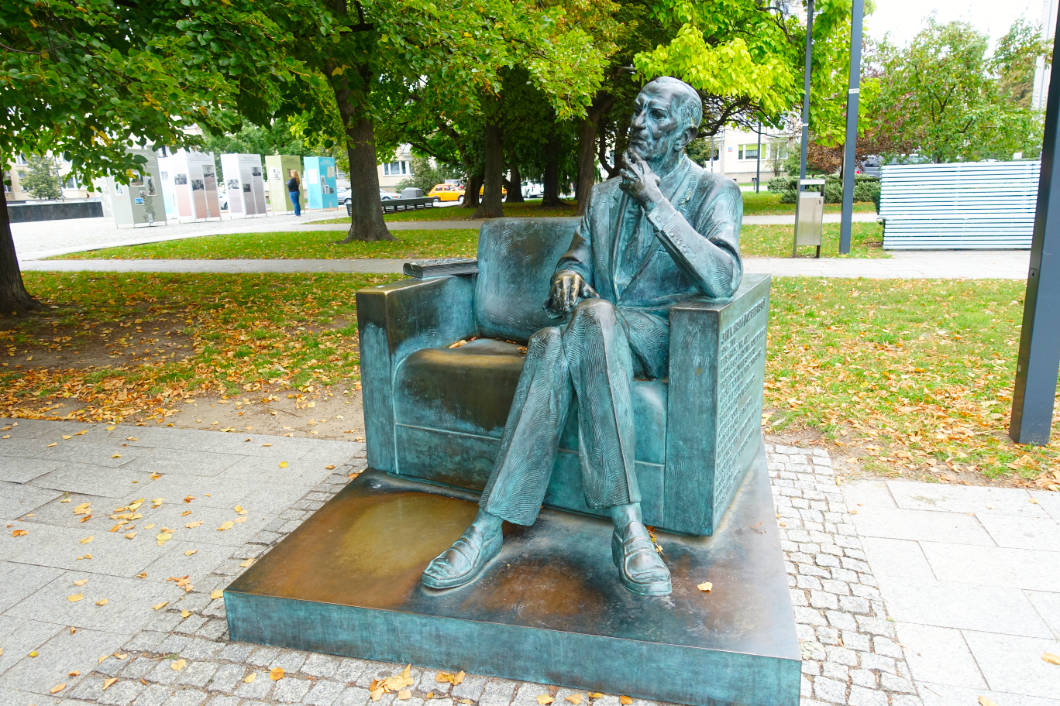
Another monument commemorates Jan Karski. He was an envoy of the Polish underground state during the Second World War and came to Great Britain in 1942. There he testified as an eyewitness before Allied authorities and reported about the extermination of Jews.
When you enter the museum building and have passed through the security check, you will find yourself in a bright and friendly open-plan entrance area. From there you can visit the permanent exhibition and the respective special exhibitions.
Permanent exhibition at POLIN
I walked through the permanent exhibition. An audio guide (also available in German and English) leads you through the 4300 m2 exhibition area. It should be noted in advance, I have not worked at all stations with the audio guide and my visit has already lasted over 2 hours. I think you should take 3 hours if you want to explore the permanent exhibition.
The exhibition took me through eight themed galleries, each dedicated to a main topic.
It begins with the emergence of the first Jewish settlement in medieval Poland and ends in the present day.
I am particularly impressed by the large number of pedagogically well-prepared stations. The exhibits and interaction stations have explanations in Polish and English. However, many things are self-explanatory or can be understood quickly with a little trial and error. So don’t worry if you don’t speak the language.
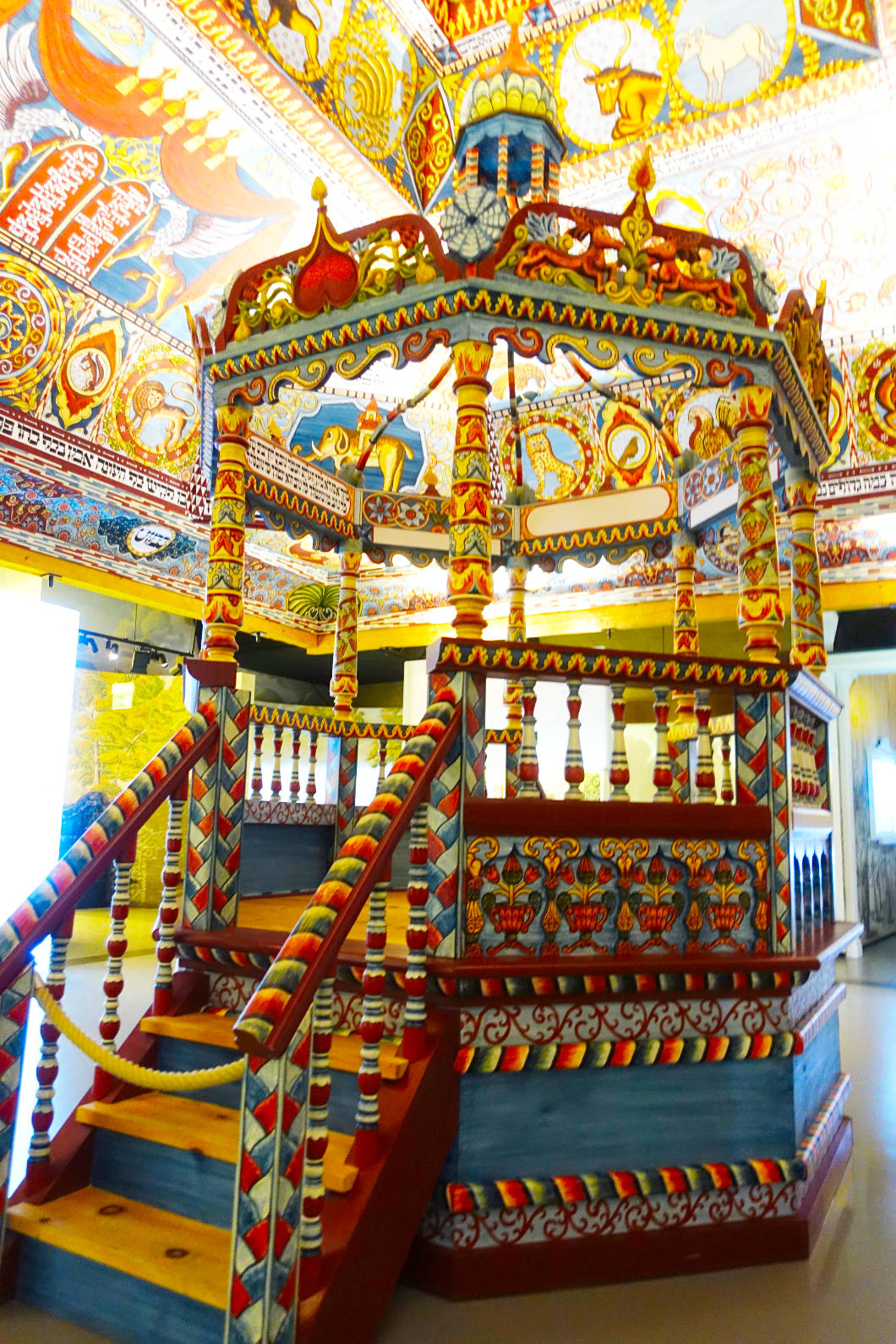
I was particularly impressed by the reconstructed vault of the wooden synagogue from Gwoździec. What bright cheerful colors. I spent quite a while in this room looking at the beautiful patterns. What a great job.
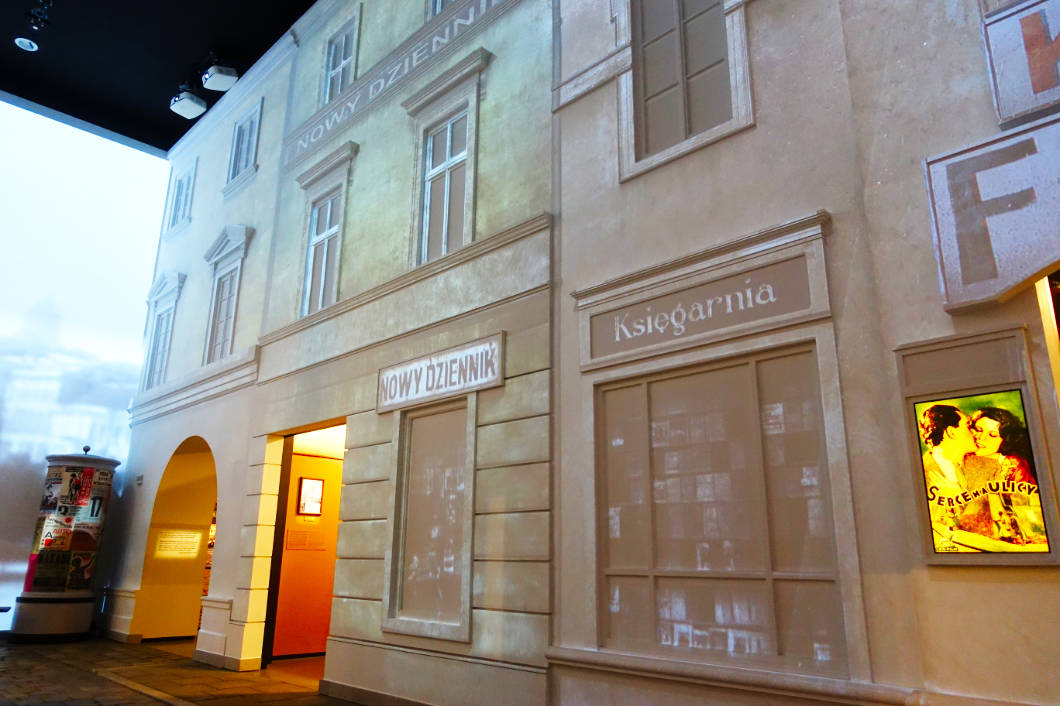
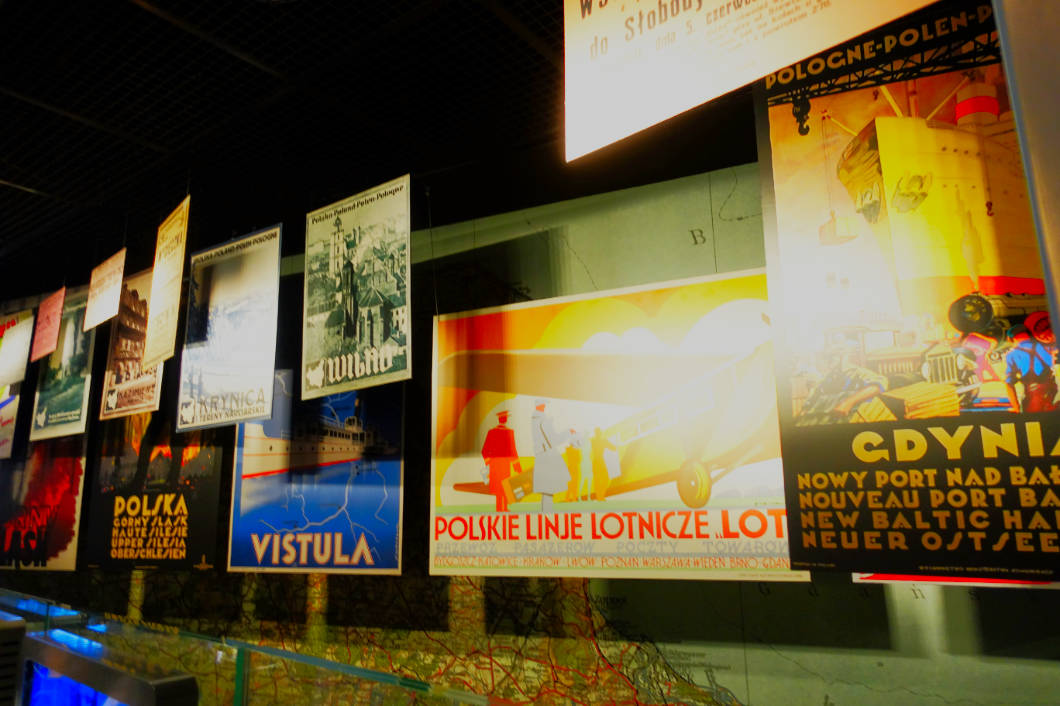
But also the area where a Jewish street of the pre-war period has been reconstructed, I found very interesting. Here you got a lot of information about the life of Jewish families in the “houses”. And – this was of course something for me – on posters I could discover popular travel destinations, some of which are certainly still just as attractive today.
Of course, the time of the Warsaw Ghetto was not neglected in the exhibition. However, I admit that I had already absorbed so much new information that I only dealt with this period briefly.
At the end of my visit, I was really almost overwhelmed by the amount of information. I think that if you really want to take in and look at all the points intensively, you should plan several visits. This way, one can deal more intensively with the individual areas presented. The topic is simply too detailed and too well presented for one to just “run through” here and thus get an incomplete picture. I will definitely go through the Museum of the History of Polish Jews in Warsaw again with a different perspective.
Address:
Anielewicza 6,
00-157 Warsaw, Poland
Approach:
Bus: Line 111 and 180 stop Nalewki-Muzeum
Tram: Line 15, 18, 35 Station Muranow und Line 17,33,41 Station Anielewicza
Opening hours:
Monday, Thursday, Friday: 10-18 h
Wednesday, Saturday, Sunday: 10-20 h
Tuesday closed
Attention! Last admission always 2 hours before closing!
Entrance fees (main exhibition):
Adults: 45 PLN
Audio guide: 10 PLN
Discounts are available!
Thursday: free admission to the permanent exhibition and temporary exhibition
Disclosure: The visit to the museum was provided to me free of charge.

Leave a Reply