Crimmitschau is located very close to Zwickau and is a typical industrial town. Mainly textiles were produced here and the nickname “city of 100 chimneys” was more than justified for many years.
In 1901, there were 53 cloth and buksin factories, 22 spinning and twisting mills and 10 dyeing mills in Crimmitschau. The industry in the town was also reflected in the population structure. The almost 7000 workers lived in the simplest conditions in workers’ quarters. At the beginning of industrialization, the factory owners still lived in rather functional apartments and preferred to put the money they earned into modernizing the factories.
This changed at the latest after the Franco-Prussian War. The factory owners’ income grew due to the enormous demand for textiles and now people wanted to show off their wealth and live in luxurious apartments. The factory owners were drawn to the outskirts of the city, preferably to the area around the Pleisse valley. Here, they did not live directly in the valley basin and not in the wind direction, which was frequent, and were thus not “bothered” by the polluted air from their own factories. The factory owners could afford to build pompous villas here, because it is said that around 1912 about 20 millionaires lived in the city.
Emergence of the villa district in Crimmitschau
The villa district of the city was built mainly in the period from 1880 to 1916. The city issued precise building regulations for this purpose. These stipulated, for example, that villa-like apartment buildings and tenement villas were to be built on the outskirts of the newly planned quarter. In the core of the quarter, only detached villas were allowed to be built. These had to have two floors and could only be inhabited by 1-2 families. The property had to be bordered to the street side with a wrought iron fence on natural stone plinths and the garden design had to be appropriate.
Three types of villas were built in Crimmitschau that complied with these regulations:
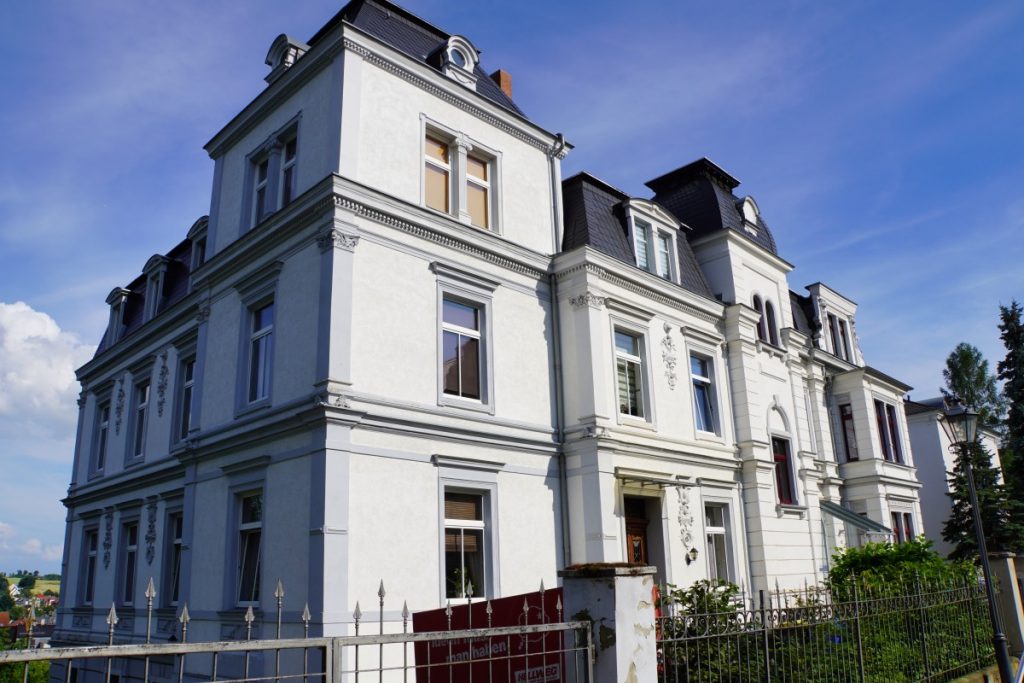
blocky type These villas are characterized by clear and angular exterior shapes of the building. The main front faces the street front, the roof is flat and there is a developed attic.
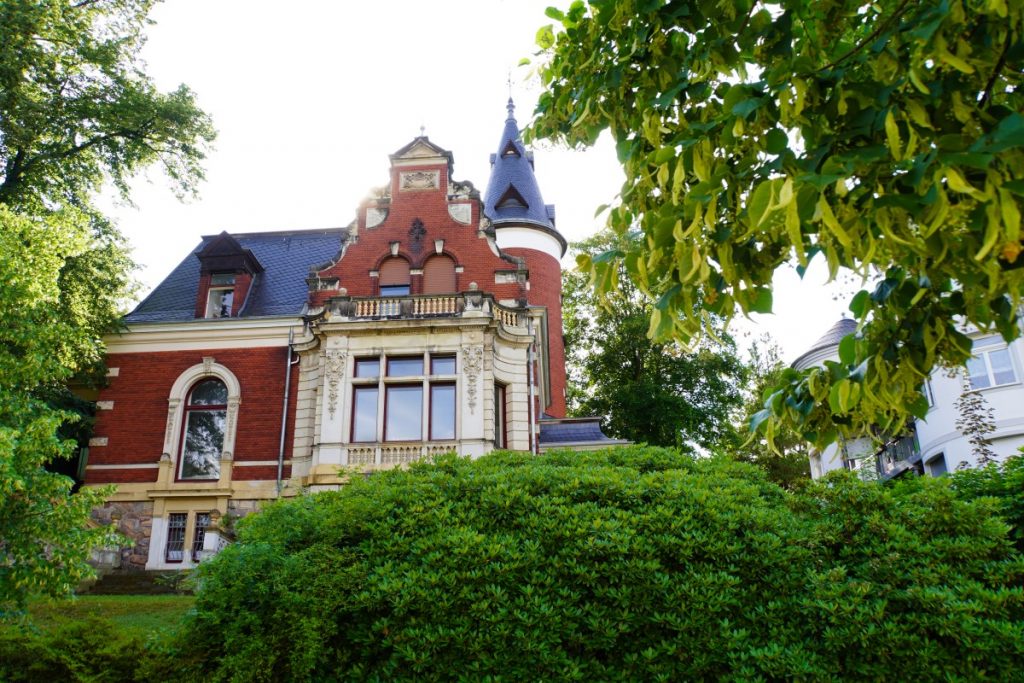
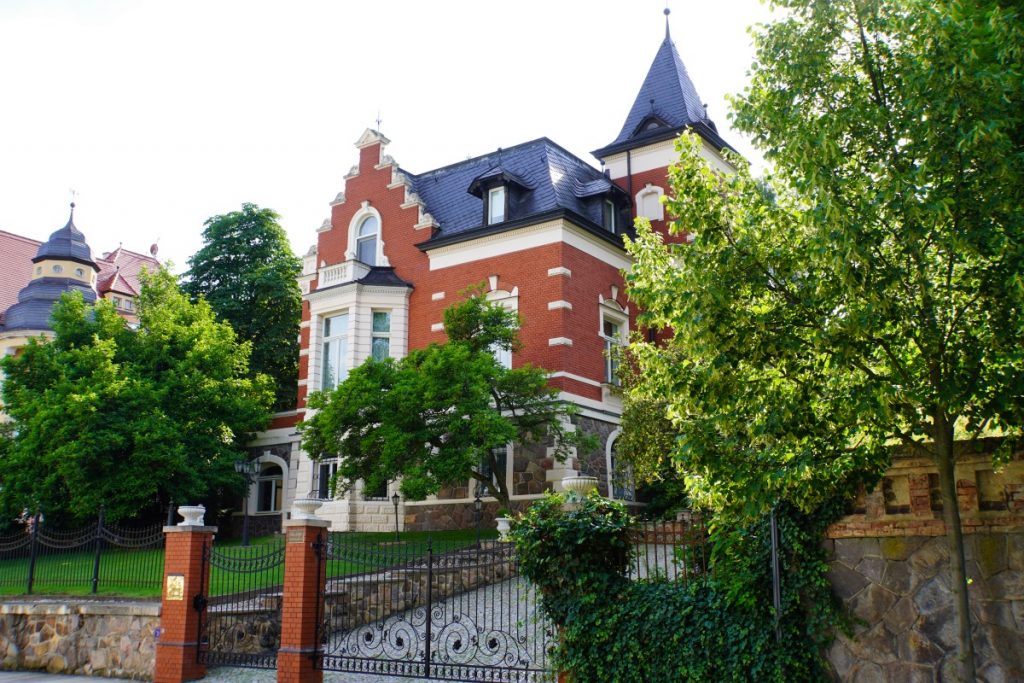
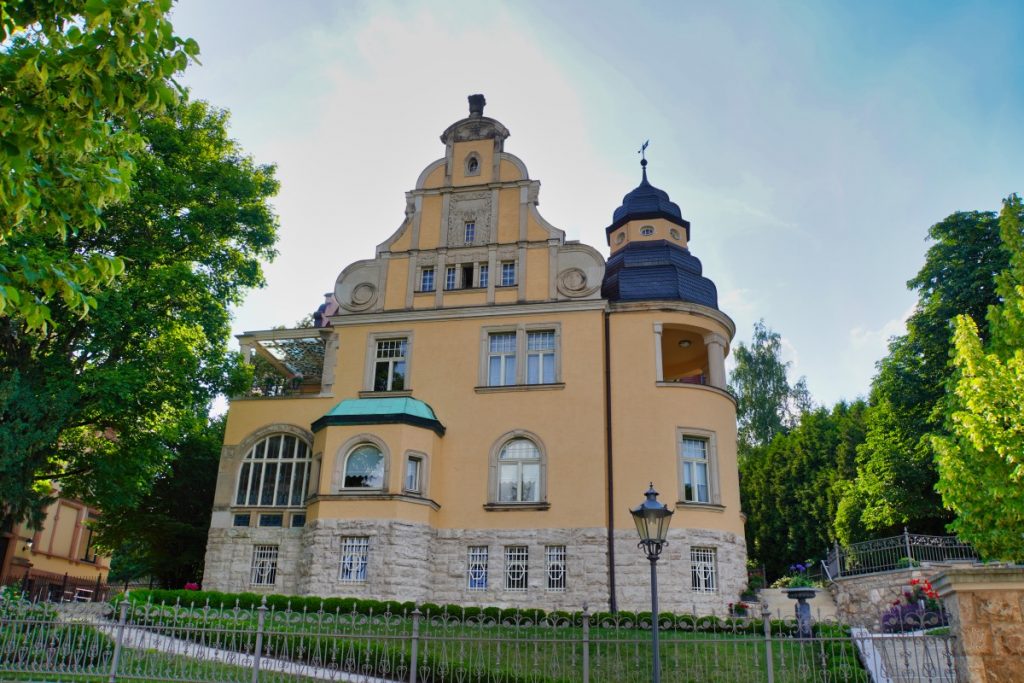
Castle type These villas resemble the German castle as they were built in the Middle Ages. There are attached oriels, porches, small towers and decorative gables. A very playful building, which made the wealth very obvious to the outside.
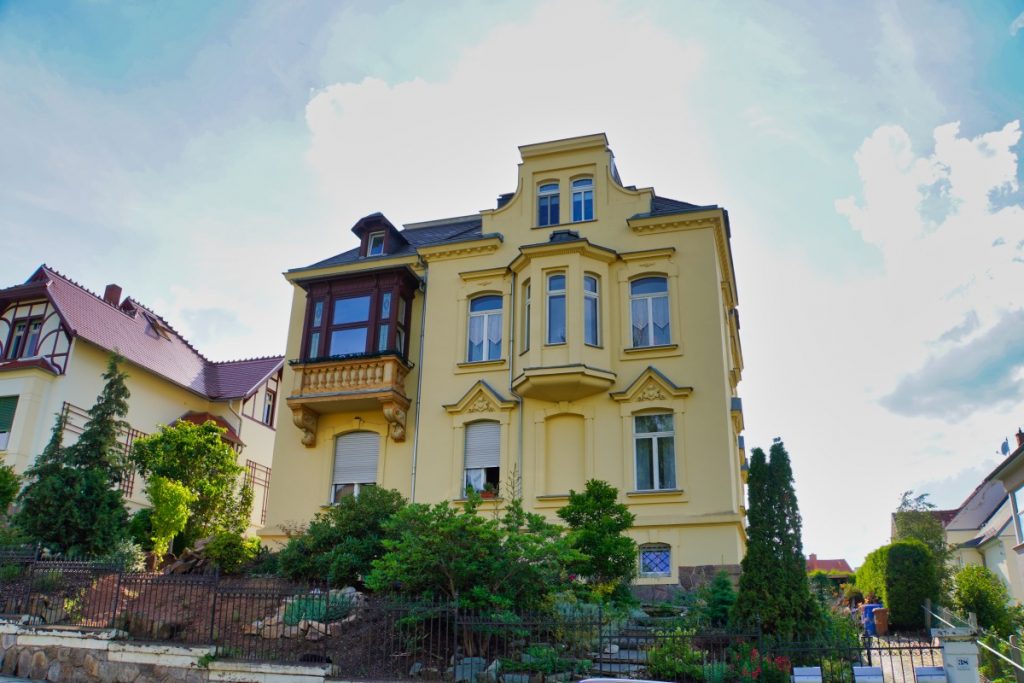
Town house type This type of villa is usually an apartment house located on a main street. It has a simple design from the outside and usually has a gable roof.
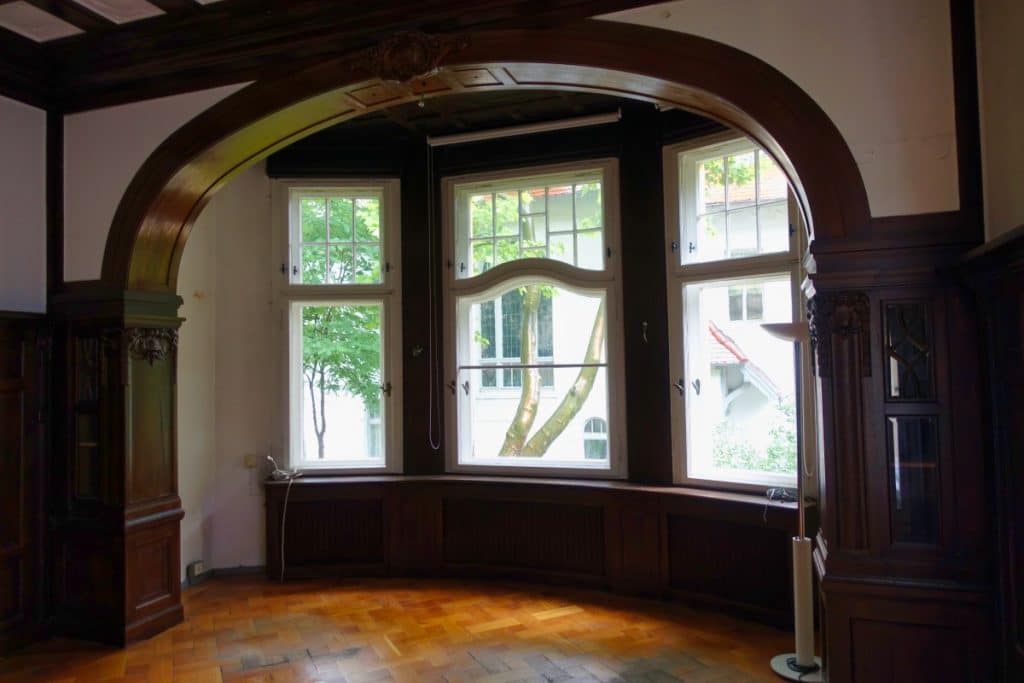
The interior design of the villas was not regulated by building codes and so the owners could realize their wealth and interests here. For example, there is a villa whose owner had a telescope installed in the roof for stargazing.
Development of the villa district after the Second World War
After the war, the factory owners were expropriated and many moved away from Crimmitschau or had to give up their houses. A wide variety of “new owners” moved into the villas, for example FDJ, state-owned enterprises or city and state administration. After the political and economic turnaround, most of the villas stood unused in the city and gradually fell into disrepair.
Fortunately, there were and still are enthusiastic people who bought, renovated and restored these houses. Not all houses shine completely in their former glory yet, but more and more are.
Lindenstraße in Crimmitschau
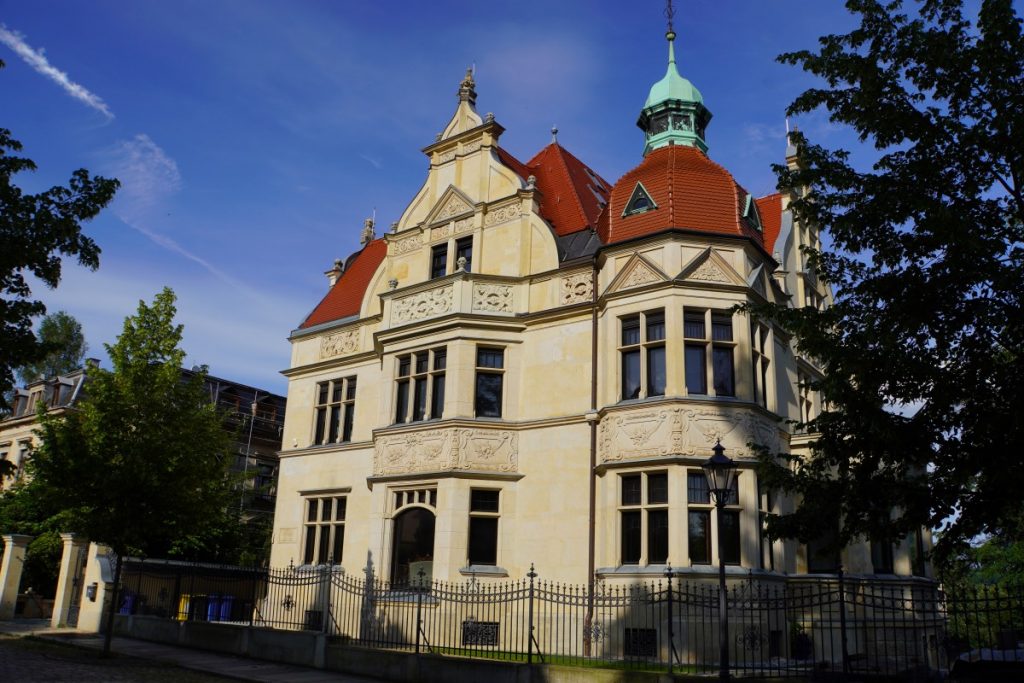
Walking along the Lindenstraße we could see some beautiful villas from the outside. Each building had something special and it was almost like a walk through the past.
The villa at Lindenstraße 18 once belonged to one of the city’s most influential families, the cloth manufacturer Reinhard Kempte. Later, the Zöffel family moved into the house. The family had the villa remodeled and especially the ceiling design in the Angel Room must have been beautiful. After the Second World War, several families moved into the villa and later the house stood unused in Crimmitschau for a while. In 1996, a descendant of the family got the house back and renovated it.
Only a few steps away, at number 20, the cloth manufacturer Ferdinand Ehrler had built his villa. He had it splendidly furnished by the furniture manufacturer Oskar Reichenbach.
The house number 23 in Lindenallee in Crimmitschau was built by the cotton wholesaler Reinhard Strauß by a Berlin architect. The owner ran his business worldwide and wanted to illustrate this in a villa. He had a very special leaded glass window made that depicted the path of cotton.
Villa – Gabelsberger Straße
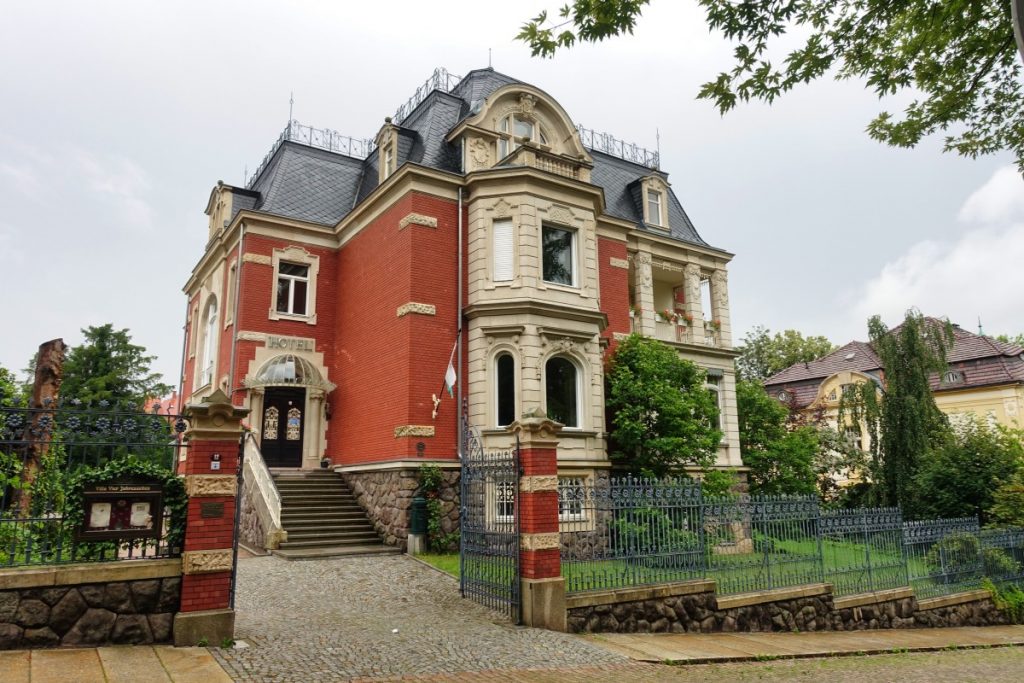
We had the opportunity to take a closer look at two of the many villas: the Hotel Villa Vier Jahreszeiten and the villa right next to it.
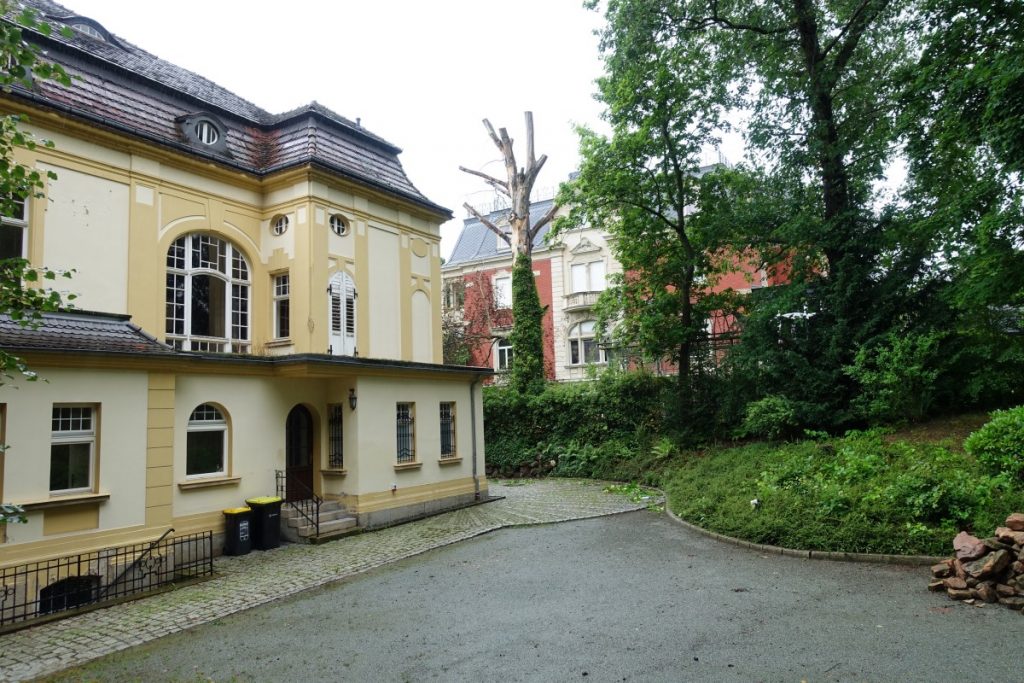
First we went to the not yet renovated villa right next to the hotel. The current owners had acquired this only recently and are planning to build an extension to their hotel here. For us, it was quite exciting to go from room to room, always with the thought in mind that at some point guests will move in here. It still needed some imagination, but even in the non-renovated state, the rooms impressed me.
However, this was only a foretaste of what awaited us in the neighboring villa built in 1904.
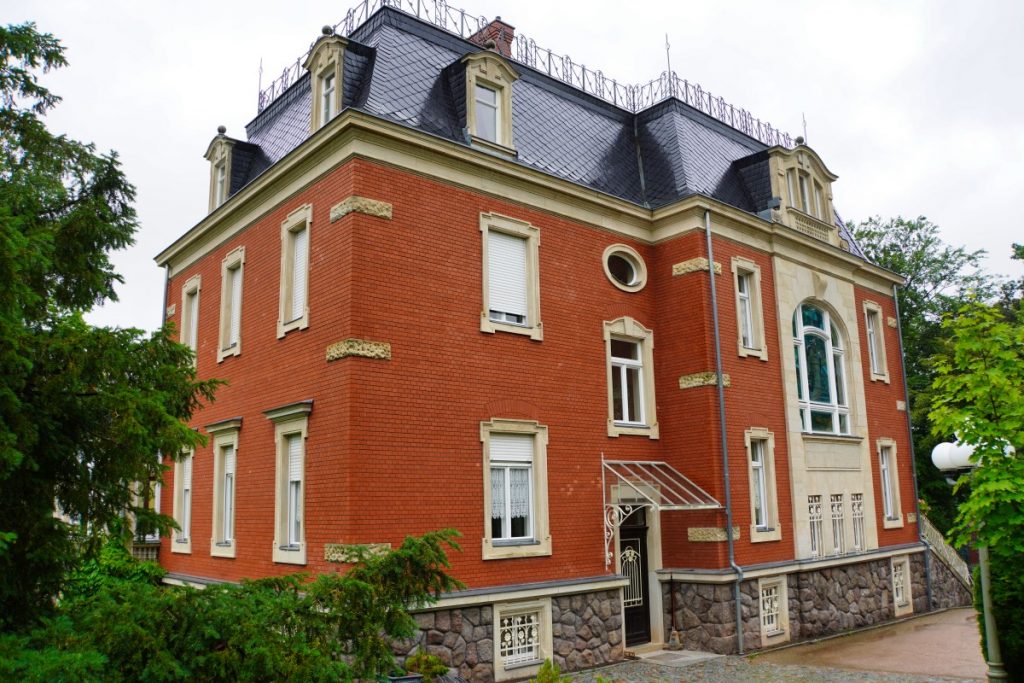
Today a hotel, the villa was formerly known as the “Eskimo Villa” in Crimmitschau. The house had received the name for several reasons. The owner Bernhard Schönfeld was a textile manufacturer and his factory produced very thick and warm fabrics for winter clothing, the so-called Eskimo coat fabric. He was one of the somewhat progressive homeowners and, unlike the fireplaces that were still common at the time, had central heating installed in the rooms. However, this did not seem to work properly and it is said to have been very cold in the house. Whether the owners, who always look very grim and aloof in pictures, had to wear their warm clothes in the house is not known to me, however.
In 2000, the current owner acquired the building and lovingly rebuilt it. Since 2006 it has been used as a hotel.
The villa was built in the style of historicism in solid construction and was one of the larger villas in the city with 1600 m² of floor space. I find it especially nice that the facade design is beautifully restored and so you can imagine very well how the building once looked.
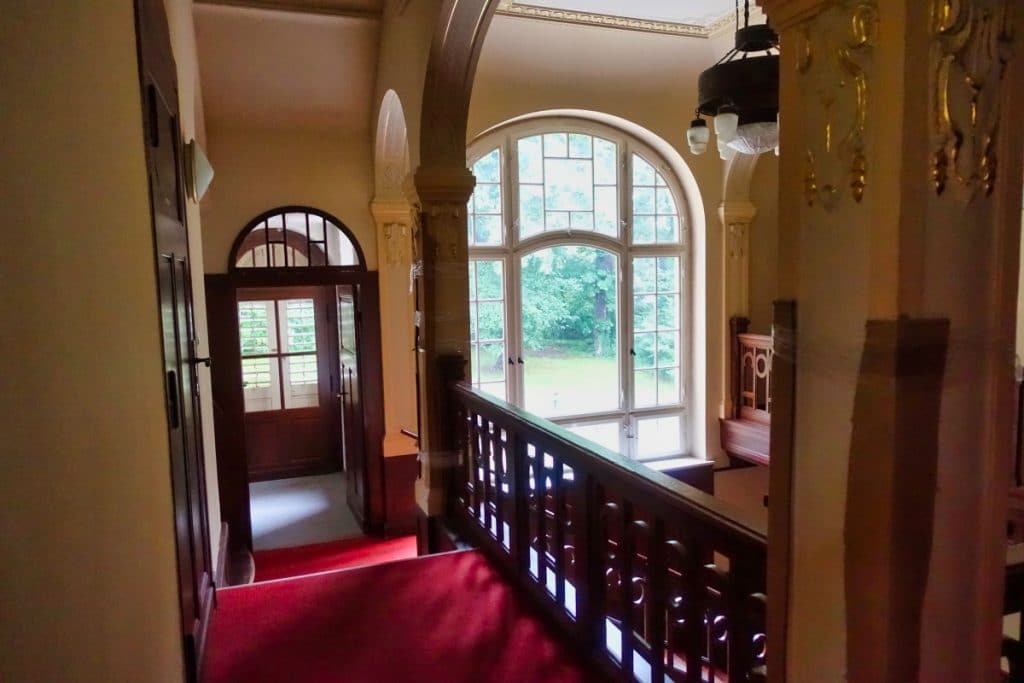
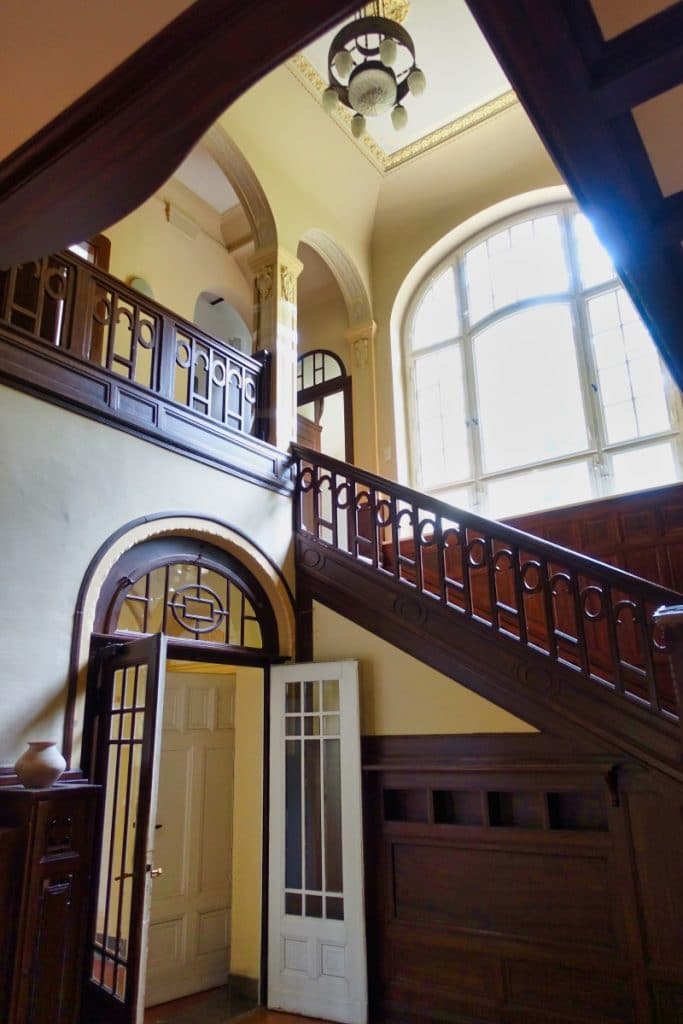
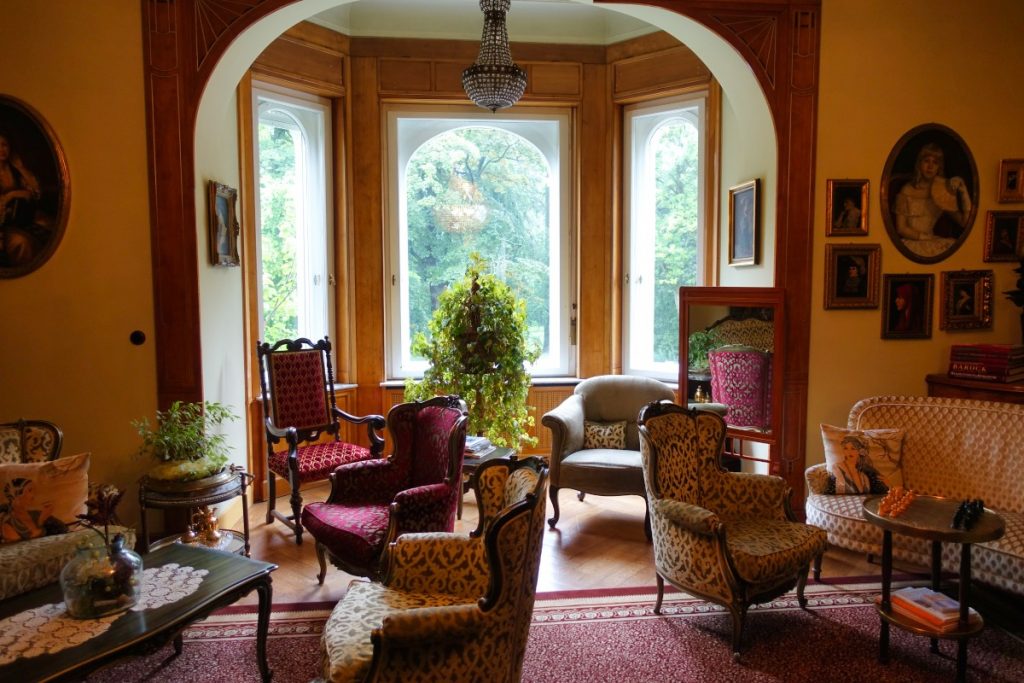
Stepping into the building, it is almost like entering a museum. The interior of the staircase and the entrance area consists of valuable materials, stucco work and decorative paintings. In the rooms there is antique furniture from the imperial period, which the owners have collected.
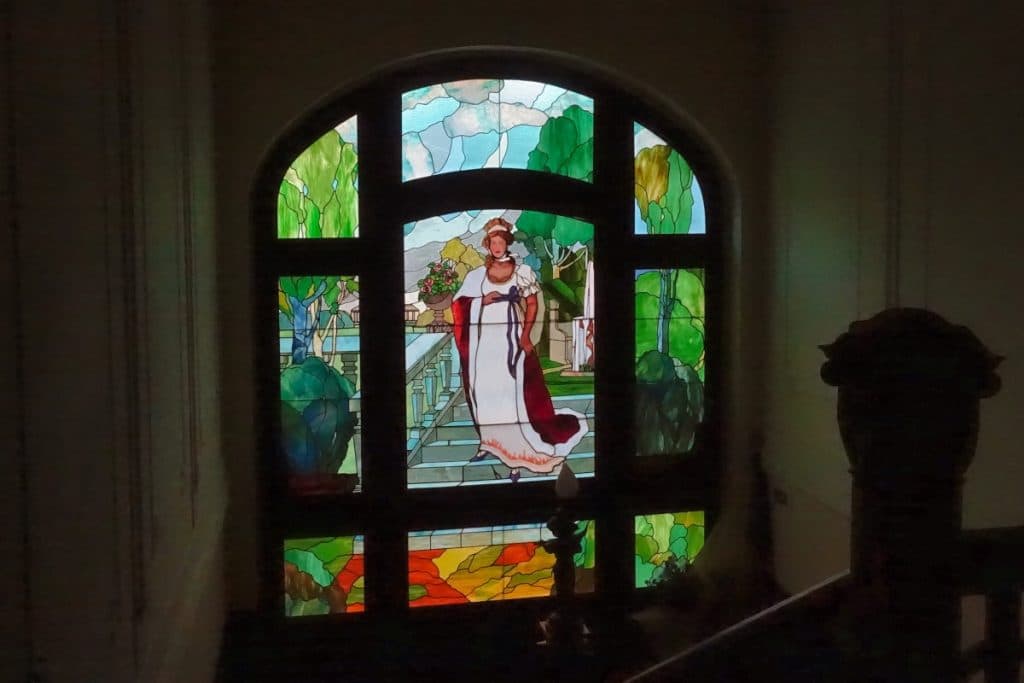
Queen Luise is present throughout the entire house. Already in the staircase, the Prussian queen looks down on the visitor from a huge stained glass window. Paintings of Luise hang on the walls, there are books about Luise, and actually there is nothing about Luise that you won’t find in the villa. Some may find it almost too much, but the owners like it and I think it adds to the charm of the house.
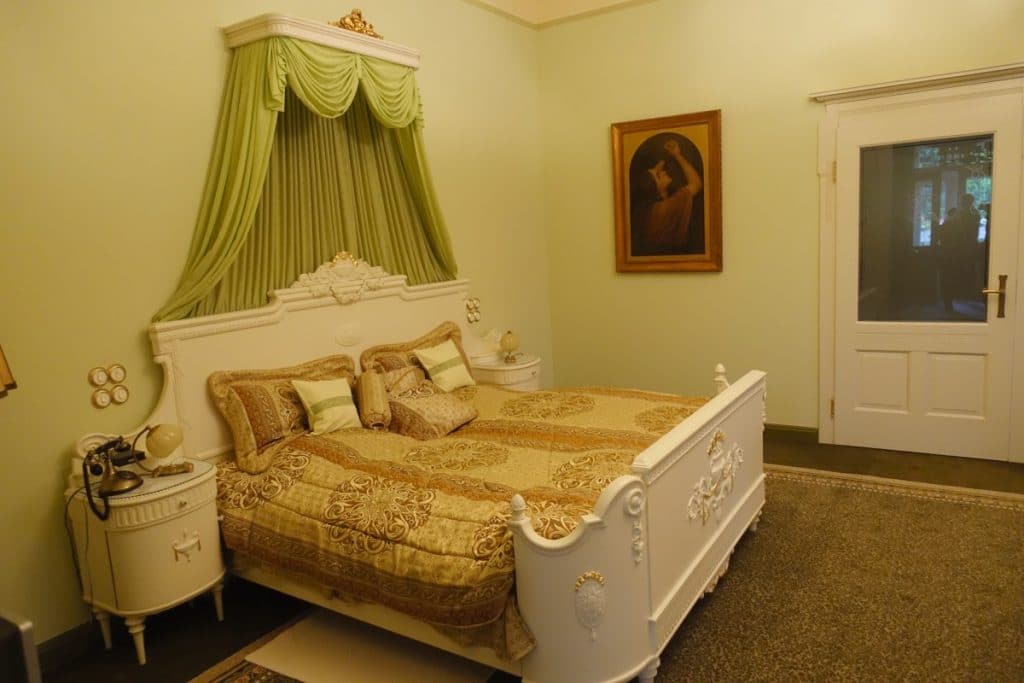
The hotel rooms are individually furnished, no two rooms are alike and each room is coherent in itself. Who stays here, stays in nobly furnished rooms – of course with the Queen Luise – and with recreational character.
By loading the video, you agree to YouTube’s privacy policy. Learn more




Leave a Reply