Philopappos Hill – the best viewpoint of the Acropolis
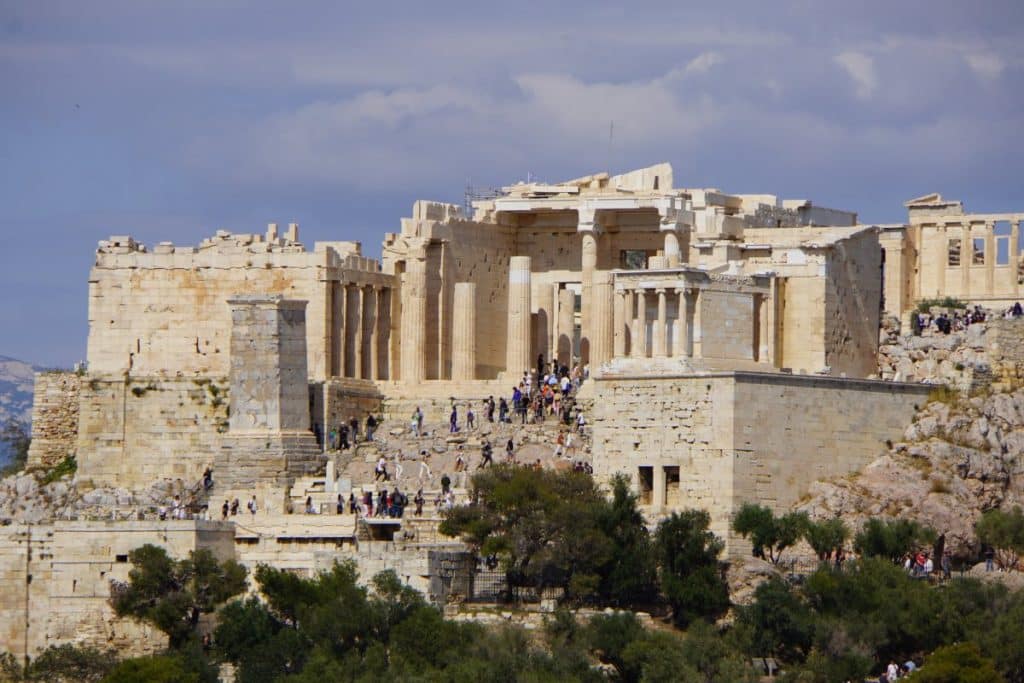
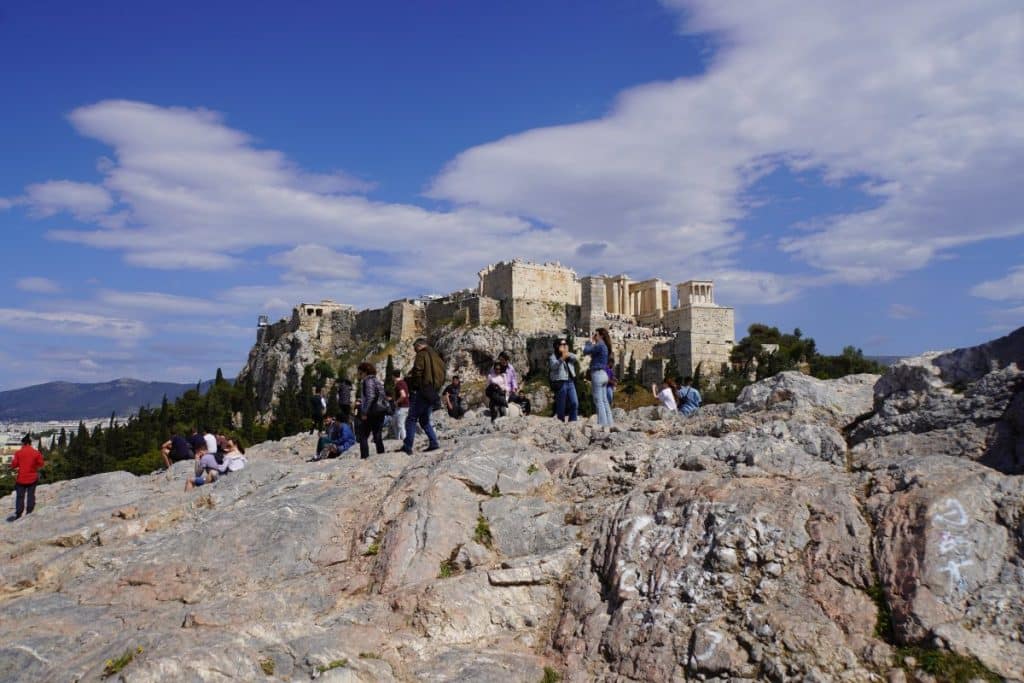
Philopappos Hill in Athens offers a unique combination of history and natural beauty. An important historical site and remarkable natural monument, the hill is a place that offers visitors both glimpses of the past and breathtaking views of the surrounding city, including the famous Acropolis.
Hügel ist vielleicht nicht wirklich der richtige Begriff für die fast 150 Meter hohe Erhebung mitten in Athen. Für mich als „Flachländer“ ist der Weg auf den Philopapposhügel schon fast eine „Bergbesteigung“.
The small chain of hills consisting of the Pnyx, the Nymph Hill and the Philopappos Hill (in the Middle Ages also called the Muses Hill) are located in southern Athens and are visible almost everywhere in the city area. About 300 years B.C. there was still a fortress at this strategically important place, which protected the road to Piraeus. Today nothing of it is to be seen any more.
Hill Pnyx
The Pnyx is located on one of the hills and was the place where the people’s assembly was once held. From the former building, which looked like a theater, nothing can be seen today. Here once sat about 6000 people, which was a fraction of those entitled to vote, and decided on the coexistence of the population. Over the years, the capacity expanded to an estimated 24,000 citizens.
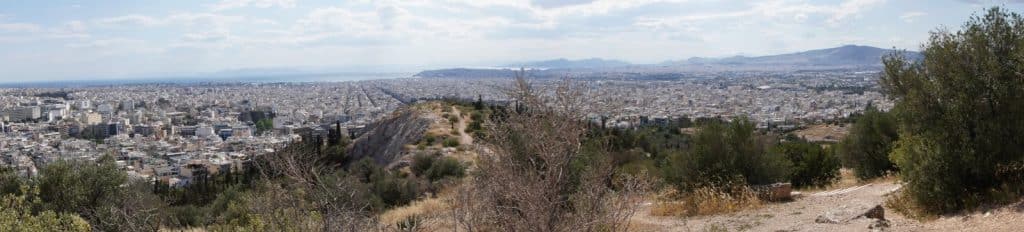
Today you have a great view over the city from this historic meeting place. From there, the path led us further to a place where Socrates is said to have been.
The prison of Socrates
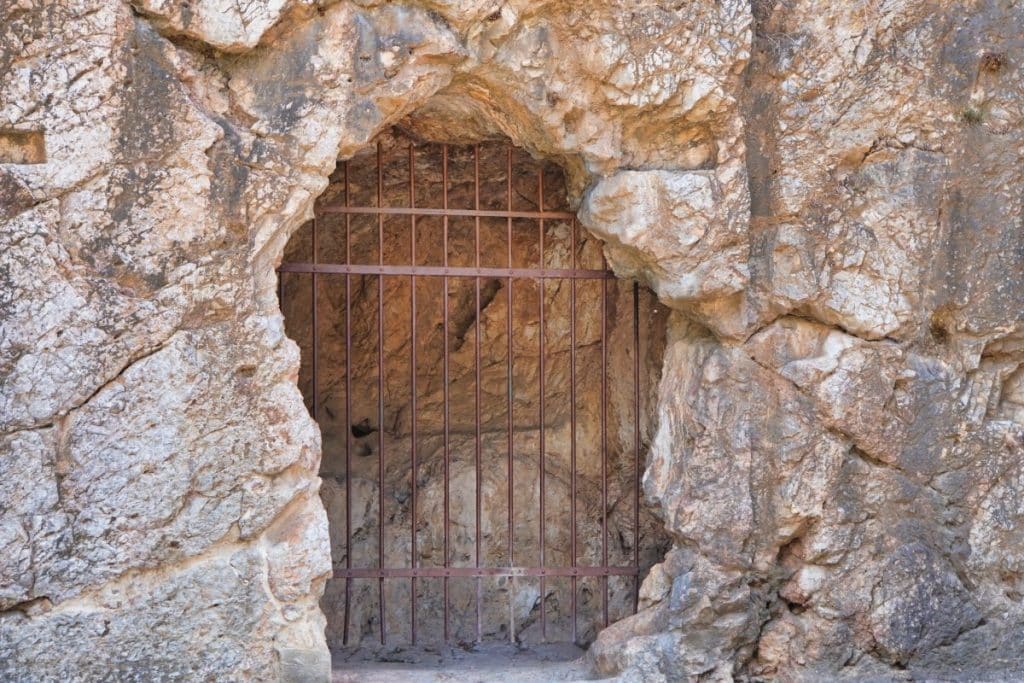
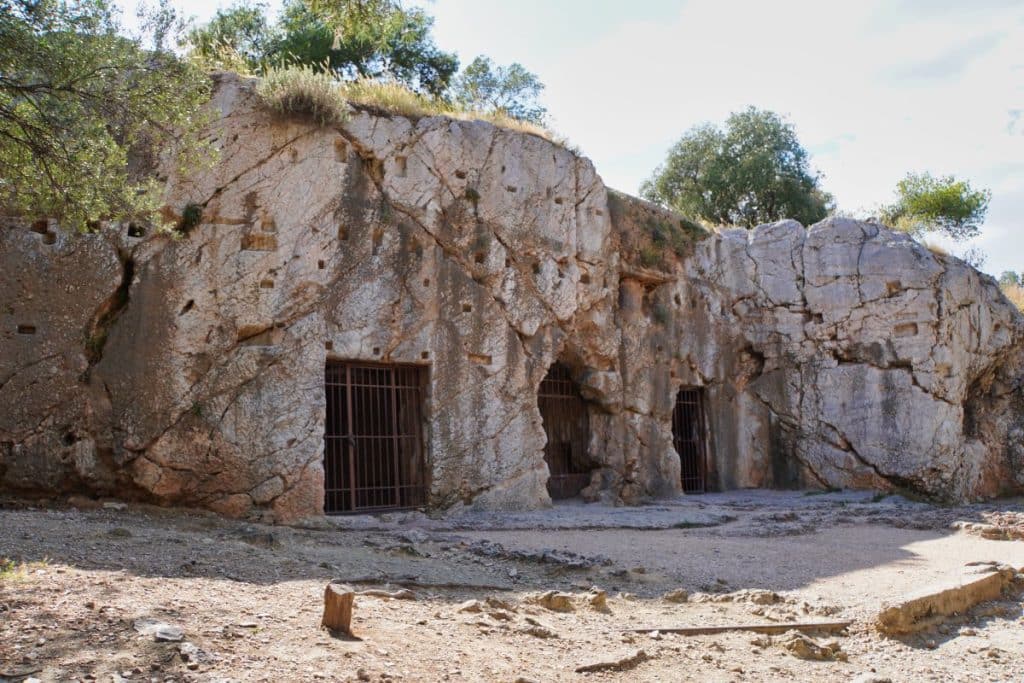
The two barred cave entrances in the mighty stone massif of Philopappos Hill appear quite inconspicuous. These caves are called the “Prison of Socrates”. The caves probably date back to the 5th century BC. It is believed that this place was the one where the philosopher was held before his trial and where he spent the last weeks and hours of his life before being sentenced to death by the cup of hemlock for seducing youth and impiety.
Is it really true that Socrates was held in the so-called “prison of Socrates”? Numerous experts question this. There are doubts that this was actually the place where the philosopher was imprisoned during his trial and until his death by the cup of hemlock. Some claim that the real prison may have been located next to the ancient agora.
Even though the site is almost certainly not the real prison of Socrates, visitors still like to come there. Unfortunately, the actual use of the ancient rock caves is uncertain. There are speculations that they were used as living quarters or as a prison. What is certain, however, is that this ancient cave complex was used during World War II to hide important artifacts from the Acropolis Museum as well as the National Archaeological Museum.
I must admit that I found the place rather uninteresting. There was just the barred entrance to see and nothing more.
The monument on Philopappos Hill
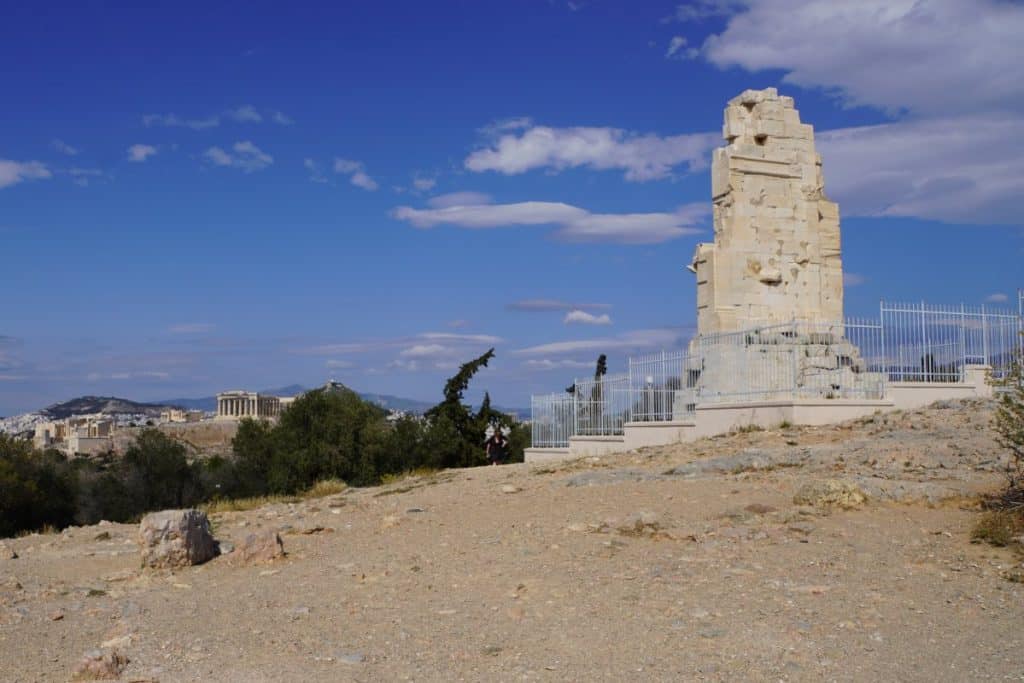
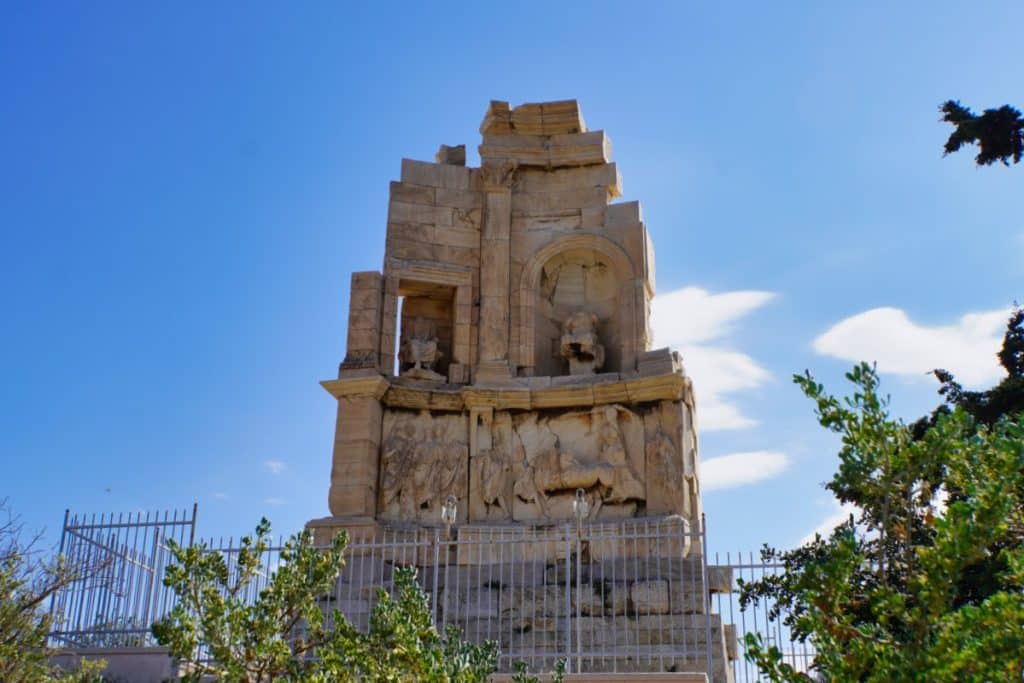
At the highest point of the hill we finally reach the funerary monument to the Syrian prince Gaius Iulius Antiochus Philopappos. It was built in 114-119 AD in honor of the prince, who is considered a benefactor of Athens.
Today, the monument is no longer preserved in its full size. Originally it had a base of 9m x 9m and the stately height of 12 meters. In the 15th century, the structure of pentelic marble must have been still fully preserved, because from that time there are still survivals of the inscription, which are no longer fully preserved today.
The preserved “fragment” I find very impressive. One recognizes the headless sitting statues of two men in the center. These are supposed to represent Philopappos and his ancestor Antiochos IV. Very well to recognize is also a relief, which shows a triumphal procession.
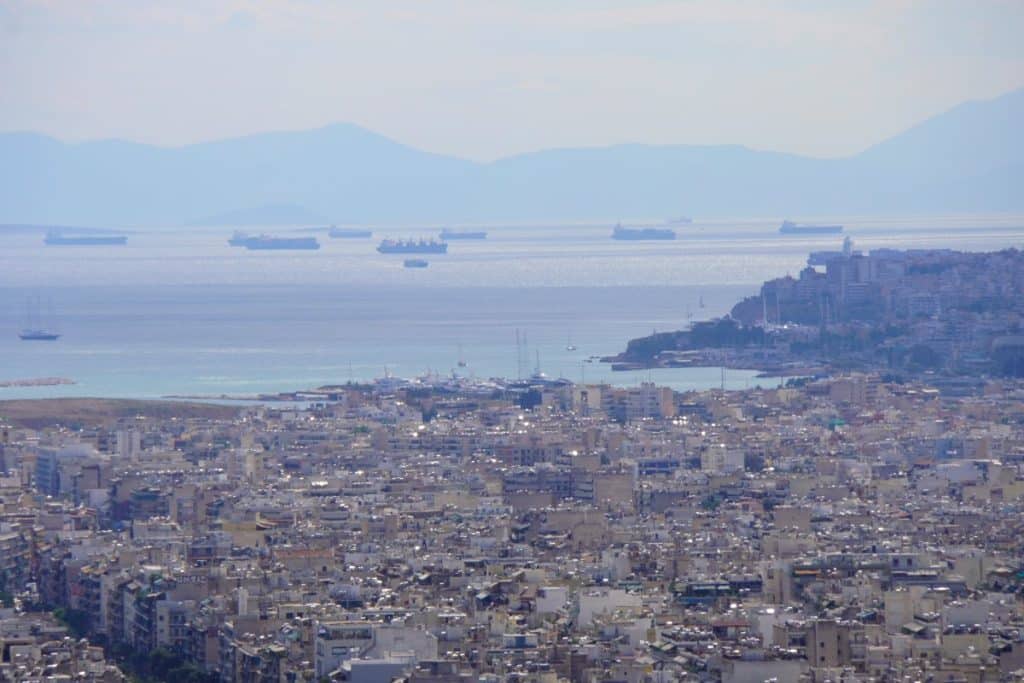
Even though the monument is impressive, I was much more impressed by the view over the city. The view to the Acropolis, over the city to the sea and Piraeus is outstanding and unforgettable. Enjoying the sunset from up there must be pure romance.








Leave a Reply