Warsaw is a multifaceted city that you can’t just discover along the way. There is so much to see that we realised after our visit that we had not yet visited some items on our list.
Our 10 tips show places in Warsaw that we liked.
1. Warsaw Old Town
What we didn’t realise before was that the old town of Warsaw was almost completely destroyed after the Second World War. The buildings could be reconstructed and quite honestly, if I hadn’t been told, I wouldn’t have noticed.
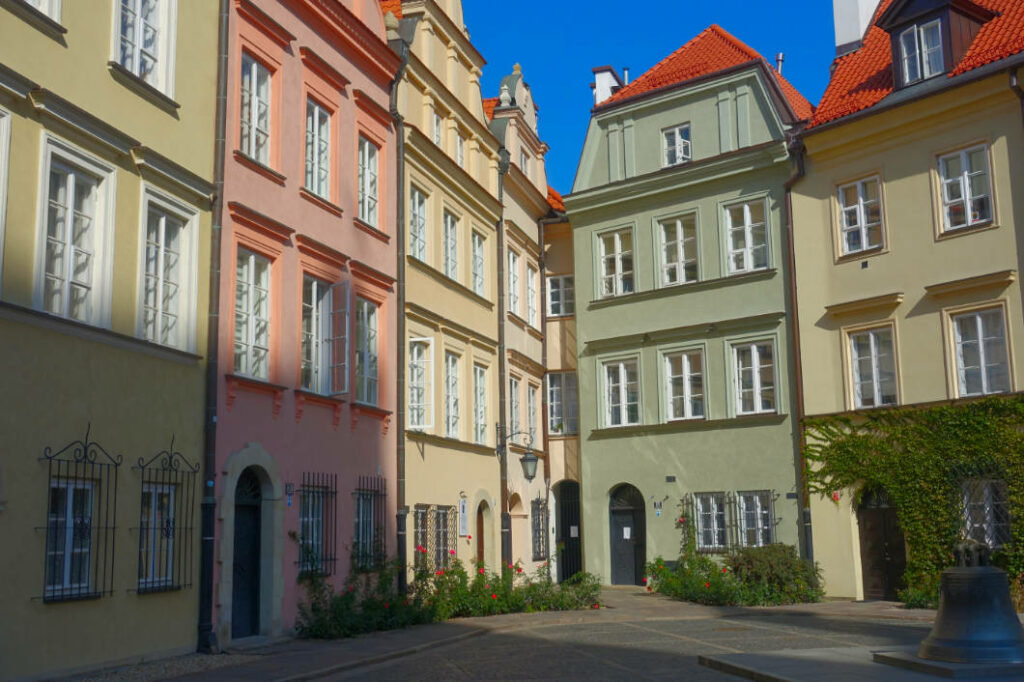
The Old Town of Warsaw can be easily explored on foot. Almost the entire area is a pedestrian zone or may only be entered by residents by car.
We started our tour at the castle square. This is where the Sigismund Column stands. The 22-metre high landmark depicts King Sigismund III, under whose reign Warsaw became the capital of Poland.
In the narrow streets that branch off from the castle square, there are beautiful houses and imposing churches. The churches were all open and you could (as far as we have seen), without having to pay admission to go inside. Often behind a rather inconspicuous outer door hides an imposing nave, which is worth a small visit.
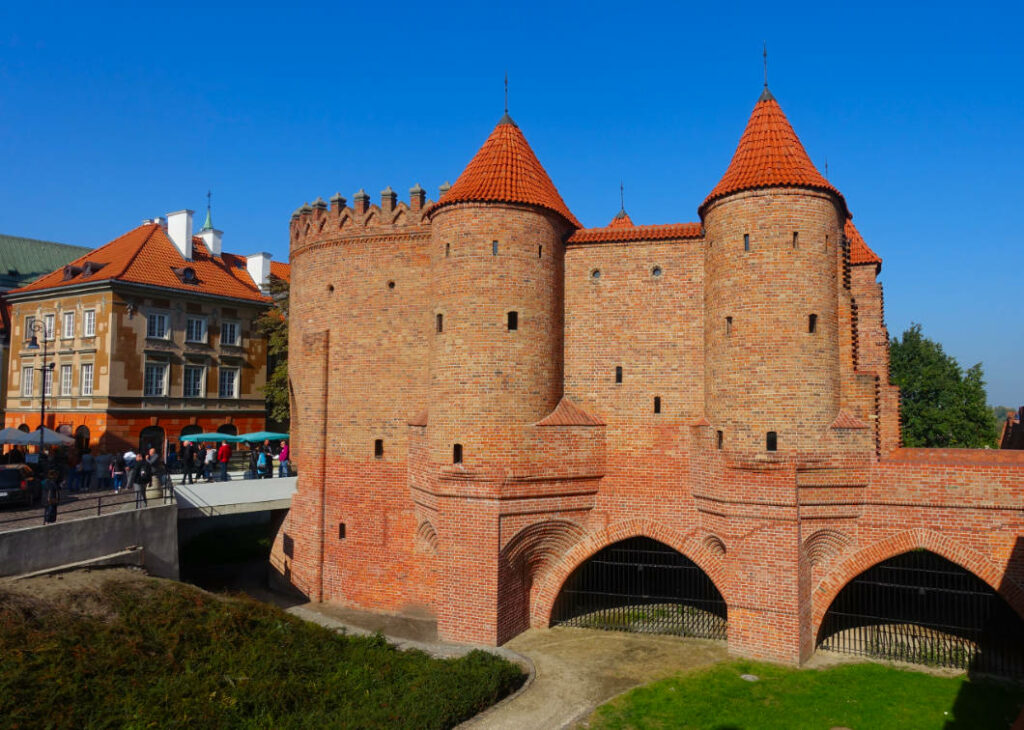
Around the Warsaw Old Town you can still find remains of the city wall. I liked the walk on and next to the wall very much. A look at the Barakane, an access gate from the Old Town to the New Town is definitely worthwhile.
2. The marketplace and the mermaid
The market square (Rynek Starego Miasta) was already laid out in the 13th century. It is really big with 90 x 73 meters. In the beautiful houses around the market square you can find restaurants and stores.
In the center of the square stands the bronze sculpture of the Warsaw city emblem – the Mermaid.
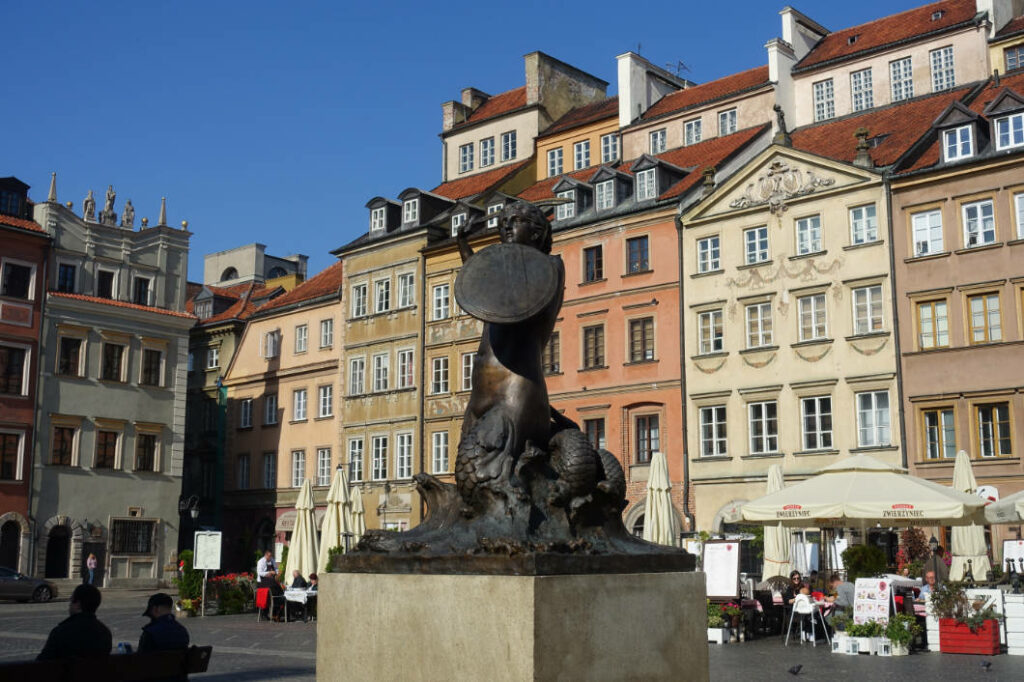
A mermaid in a city coat of arms of Warsaw?
Already in the 14th century, the mermaid can be found in a modified appearance in the image of a seal of the city. At that time she resembled a scaly human with wings, tail and paws. Later the image changed and she got fins instead of legs.
Why the mermaid belongs to Warsaw, there are quite a few legends about it. One variant of them says that a long time ago a mermaid swam along the Vistula from the sea. When she got tired, she stopped on a sandy shore. She liked it there so much that she decided to stay there. She liked to play tricks on the fishermen living there. However, when she got into trouble, a fisher boy saved her. As a result, the mermaid promised to protect the settlement. Later, the old town of Warsaw was located on this spot.
3. Warsaw Royal Castle
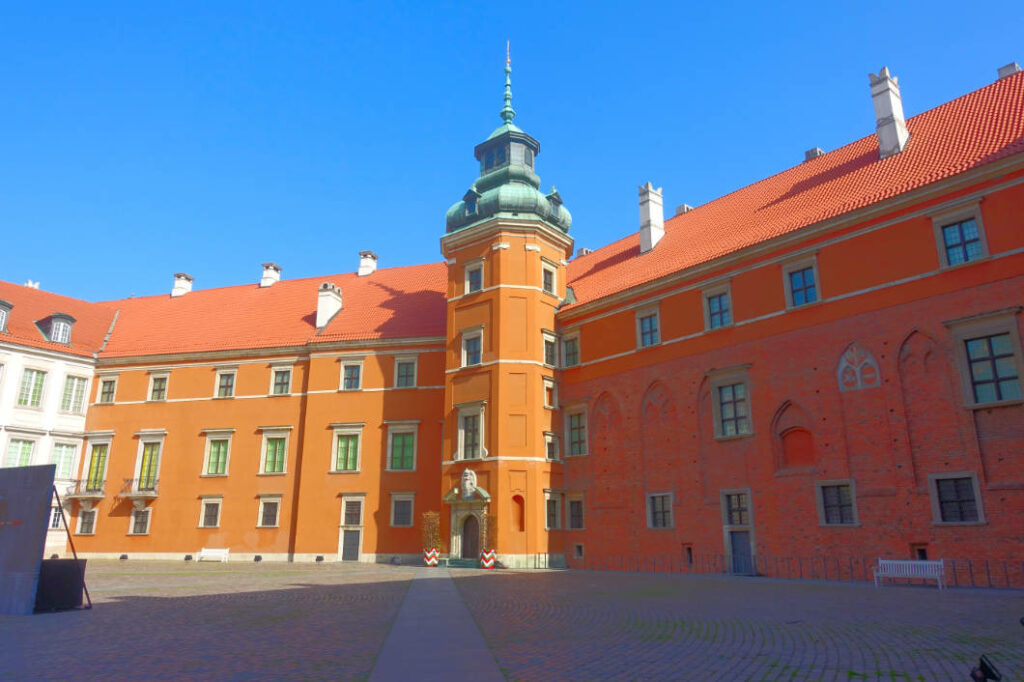
The royal castle was also almost destroyed by bombing in the Second World War and subsequently the art treasures were also plundered. In 1971, the party leader at the time ordered the reconstruction, which was to be financed by donations.
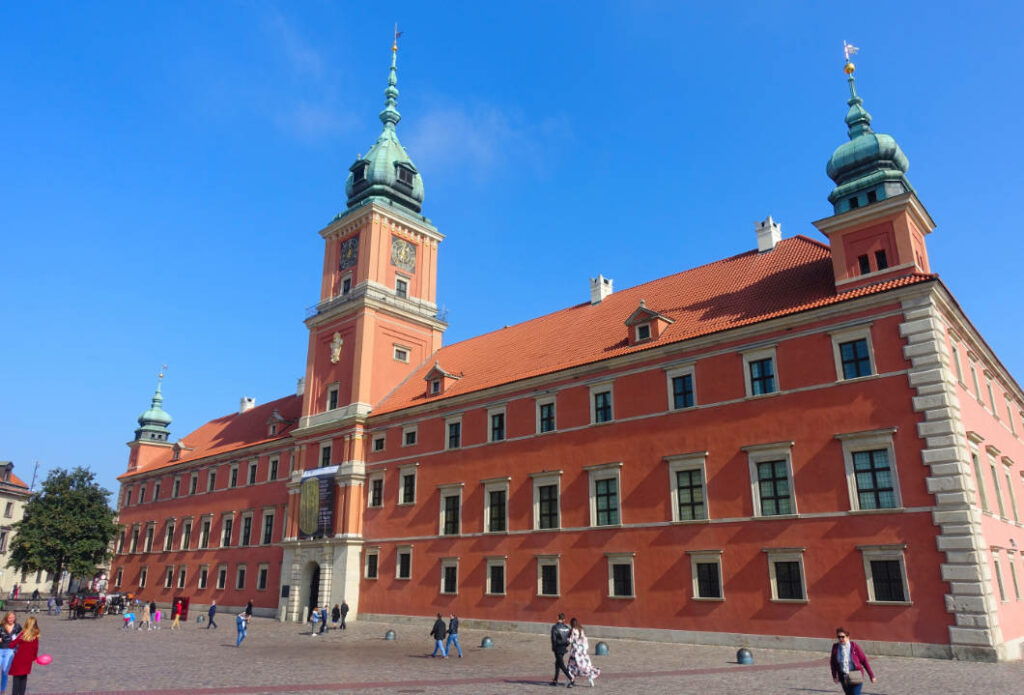
In 1980, the castle and the reconstructed old town were inscribed on the UNESCO World Heritage List.
Until the 18th century the Polish kings resided in the Royal Castle in Warsaw. It was rebuilt several times and if you take a small tour around the castle, you will discover the subsequently added rococo wing.
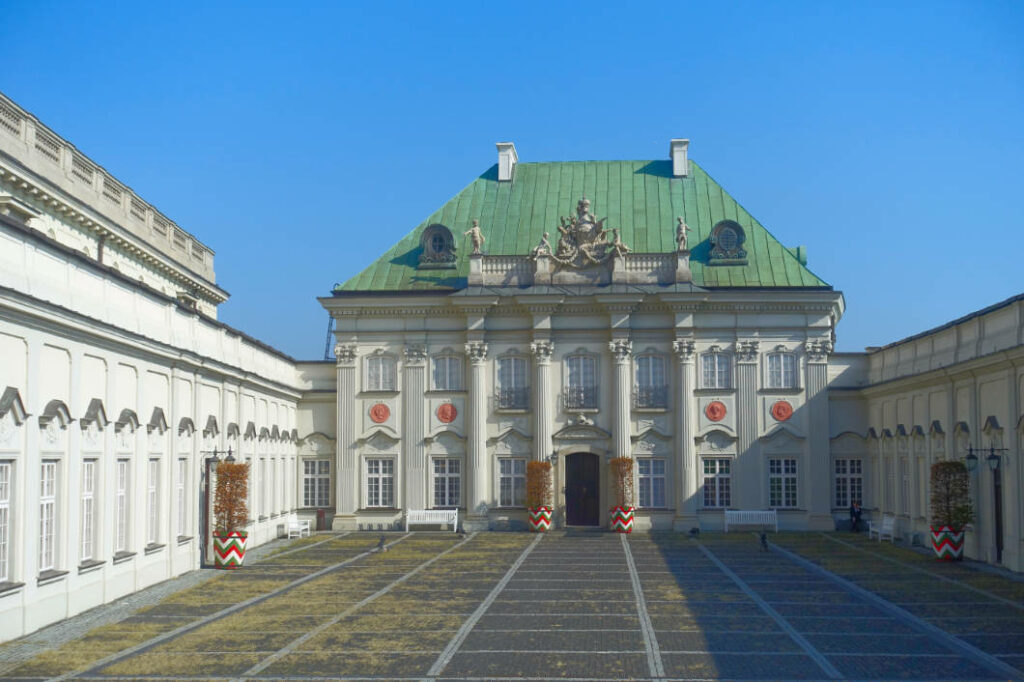
The palace garden, which is open to the public, is hardly visited. The entrance is somewhat hidden at the back of the castle.
To be honest, I almost didn’t go through the gate either. In a guard house sits an supervisor and I could not discover a sign, whether one may enter the area. But since some visitors simply walked past the little house, no one stopped them or demanded admission, I went shortly decided simply behind.
A good decision! The small baroque palace garden is really beautiful.
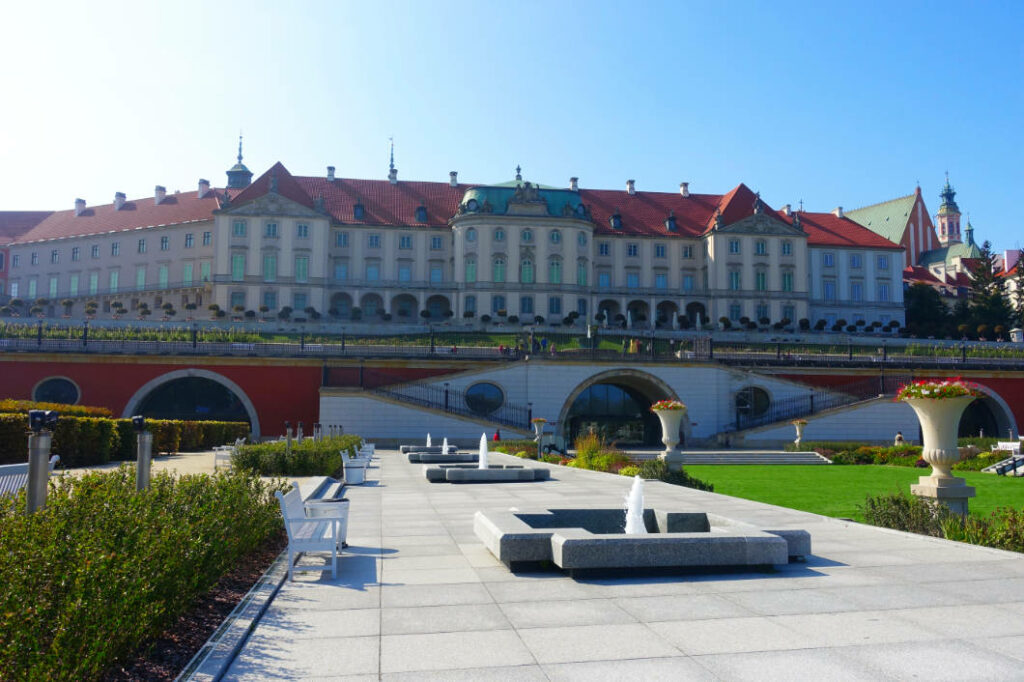
The royal castle can be visited. However, we were not in the building and can therefore not judge whether a visit is worthwhile.
Address:
Plac Zamkowy (Schlossplatz)
Warsaw
Directions:
Bus 125, 170, 190, 307, 512
Tram 13, 23, 26, 32.
Opening hours:
May – September
Monday-Saturday: 10-18 h (Thursday -20 h)
Sunday: 11-18 h
October – April
Tuesday – Saturday:10-16 h
Sunday: 11-16 h
Monday closed
Entrance fees:
Adults: 20 / 12 PLN – depending on the tour.
On Sundays the entrance is free!
4. POLIN – Museum of the History of Polish Jews
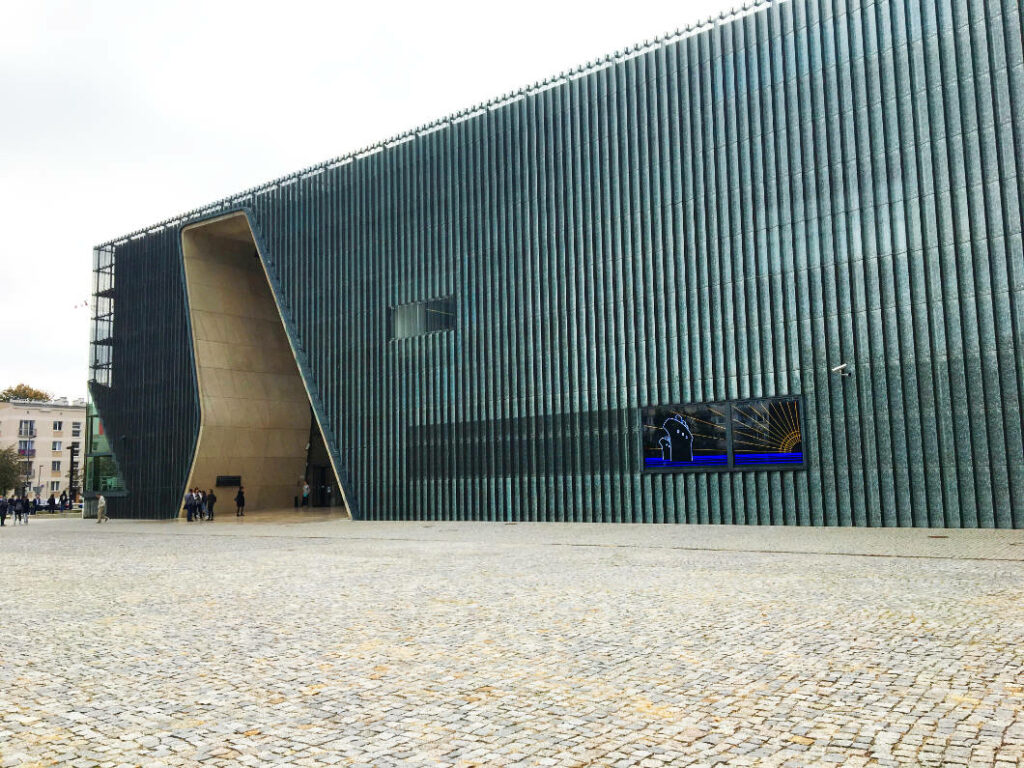
POLIN is one of the most interesting museums I have visited so far. It covers in very well designed rooms the history of the Jews in Poland from the first Jewish settlements on Polish territory to the present time. A multimedia exhibition in which I spent several hours.
I have described my visit to POLIN in detail in the article “POLIN – Museum of the History of Polish Jews”.
5. Polish Vodka Museum
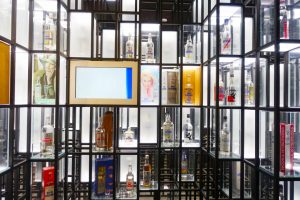
A museum about the traditional drink in Poland. Here you can learn a lot about the history of vodka, vodka production and at the end of the tour you can also participate in a vodka tasting.
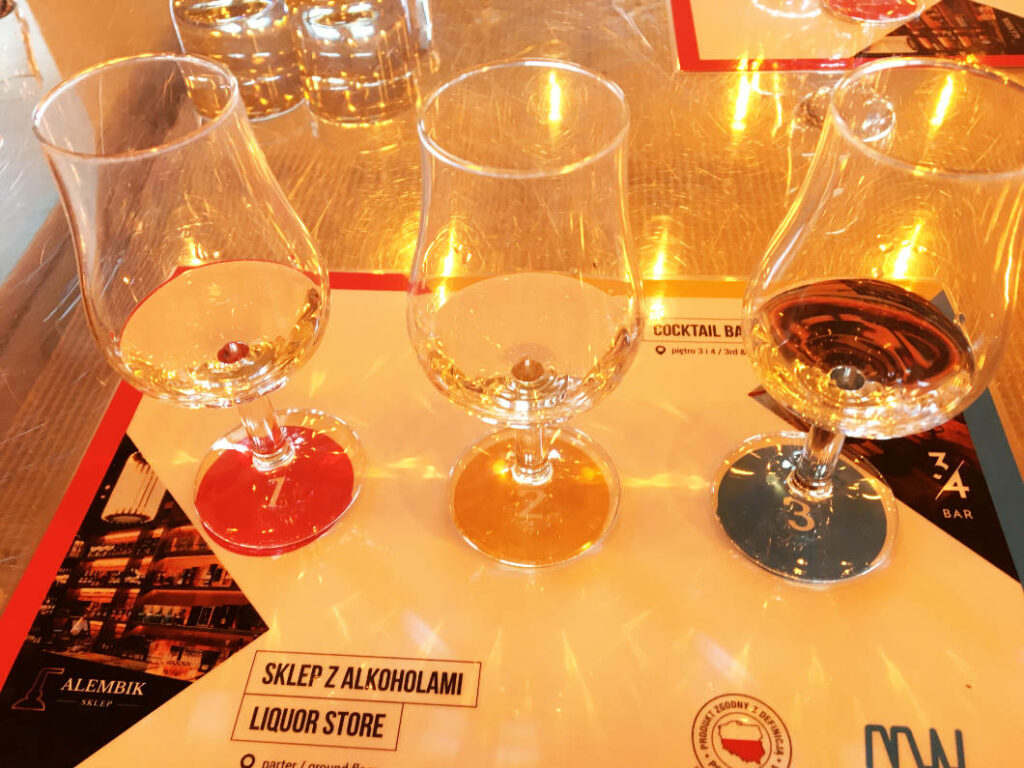
How we liked it is written in the article “Polish Vodka Museum – tour and tasting”.
6. Stroll along the Vistula
The promenade along the Vistula River is several kilometers long and invites you to take a leisurely stroll.
Numerous benches and sun loungers invite you to linger under small trees. In summer, tours on the Vistula are offered. Unfortunately, it was already too cool for that during our visit.
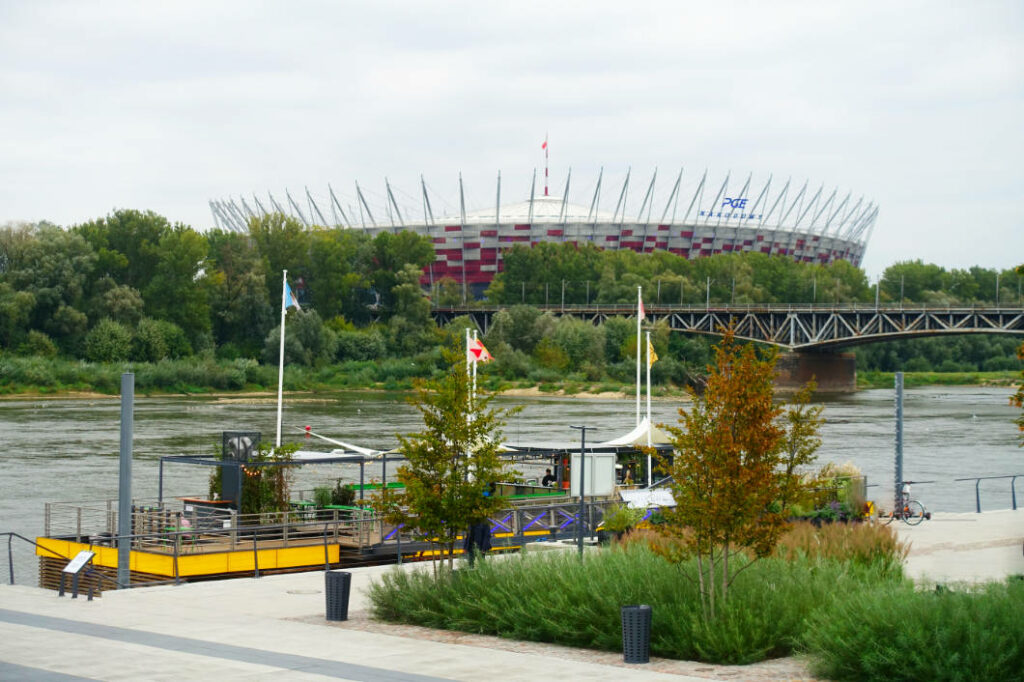
I discovered great boards during the walk on the bank showing something about flora and fauna in the Warsaw Vistula region.
Those who want to interrupt their walk can, for example, pay a visit to the Copernicus Science Center or the Museum on the Vistula, or simply make a small photo stop at the sculpture of the Mermaid.
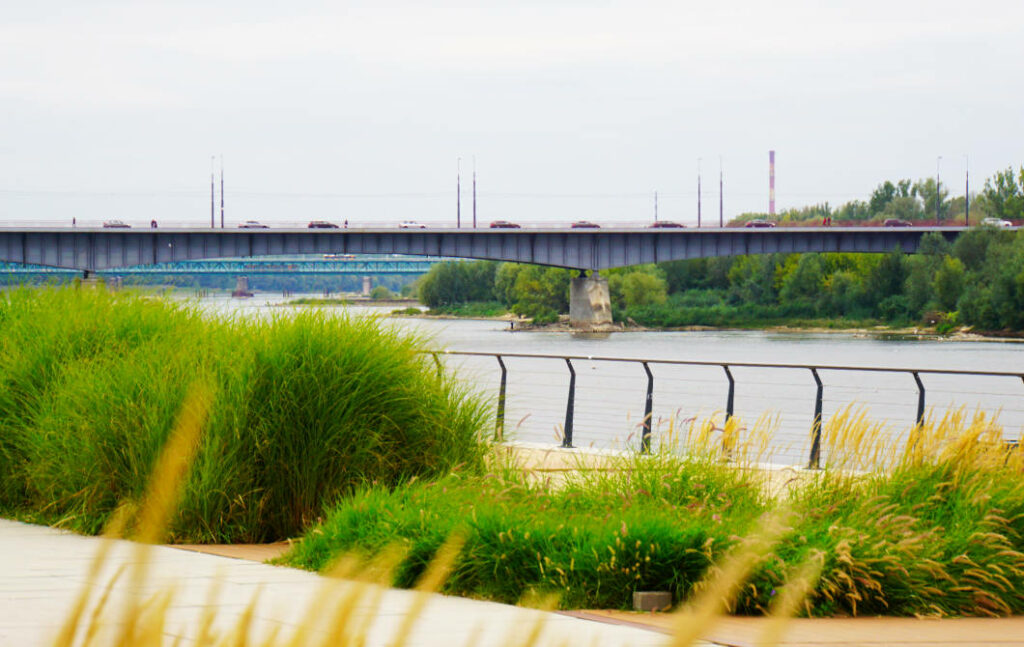
If you still haven’t had enough of the beautiful sight of the Vistula, you should visit the beach located at the historic bridge Księcia Józefa Poniatowskiego near the PGE National Stadium. There is always something going on here. On the other hand, Saska Beach near the Łazienkowski Bridge is rather quiet and relaxing.
7. Free Viewpoint: Warsaw University Library Roof Garden
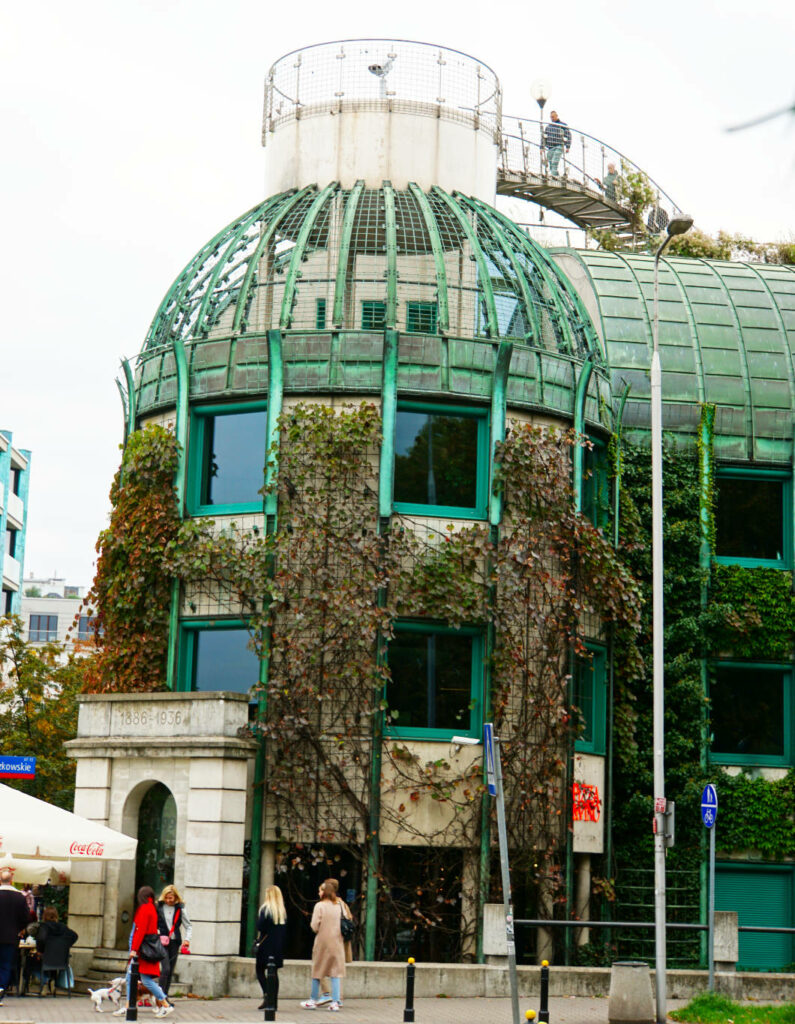
If you are looking for a nice free viewpoint in Warsaw, you should go to Warsaw University Library.
We followed the tip after a walk along the Vistula River and walked to the university building.
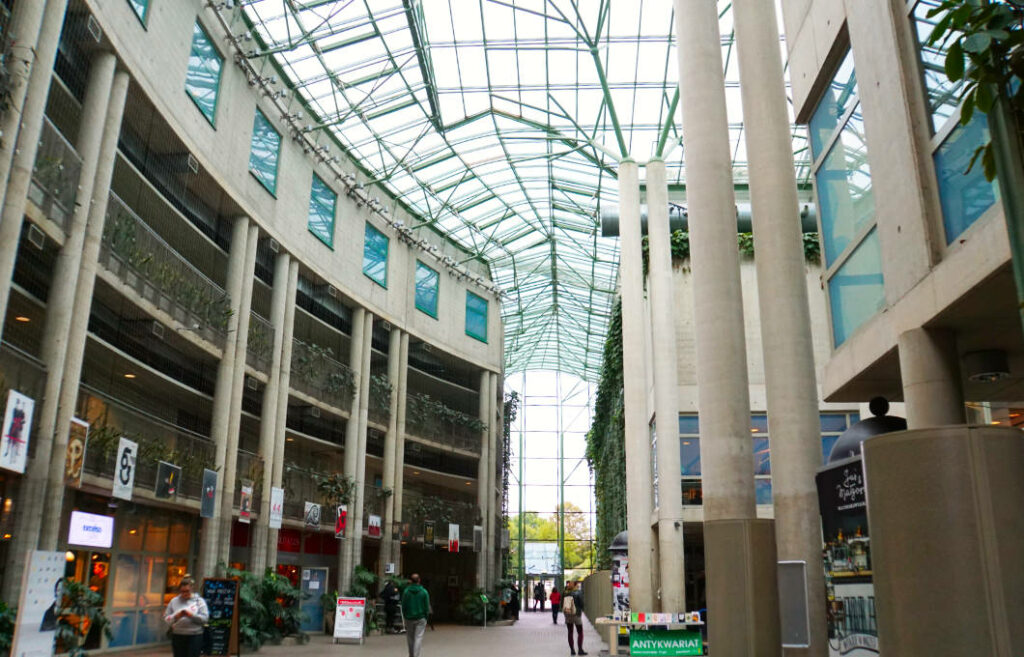
Fortunately, you can quickly find many signs that show you the right way and so we walked once across the building to find an entrance to a small park on the other side.
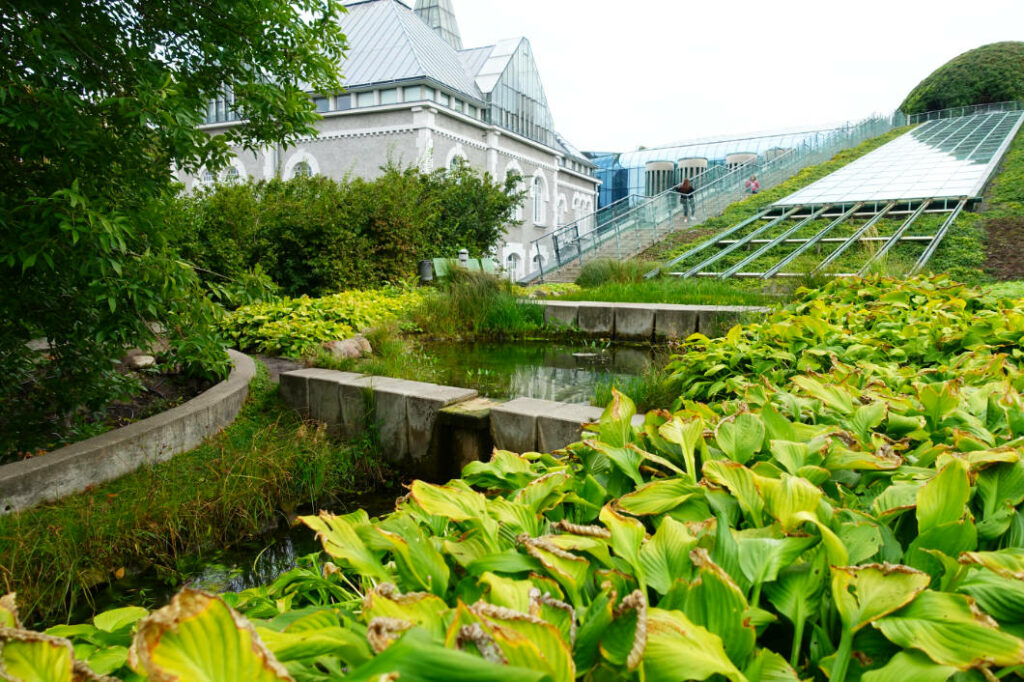
Here you are beautifully surrounded by greenery, find some secluded spots (I think I would have spent more time there as a student than in the lecture) and also a long flight of stairs up to the roof.
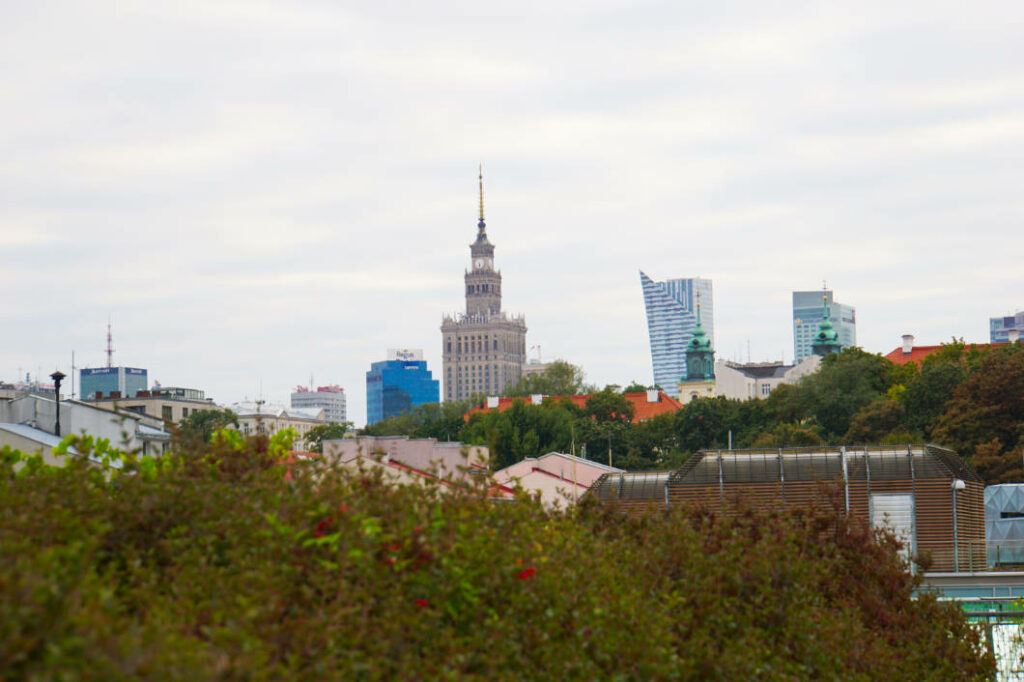
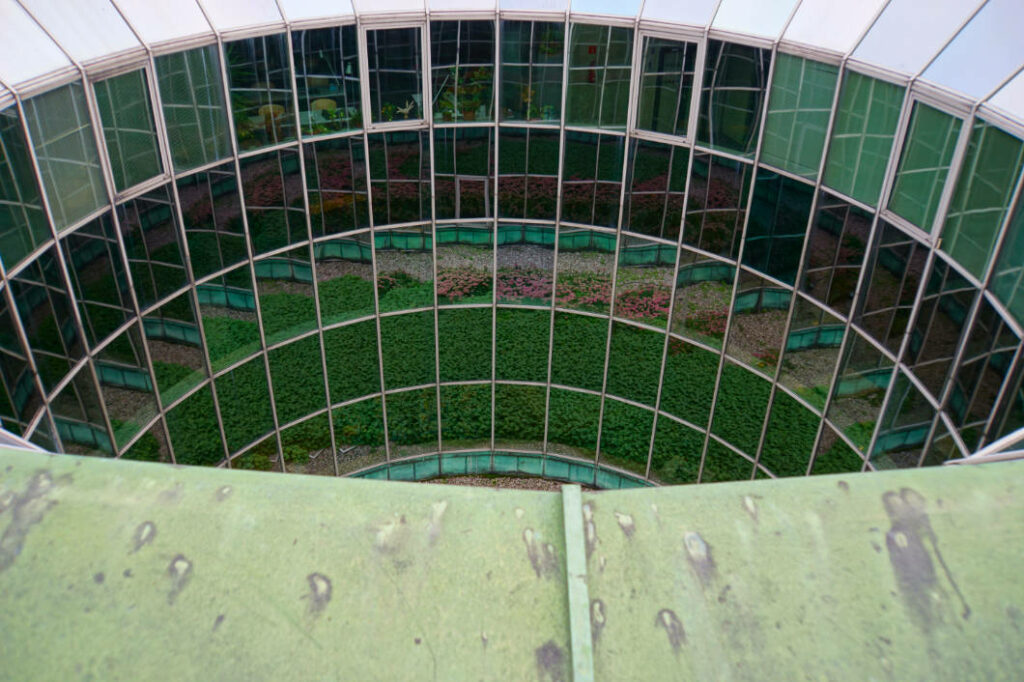
The roof garden is beautifully laid out. Winding paths lead you across the roof and at many places you can discover good vantage points. It is worth taking some time to have a look at the plants and especially the great reflections in the windows.
Address:
ulica Dobra 56/66
00-312 Warsaw
Opening hours:
1.- 30. April 8-18
1.May – 30. September 8-20
1.- 31. October 8-18
From November 1 to March 31 you can not get on the roof.
8. Viewing platform Palace of Culture and Science
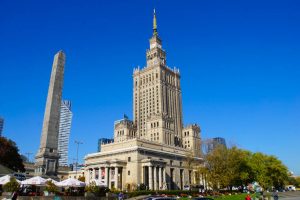
My personal highlight was the visit to the observation deck of the Palace of Culture and Science in Warsaw.
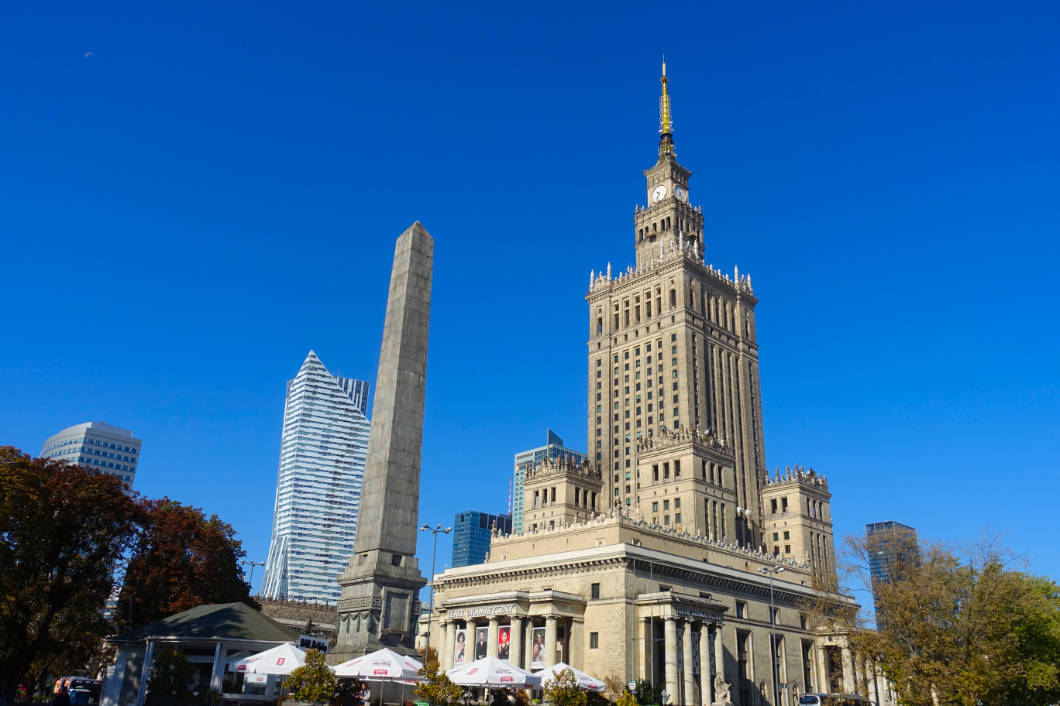
After a ride in a small and narrow elevator, you can enjoy a fabulous view of the city high above Warsaw.
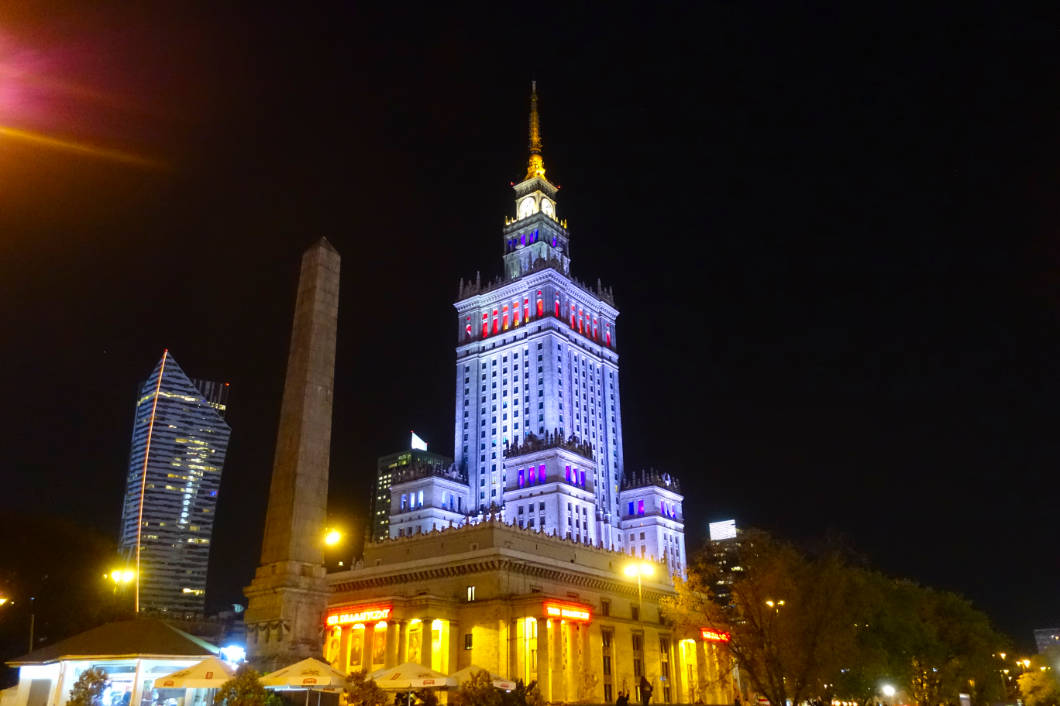
More detailed information can be found in our article “Warsaw’s best vantage point: Palace of Culture and Science”.
9. Saxon Garden (Ogród Saski)
At the instigation of the Saxon-Polish King August II. the Strong, the design of the park was started in 1713. In 1727 he opened the park and the population was allowed to use it.
Over the years, it was redesigned several times and after its destruction in World War II, a smaller park with reconstructed buildings was rebuilt.
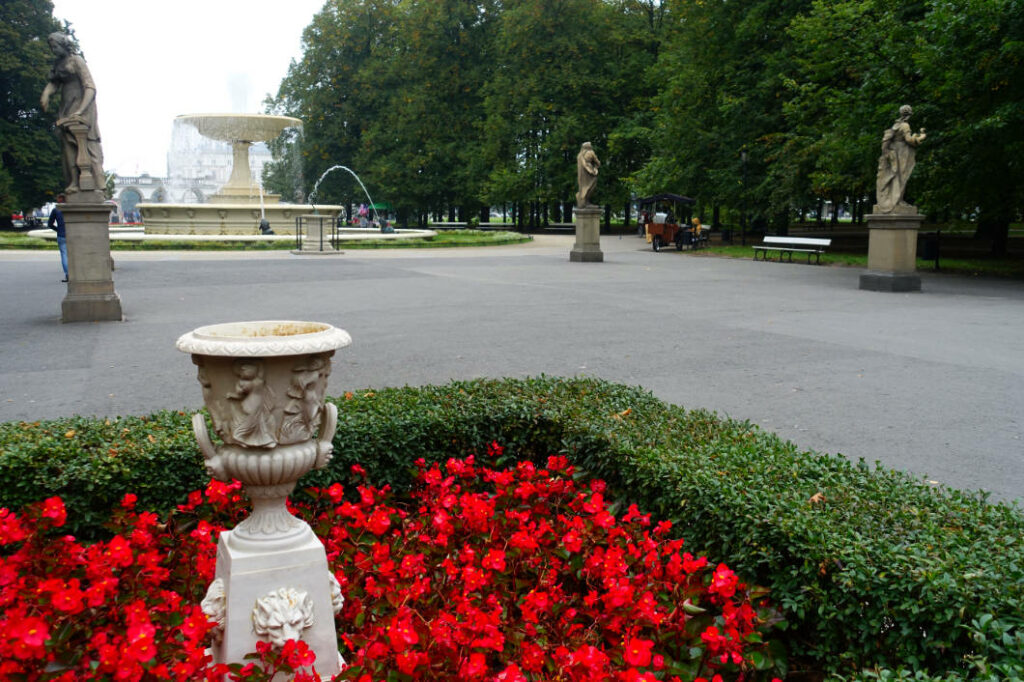
Today, the park invites you to take a little rest. Here are magnificent trees, for example, a ginko, and the columnar oak on the eastern edge of the park.
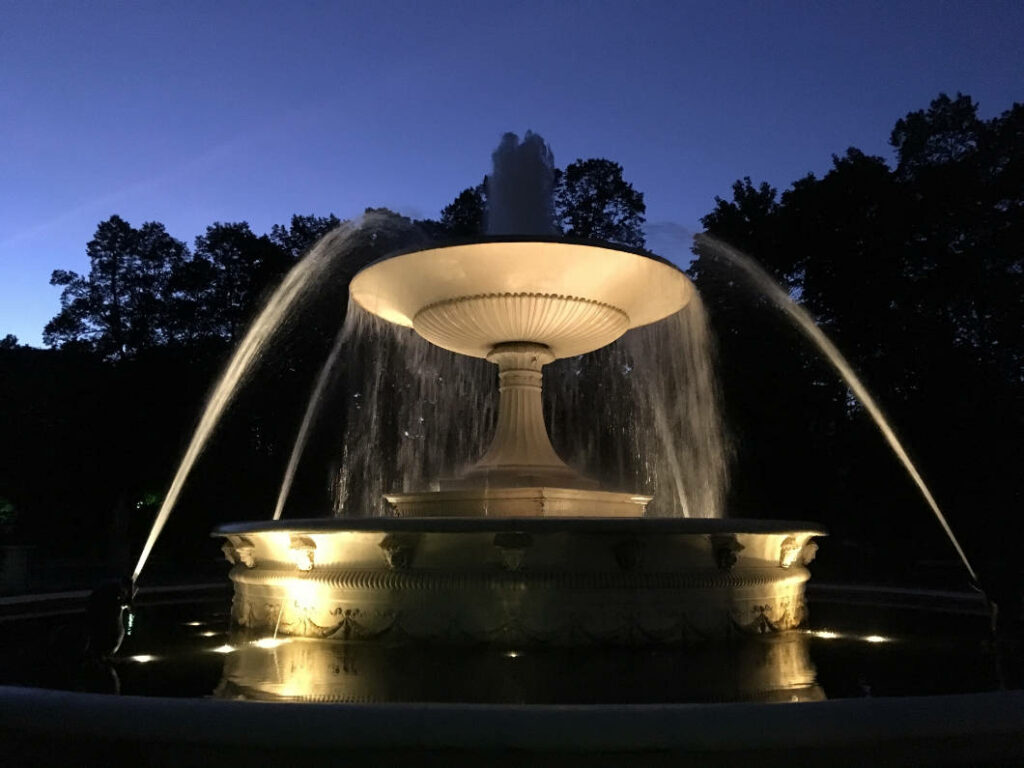
The fountain is illuminated in the evening hours and is suitable as a photo spot.
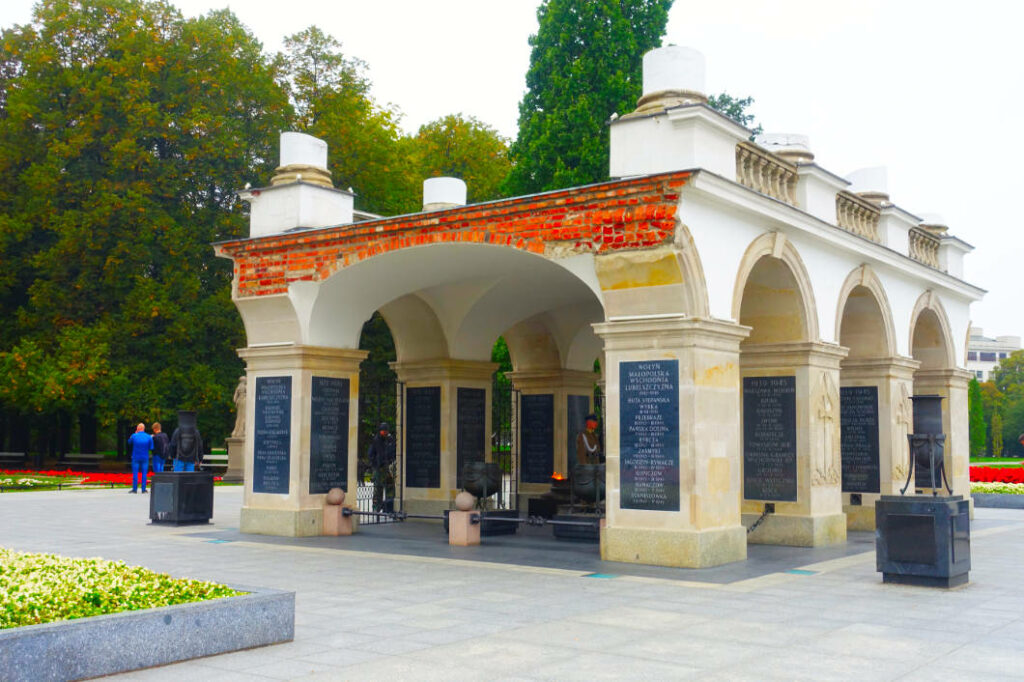
In the extension of the path you will then meet the tomb of the unknown soldier. The memorial is a symbolic burial place in honor of the soldiers who died in the First World War.
10. Lazienski-Park
We love to discover the parks and gardens of cities during a sightseeing tour. The Łazienki Park is the recreation area for the people of Warsaw and additionally offers cultural activities. Here you can enjoy free Chopin concerts in summer and discover the Royal Lazienski Museum in Łazienki Palace.
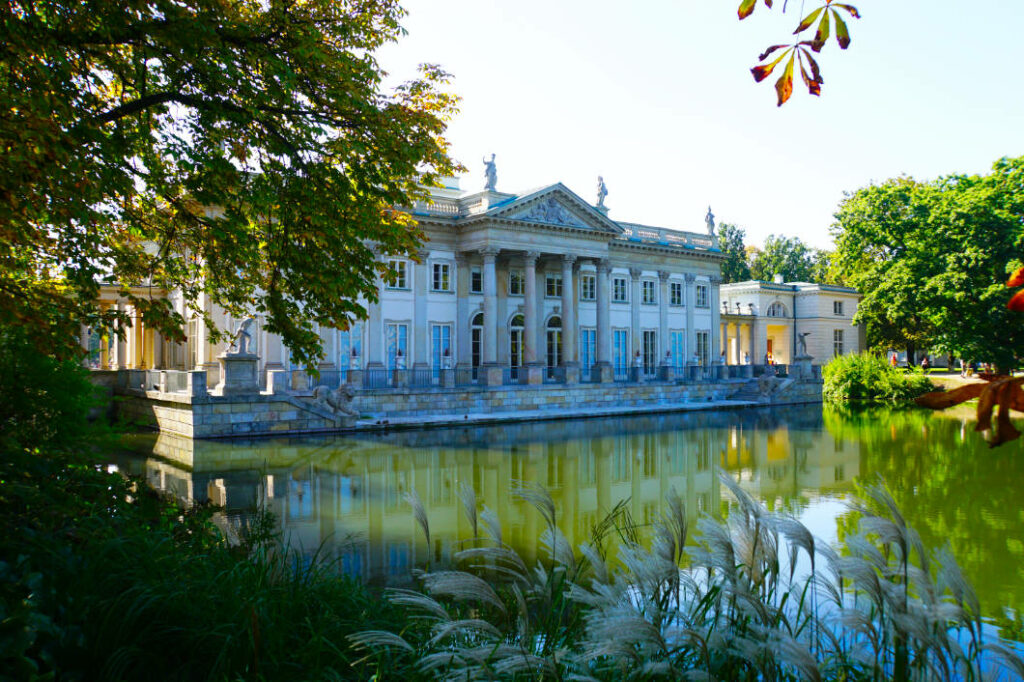
You can read more about our Sunday visit to the park in our article “Sundays in Warsaw Summer”.

Leave a Reply