Searching for clues in Idar-Oberstein: stones, precious stones, gemstones!
It’s hard to imagine a holiday in EdelSteinLand without taking a look at the topic of gemstones! We were on the lookout for clues in the region and visited interesting places related to the theme of gemstones.
There are many stones, but are they always precious stones? How can you tell if the stone is suitable for further processing – yes, and how does an inconspicuous stone become a work of art? These and many more questions were buzzing through my head when we were on our way to Idar-Oberstein in EdelSteinLand. So we set off on a voyage of discovery through the region in the hope of learning more about gemstones and their processing.
Historic water loop Biehl
Around 1880, the Biehl family converted a gypsum mill into a grinding shop, which is still in operation today, now in the fourth generation. There is an opportunity to get to know the Historic Water Loop during a guided tour of about 30 minutes.
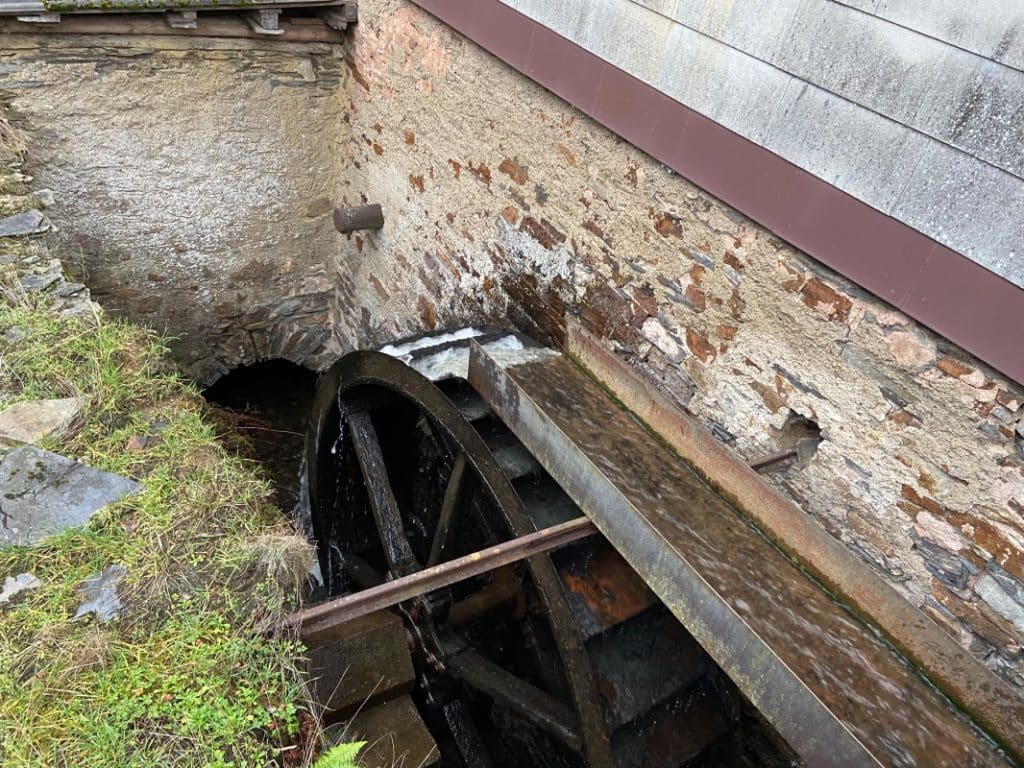
There is a large water wheel on the small building of the water loop. After the water supply from the inlet has been opened, it begins to turn merrily, generating the energy needed in the building. Only when the wheel of the water mill starts turning does Ernstotto Biehl begin his work in the loop.
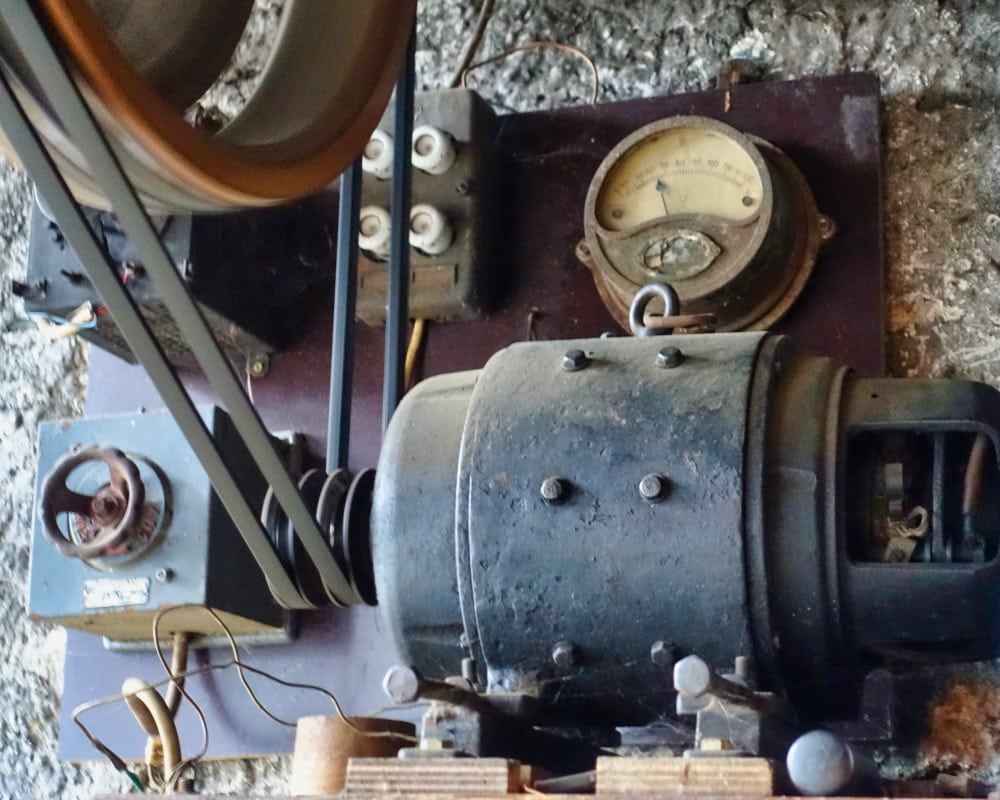
We enter the building and are initially completely captivated by the technology of electricity generation. Ribbons run over rollers on the ceiling and the energy generated drives a generator that is almost 100 years old. An Edison carbon filament lamp glows on the ceiling and gives the room some light. A fire flickers in the stove and heats the room.
After the first impressions I just had to know, where do the stones come from and how do you know if the stone is suitable for processing? Mr Biehl explained to us that he buys his stones today. In the past, there were so many stone finds in the area, it wasn’t necessary. Nevertheless, it is still a surprise when the stone is cut open with the help of a saw. How would the stone be constructed from the inside? What can be made from the stone? Not every agate is like another and so the resulting product often only develops during the work.
Work as a gemstone cutter
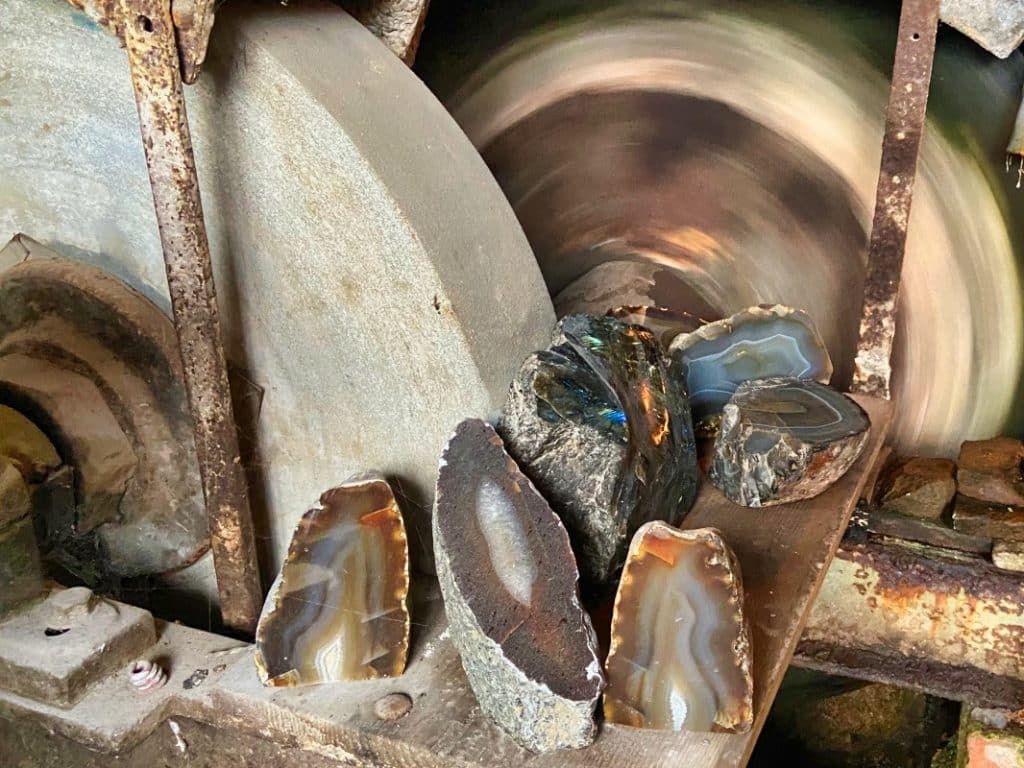
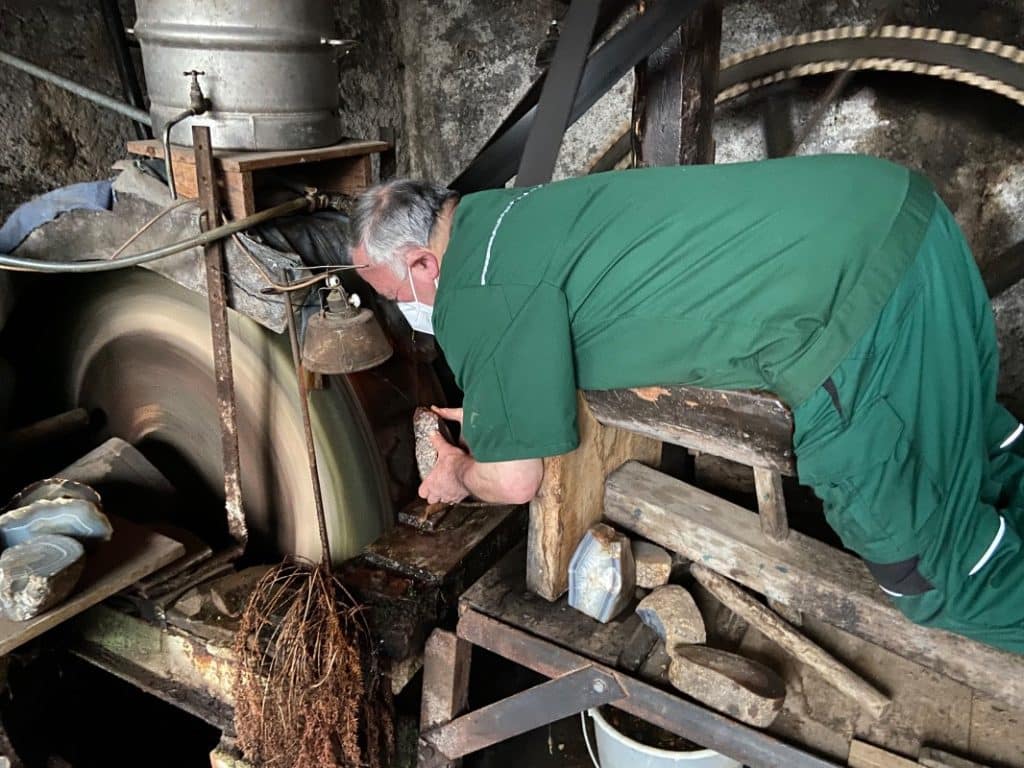
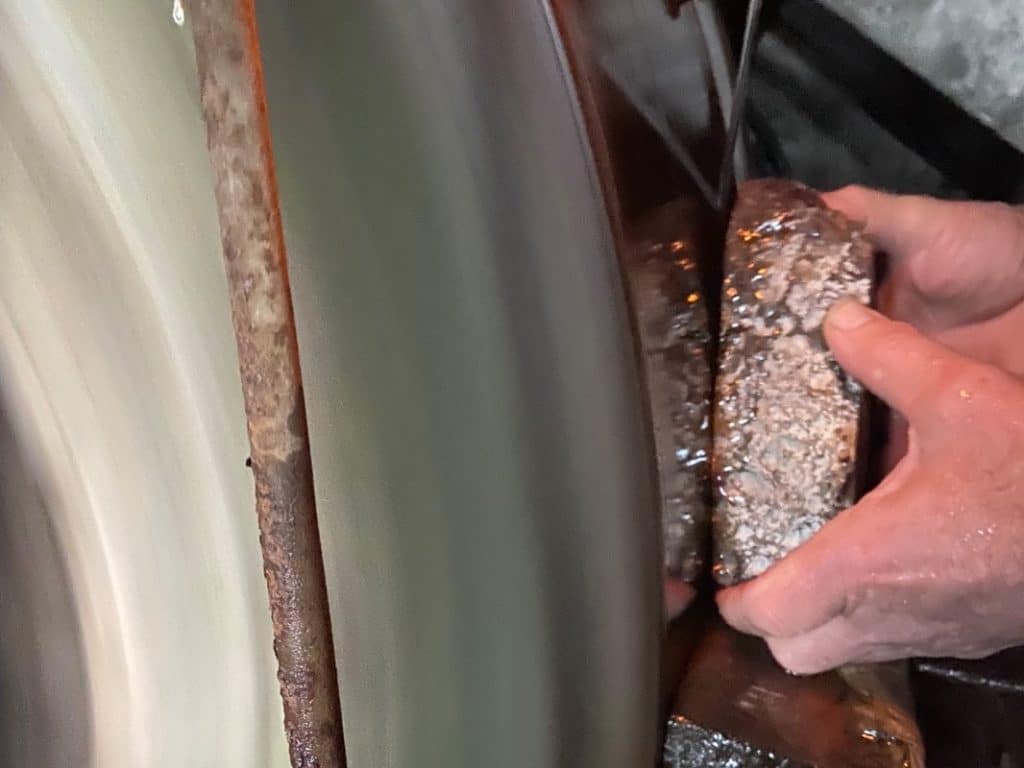
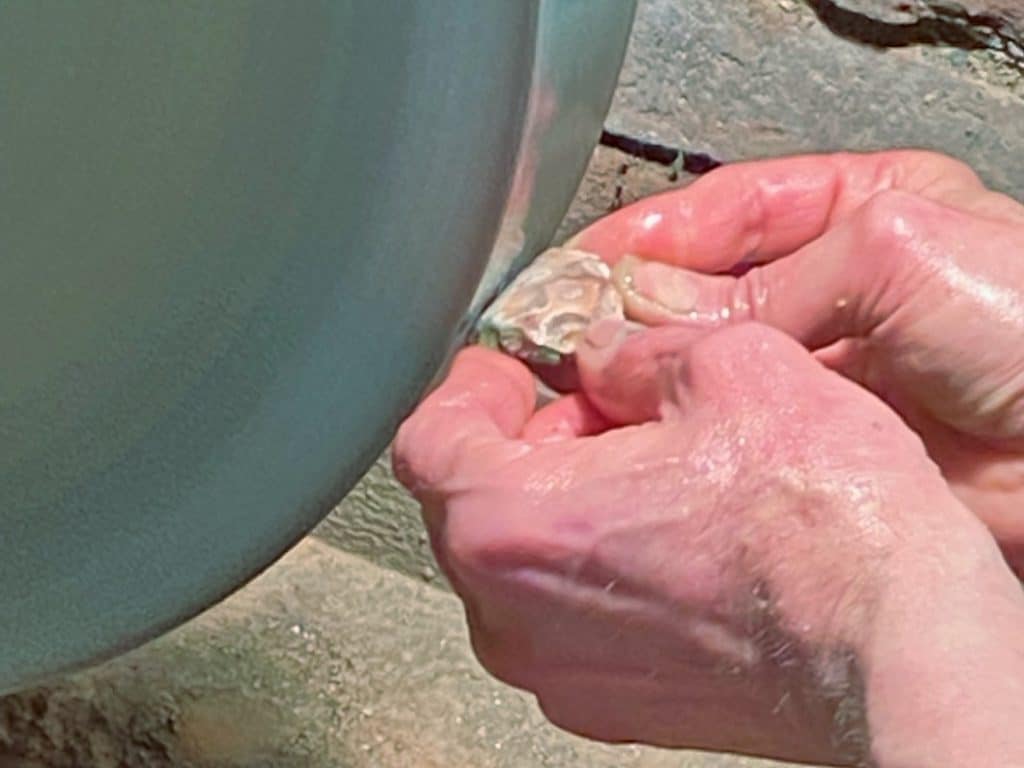
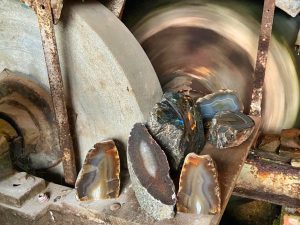
Ernstotto Biehl works with historical machines in the water loop. I was particularly impressed by the workplace at the loop. Lying on a traditional wooden tilt chair, Biehl grinds a previously cut stone. A large grinding wheel turns with the help of the water drive and if you hold the stone against the grinding surface, the structure gradually emerges. Cold water runs over the fingers, which can be very unpleasant, especially in winter. It does not take long for the fingers to become ice-cold and numb.
The work is not only physically demanding because of the cold water. You also need a lot of strength to hold the stone during the process and your body has to get used to the unusual working position. One disadvantage of this working process is that not all stone hardnesses can be worked with the rotating sandstone disc. From a hardness of 7.5, other processing methods are needed.
A small detail on the side: a smoked bacon rind serves as the axle bearing for the grindstone.
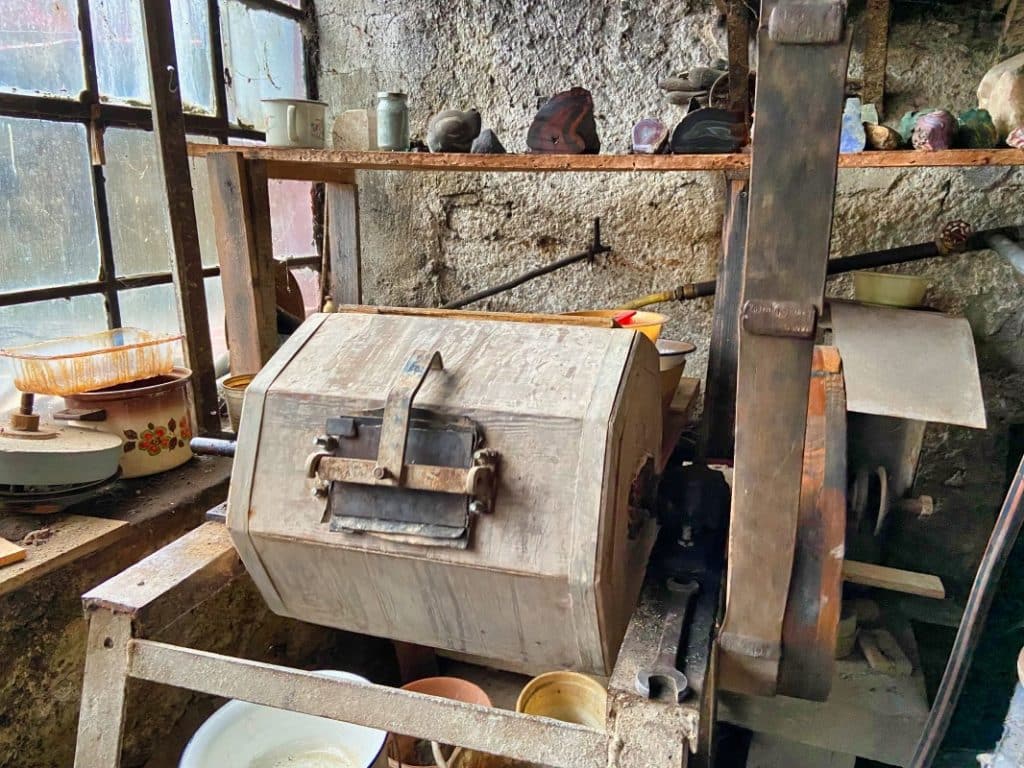
Another traditional tool are the polishing drums. Here, cut stones are often turned back and forth in circles for hours. The resulting friction polishes the material until it can be further processed.
There is so much to discover in the workshop. The stones, the historical machines and tools – we found it exciting and would have liked to stay forever and watch Mr Biehl at work.
But now we also wanted to know what beautiful objects are created in the Historic Water Loop. In the adjoining sales room, we were able to get a small impression of the product range: Jewellery, handles for cutlery or letter openers, beads, decorative stone discs… The selection is large and each piece is unique, just like the stone from which it was created.
What a great visit to the Historic Biehl Water Loop. Now I could imagine how stone was worked in the past. But how does it happen today?
Address:
An der Deutschen Edelsteinstraße 55758 Asbacherhütte
Thursday – Tuesday: 9 -17.30 h Lunch break: 12 – 13 h
Mittwoch geschlossen (außer an Feiertagen und in den Ferien)
Prices for the grinding tour:
Adults: 4,-€ Discounts are offered
Fischer Disein – Silver jewellery and gemstones
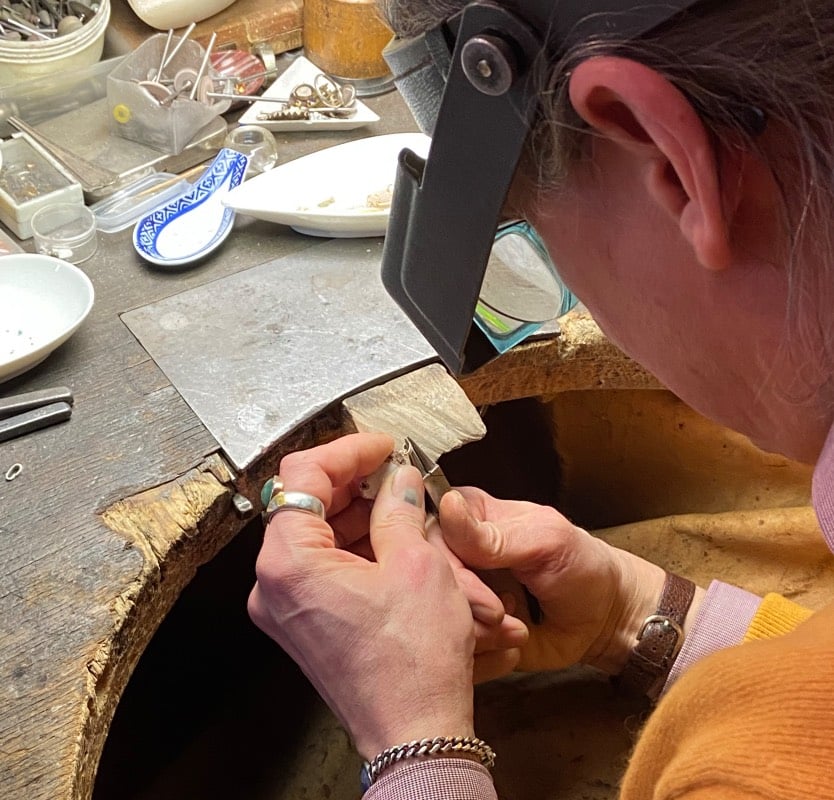
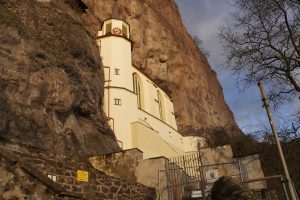
Peter Fischer runs a small shop at the foot of the Felsenkirche in Idar-Oberstein. Here he sells jewellery and gemstones. In an adjacent workshop, the artist not only offers children’s courses (e.g. forging silver rings), here you can also take a look at the modern working process of a gemstone cutter and jewellery designer.
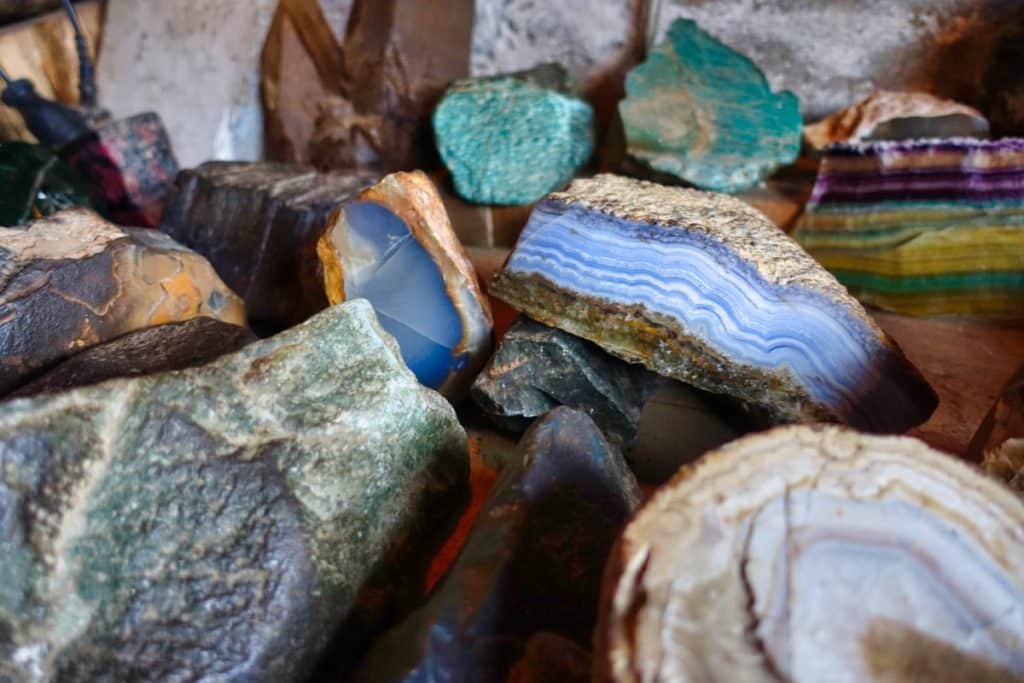
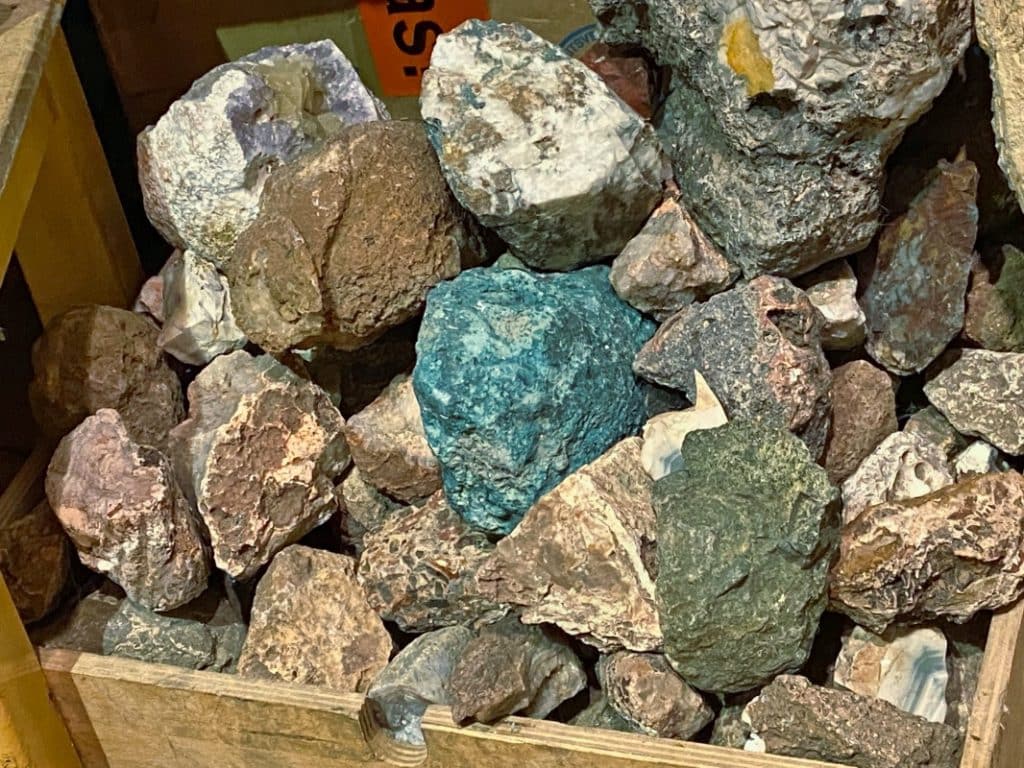
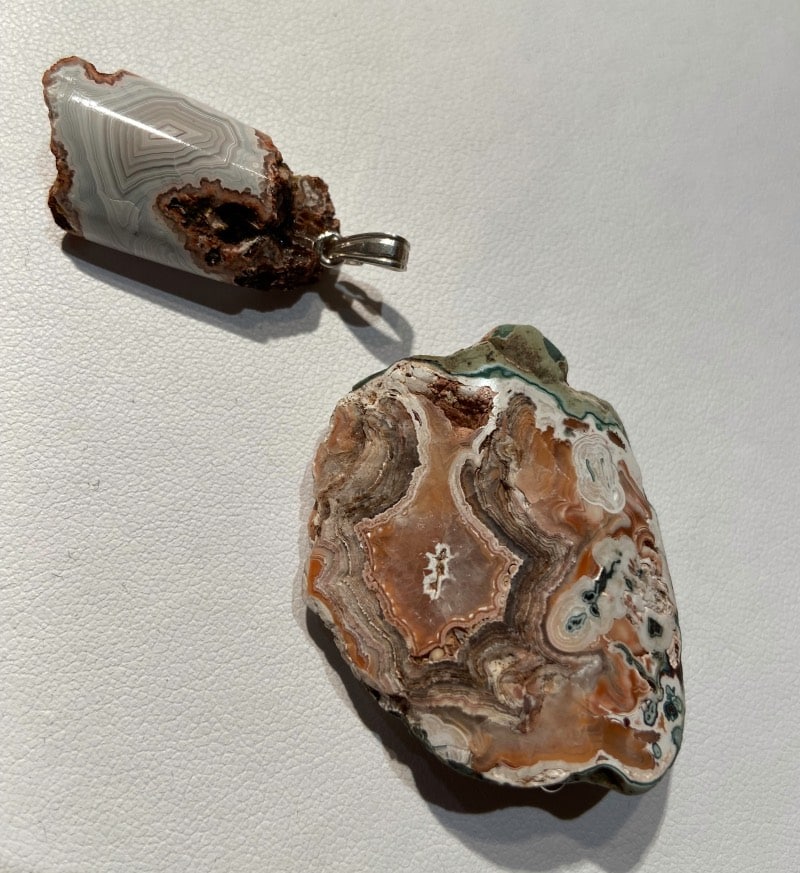
In the small shop we discovered a box of stones. Peter Fischer collected these during his walks in the area. To be honest, I would have left them by the roadside, because to me they look like ordinary stones. But, I am assured, the beauty of the stone often reveals itself later.
The stones become gemstones
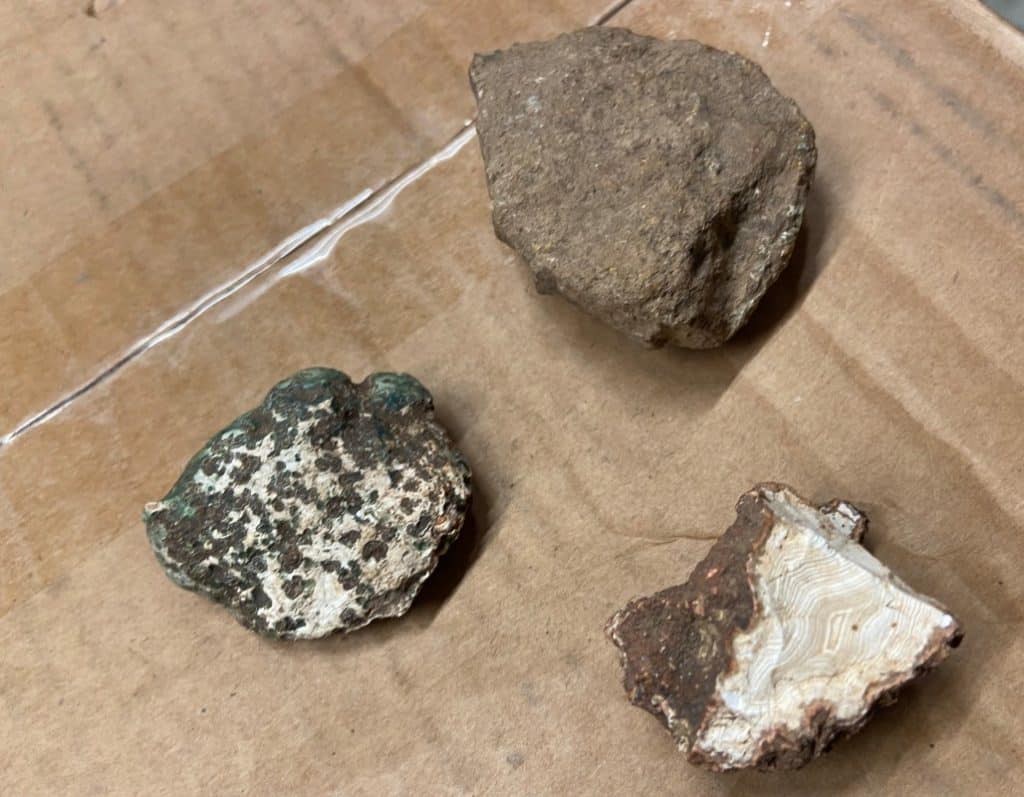
We chose 3 specimens and went with the artist to his workshop. He now wanted to show us the working process and of course also “prove” that not all stone is the same.
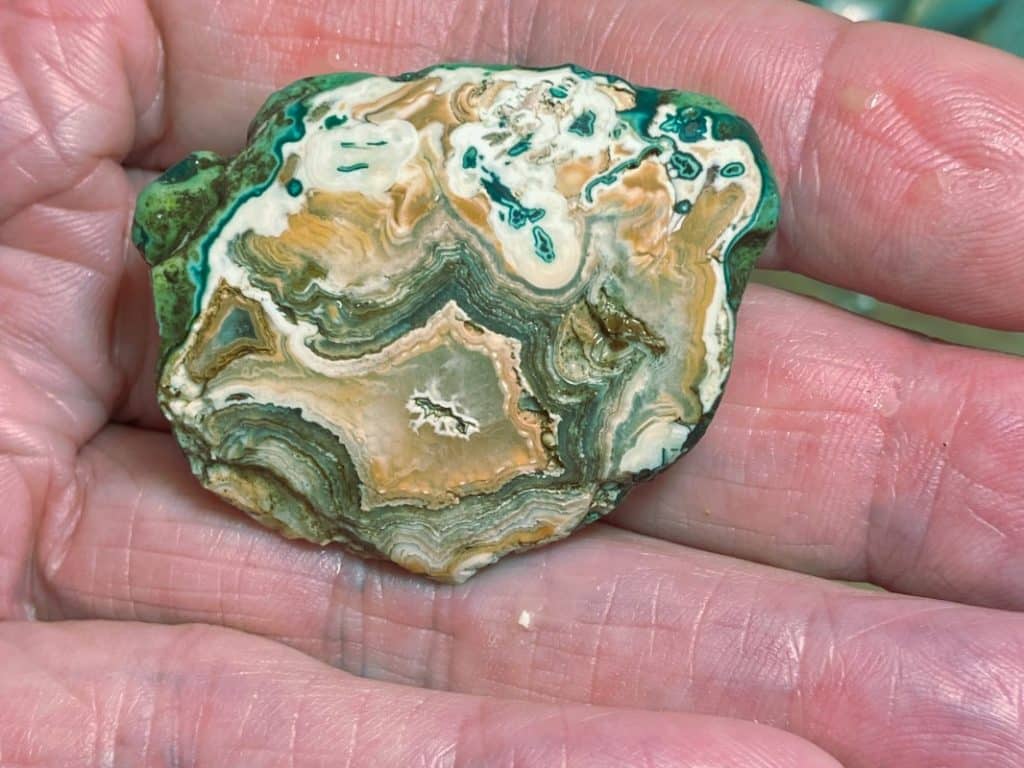
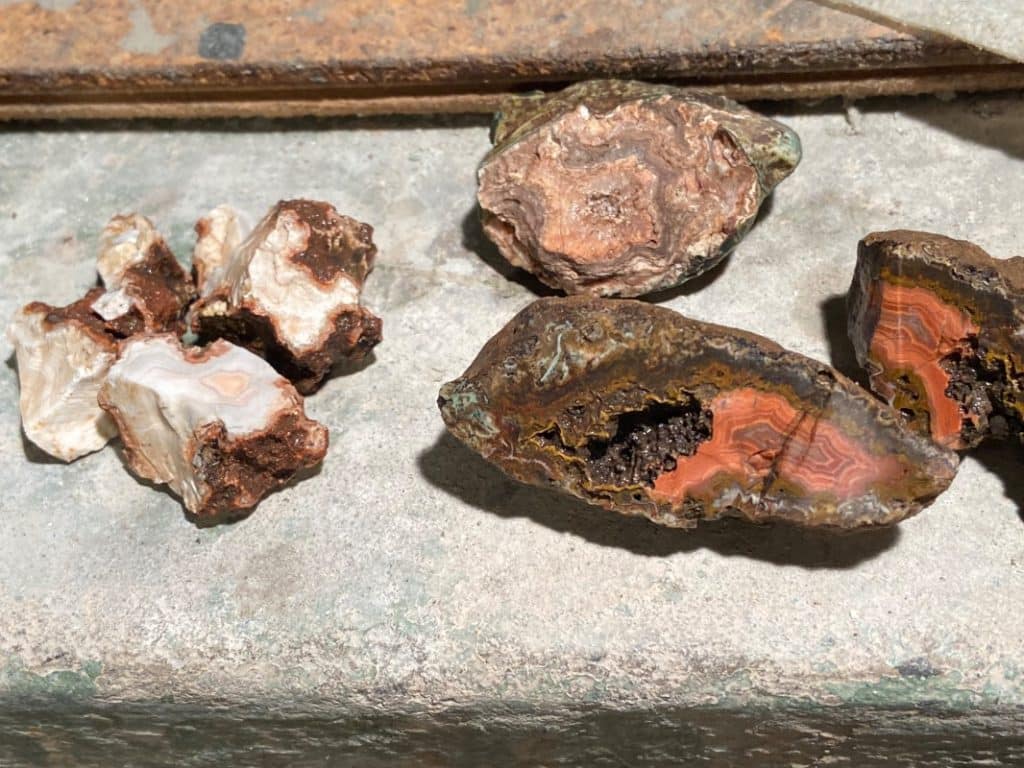
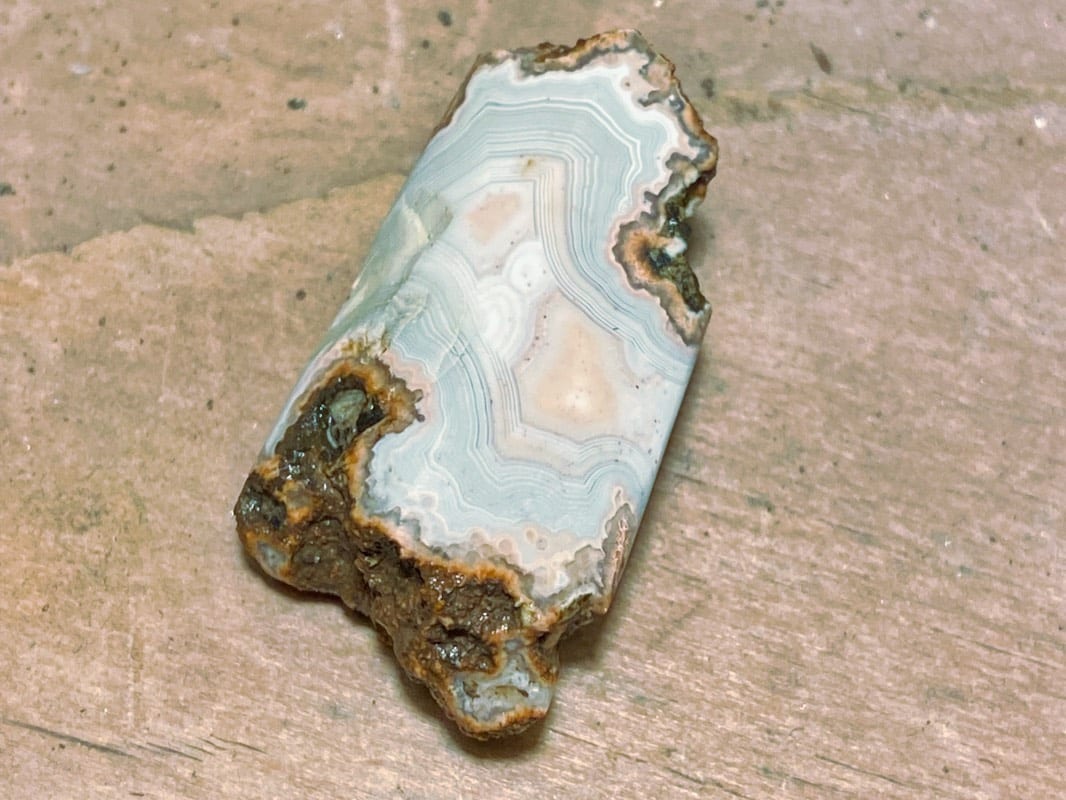
The first step consists of slowly sawing the stones apart with the help of a machine that reminds me a lot of a circular saw. With the help of a lot of water, Peter Fischer pushed our stone selection forward, smiled and presented us with the “inner life” of the stone. Already here we could see that each stone has a different structure on the inside, ranging from whitish hues to reddish tones. Each stone has a different pattern and structure.
In the second work step, the stone is now ebouched. This means to see what shape will emerge later, i.e. the first rough cut. Here it became apparent that the very light-coloured stone was somewhat unstable. It broke into several small pieces, but they were still stable enough to continue working with. It took a while until Peter Fischer was so satisfied with all three stones that he could start the next work step.
Now the fine grinding of the stone took place. A rotating disc with an emery belt is moved at different speeds over the previously cut surface. Small edges and unevenness can be removed in this way. After another change to another machine, the stone can then be polished. During this work, I was completely fascinated by how the once so shapeless stone took on more and more shape, even though I didn’t know until this point what the gemstone was supposed to “become”. On the next device, I would finally find out what the final product would be.
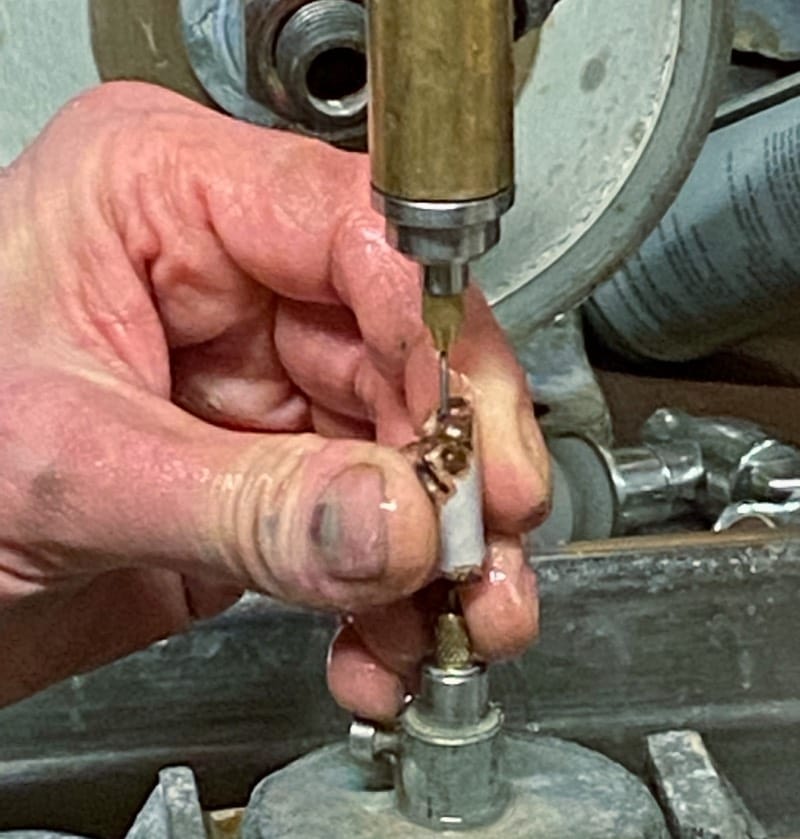
Peter Fischer drilled a small hole in 2 of the stones and placed a small eyelet in the hole at the workbench. The result was two beautiful and unique pendants for necklaces. As each stone is unique, there will never be another of its kind and I was all the more pleased to be able to take these beautiful pieces of jewellery home with me. What a great gift that will always remind me of my visit to EdelSteinLand and Peter Fischer.
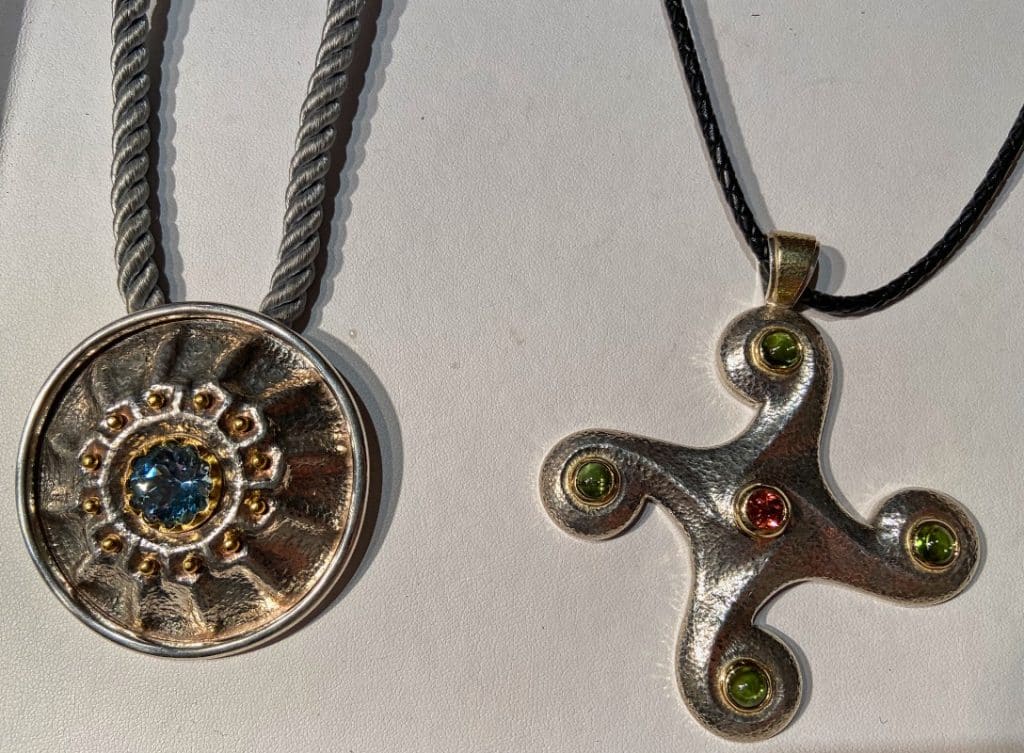
Other beautiful individual pieces, such as handmade silver jewellery and of course gemstones, can be purchased at Fischer Disein in Idar-Oberstein.
We got to know a completely different kind of gemstone processing during the ManufakTour at Roth Cameo. Here Andres Roth showed us that gemstones can also be engraved to create beautiful and unique works of art.
Andreas Roth came into contact with the art of gemstone processing as a child. His family has been resident in EdelSteinLand since the 18th century and has passed on their knowledge and skills over the years. Andreas Roth is a master gemstone engraver and specialises in the production of large cameos, portrait engravings and unique engravings.
What is a cameo?
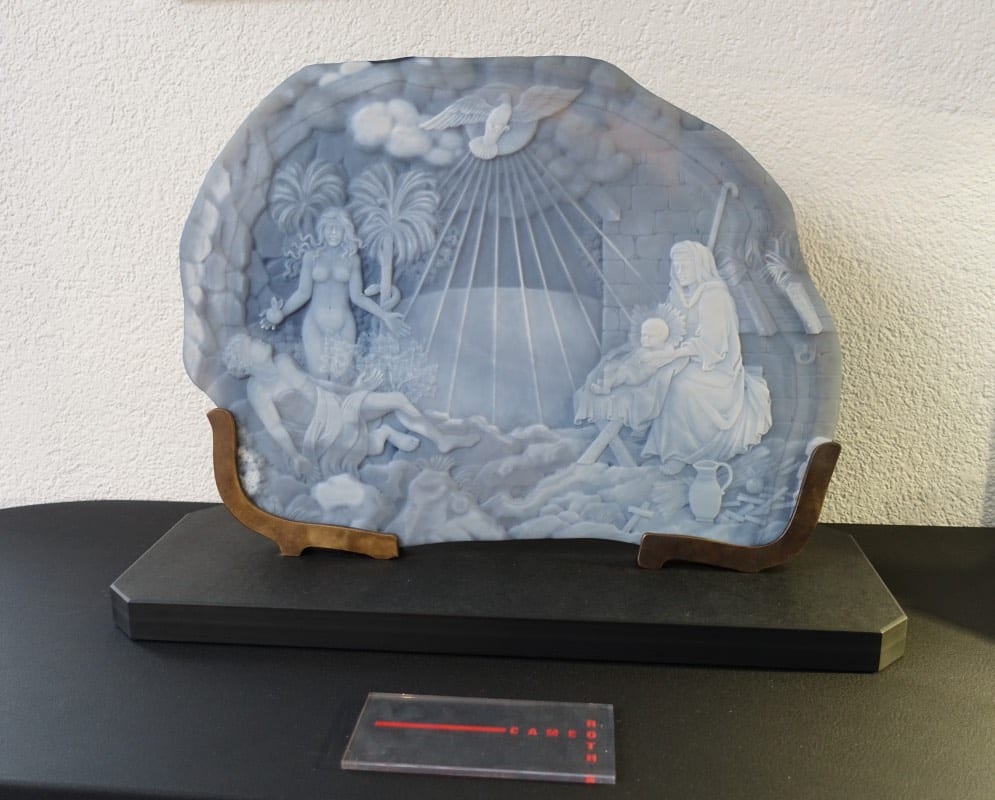
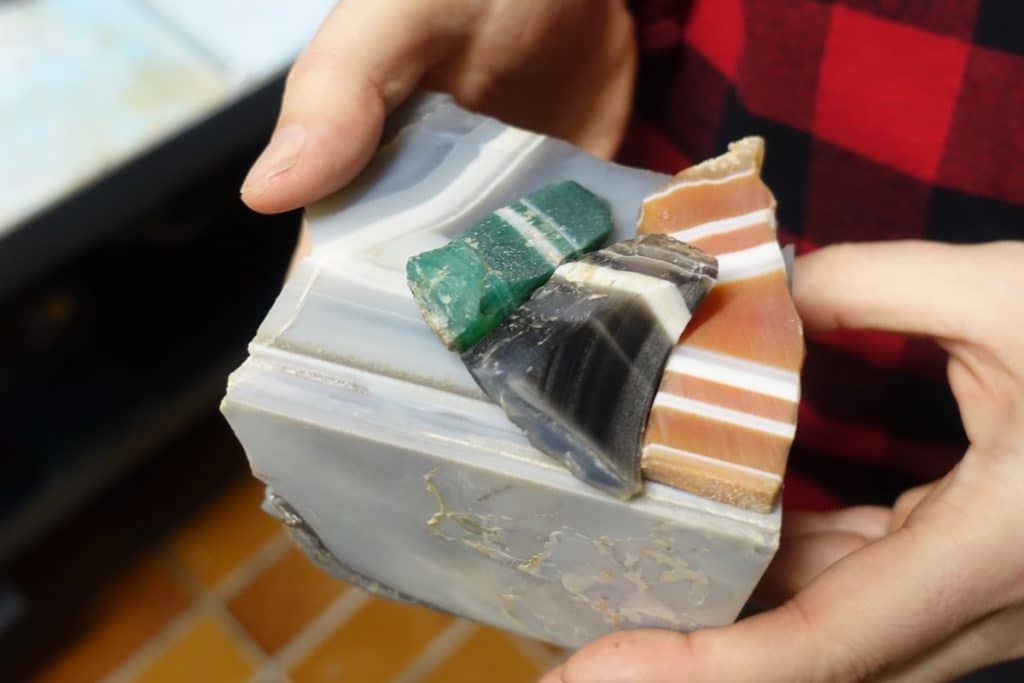
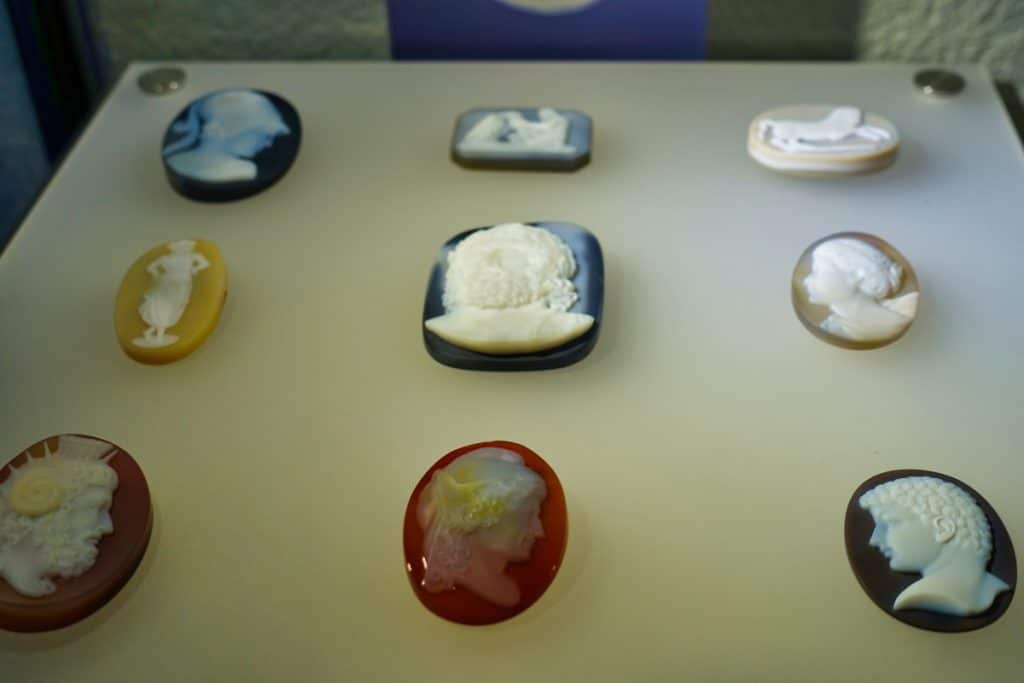
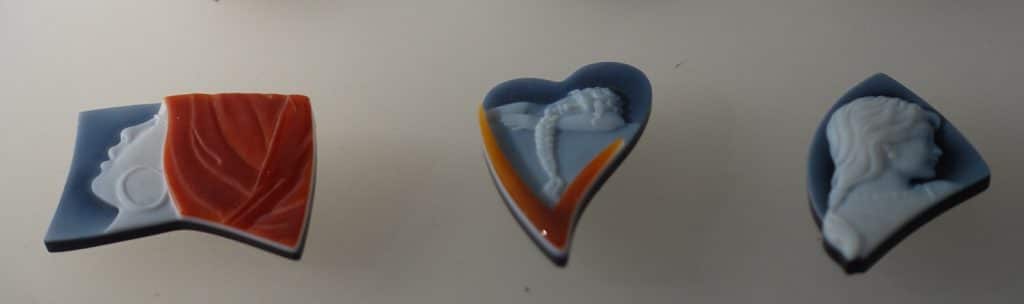
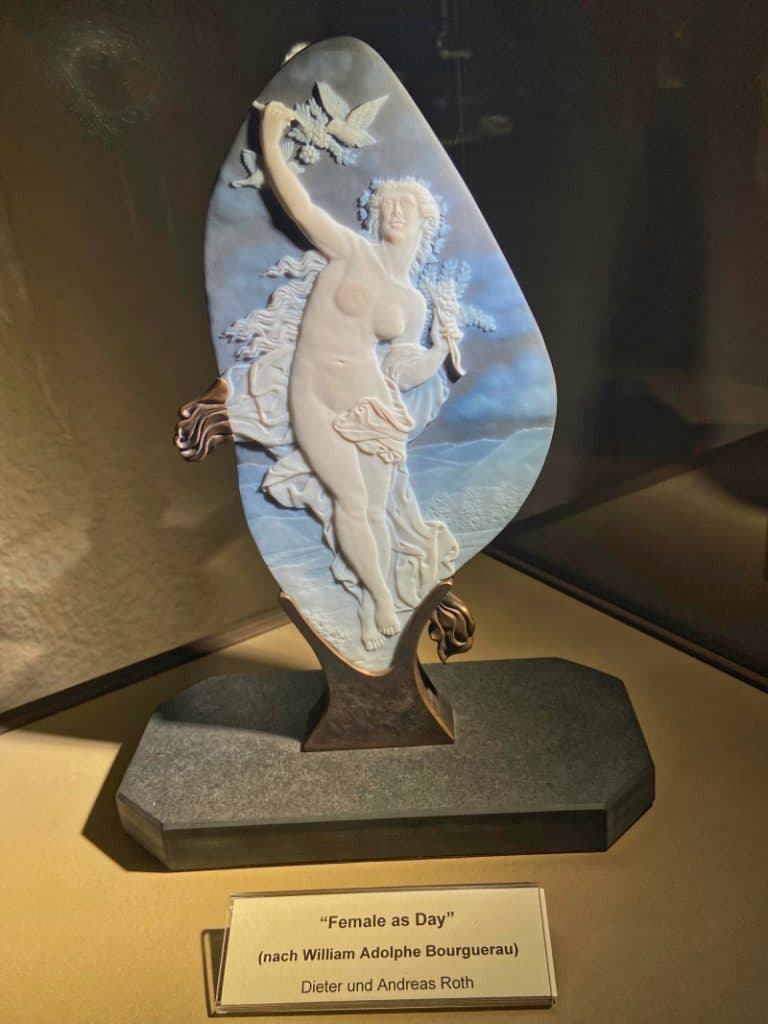
Cameo is a very special type of engraving that describes the raised relief from a gemstone. A very special stone is needed for this, which is made up of differently coloured layers of rock. Chalcedony or onyx is often used for the production. Andres Roth also uses layer agates for his work, which he buys in Brazil. One advantage of the grey layers is that you can colour them almost any way you want and the layer retains its colour permanently. When the cameo is made, the lighter stone part is usually left as the upper layer. In this layer, the artist engraves an image that contrasts with the lower, darker layer of stone.
With this knowledge, we now went to the workshop. There are various machines here that we had already seen in other workshops: machines for cutting the stones, for grinding and drilling. But there are also machines that we had not seen before. These special tools, almost exclusively our own developments, are used for the delicate manual work of milling and engraving.
Gemstone engraving
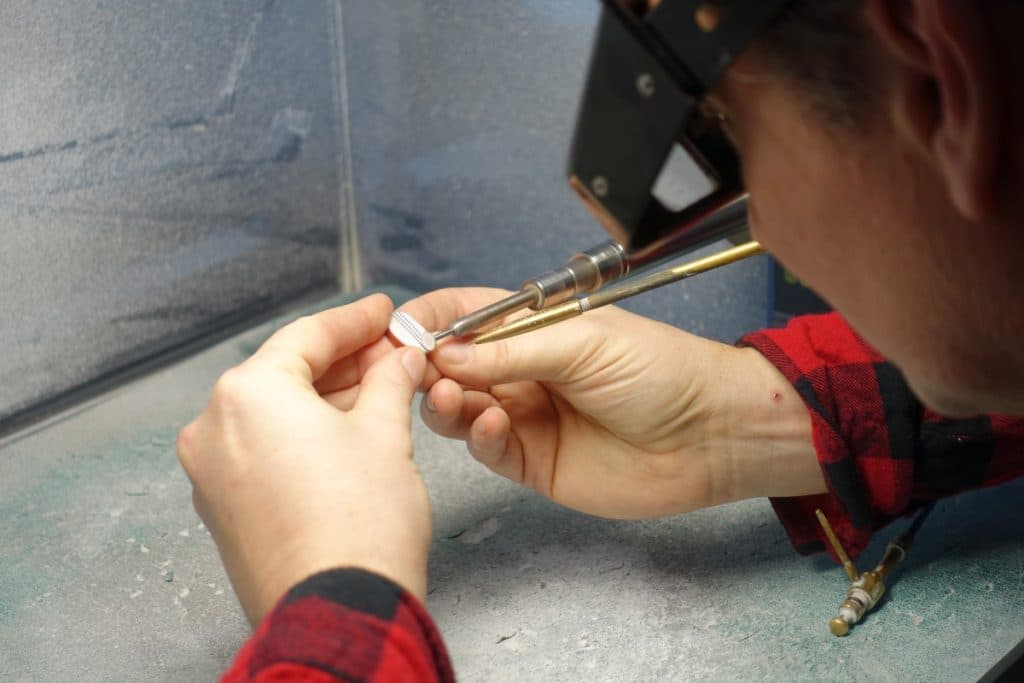
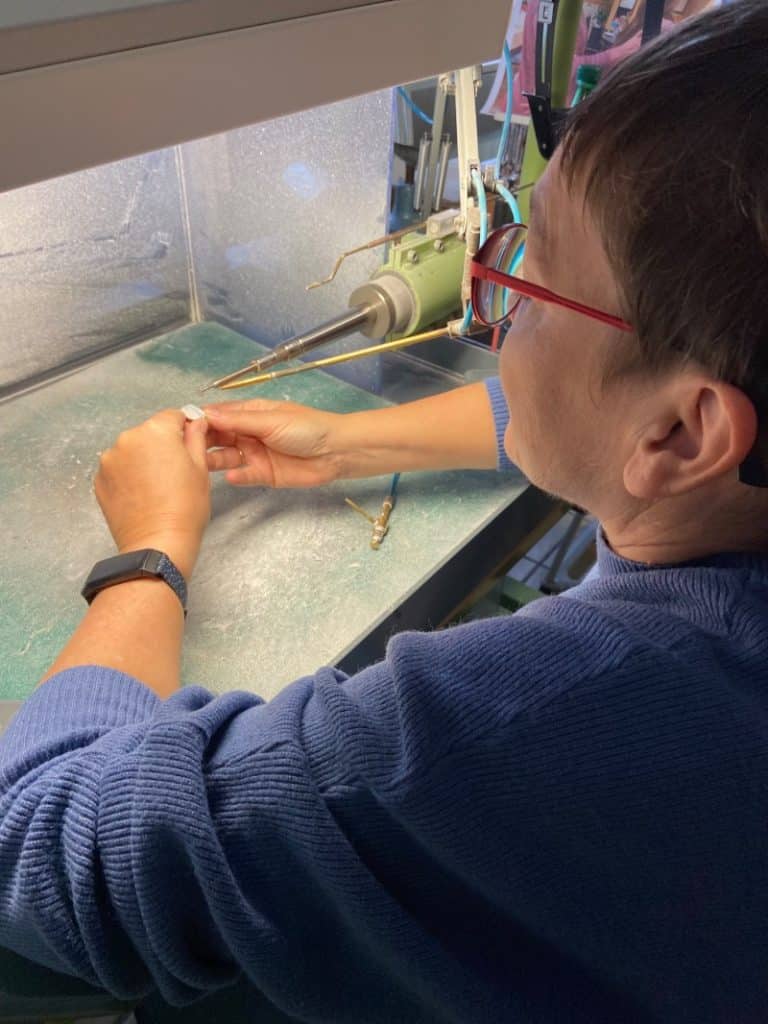
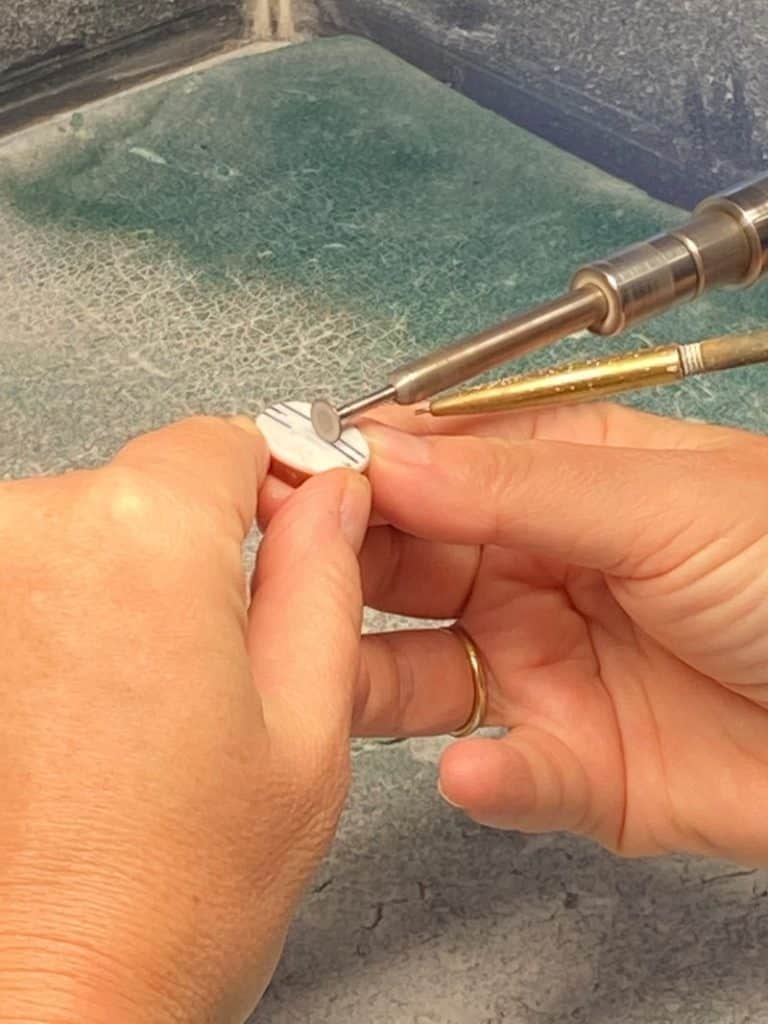
We were shown very clearly how to work with these machines and then it was time for me to try them out! Andreas Roth had drawn some lines on a small stone. I was supposed to engrave one of them “very simply”. Straight lines are the first difficulty, holding the workpiece steady is the second. The stone is very hard and just holding it carefully against the diamond-set cutting wheel doesn’t help. I had to really hold on and build up pressure to see any success at all. Then there was the accuracy to produce a straight line, which is also really not easy. After this experience, I admire the craft and the work even more.
Andreas Roth not only transforms his own designs into beautiful works of art. He mainly produces commissioned works. For example, if a customer wishes to have a portrait immortalised in stone, they can send a picture and a matching stone (by arrangement). The picture is then transferred to the stone and engraved by hand. A unique piece that is sure to catch the eye.
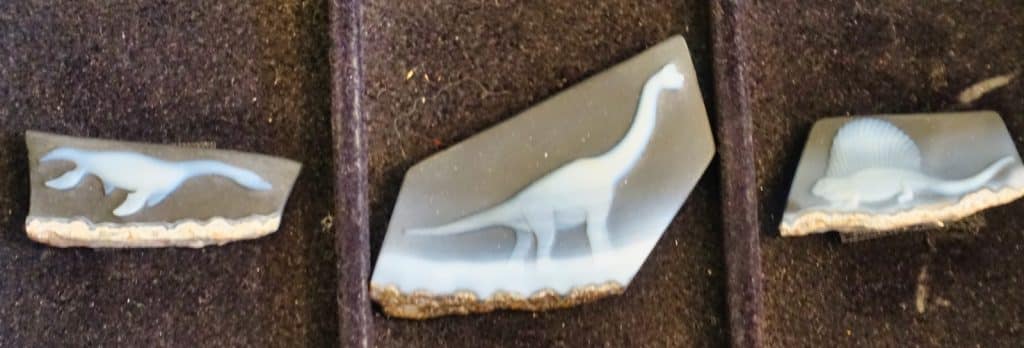
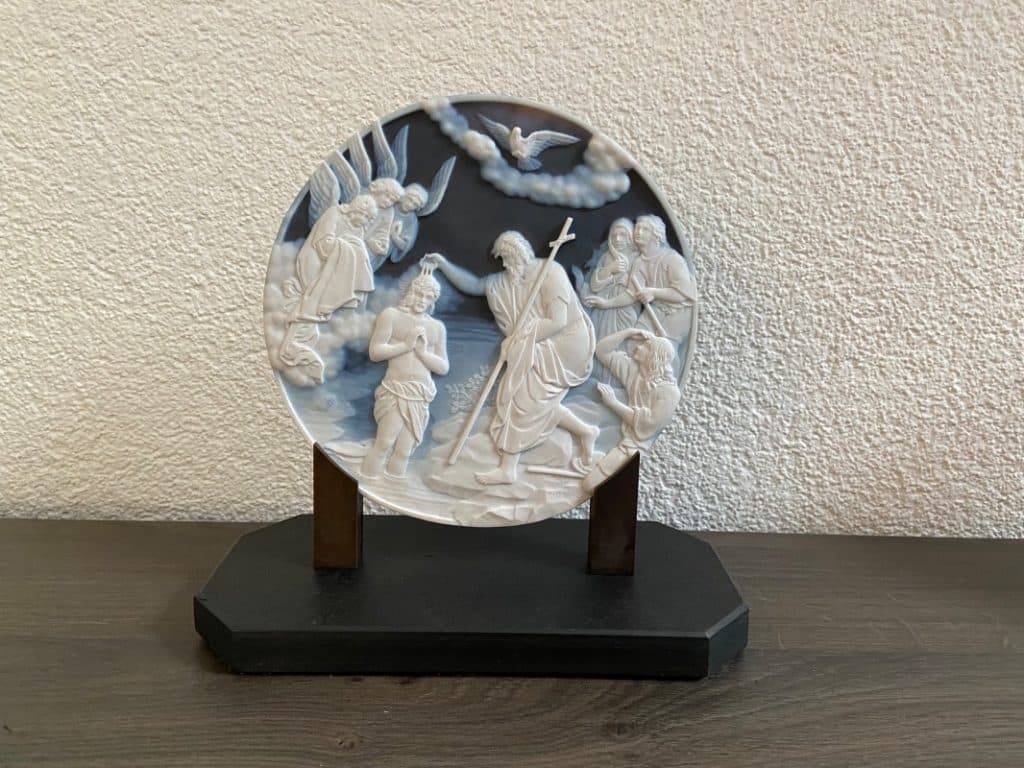
At the end of our visit, we were allowed to take a look at the exhibition room. Here you can see beautiful cameos with different motifs. The traditional Christian motifs are among the large works. But there are also small pieces with “surprising” motifs – I really liked the dinosaur collection.
Now that we had learned how, in the past and today, true treasures are made from initially inconspicuous stones, we were drawn to the German Gemstone Museum.
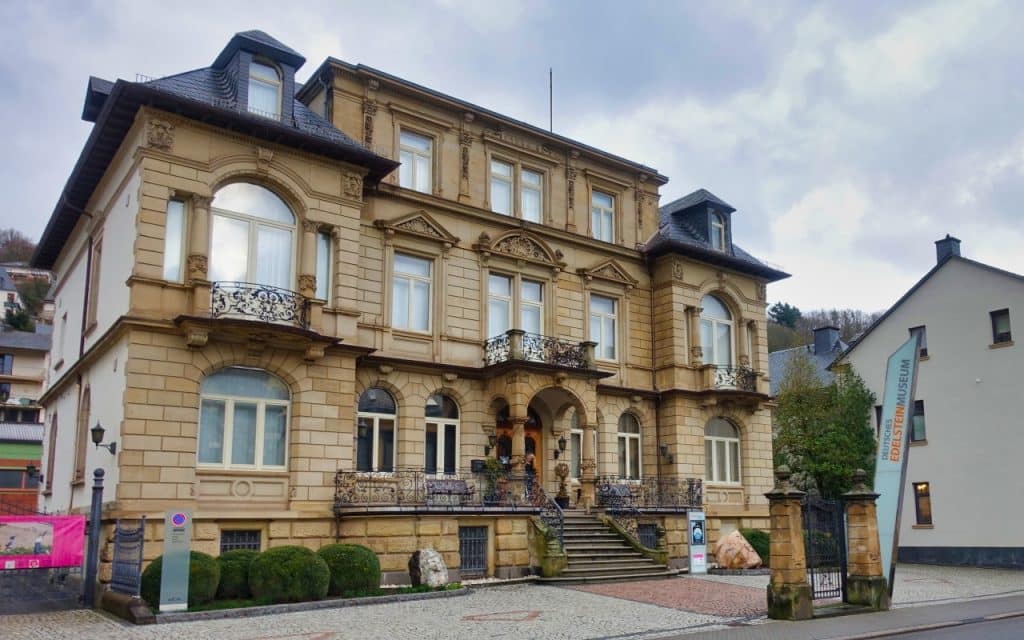
The museum has existed since 1973 and is located in the beautiful villa “Purpers Schlößchen” in Idar-Oberstein. Over 4 million visitors have visited the museum since it was founded and admired the more than 10,000 exhibits. So we were very excited to see what was in store for us.
The museum’s exhibition space extends over 4 floors. In the basement, the operator shows special exhibitions with changing thematic focuses, while the permanent exhibition is located on the three upper floors. Many of the exhibits are on loan from the local grinder families, who find a wonderful presentation setting for their works.
Tour of the German Gemstone Museum
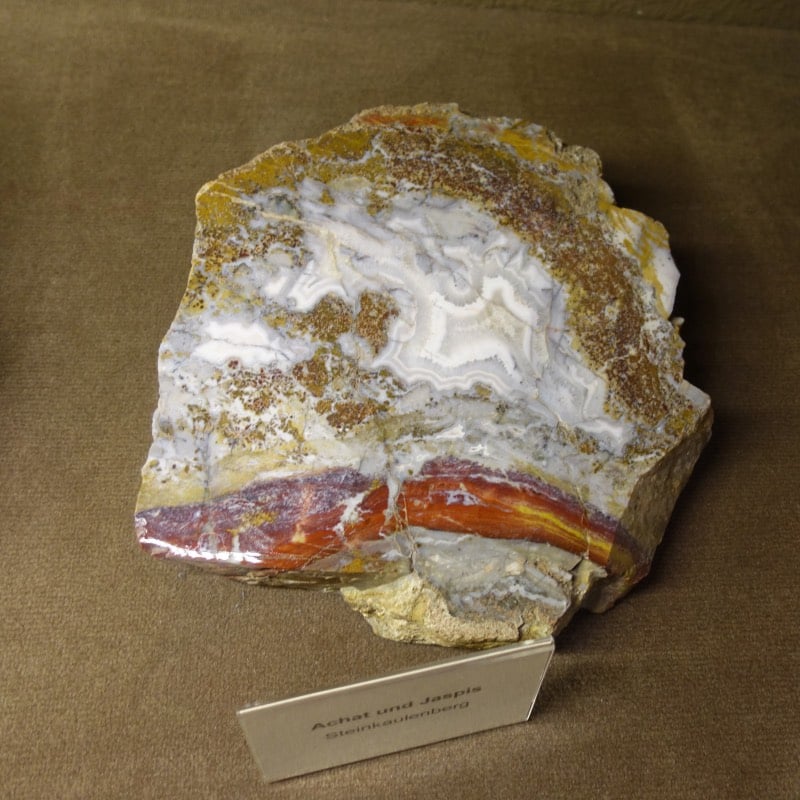
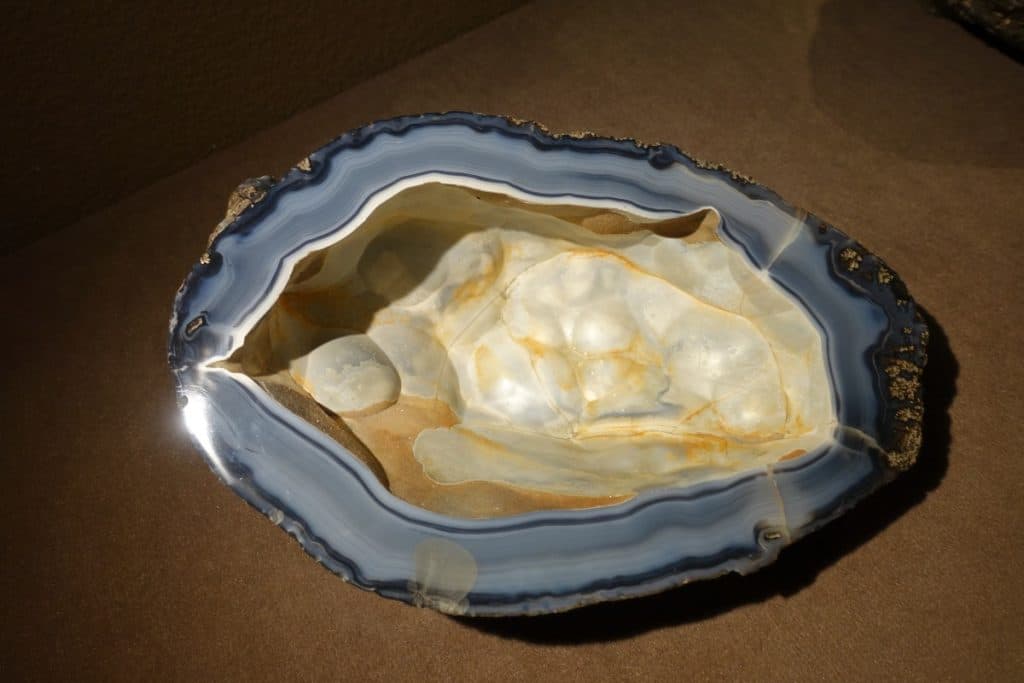
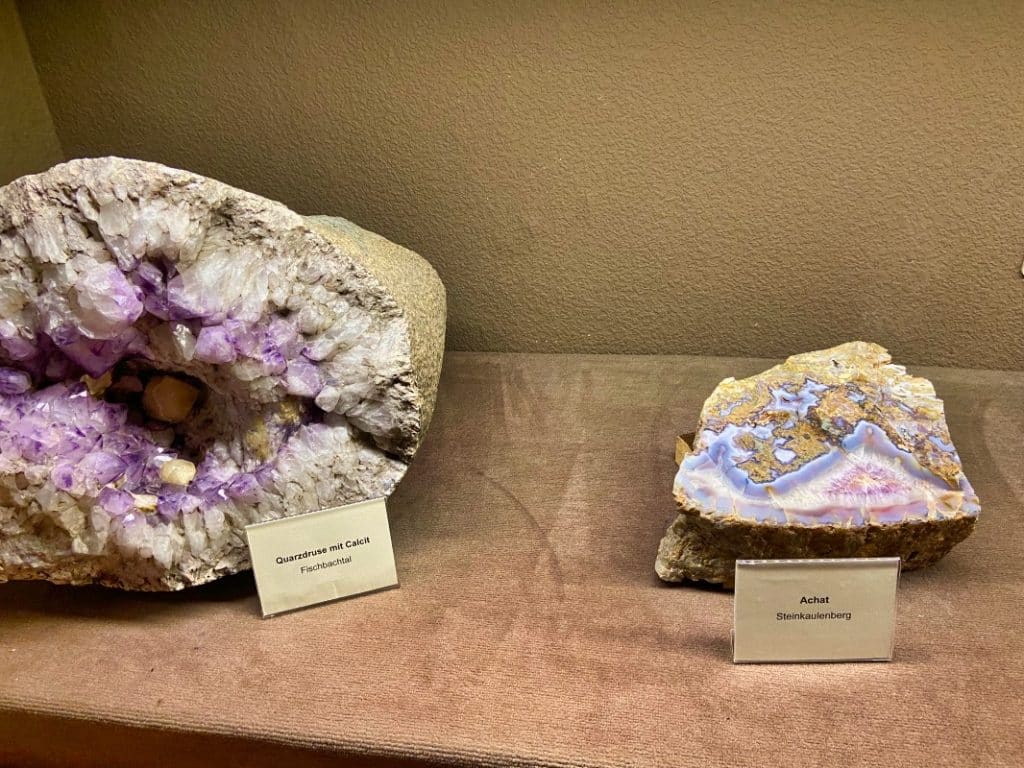
After entering the beautiful villa, we first went through the rooms on the ground floor. Here, everything revolves around the topic of the origin of the gemstone industry and gemmology, the science of gemstones. We discovered local agates and quartz, which laid the foundation for the region’s gemstone industry. Each stone has its own colouring, patterning / drawing.
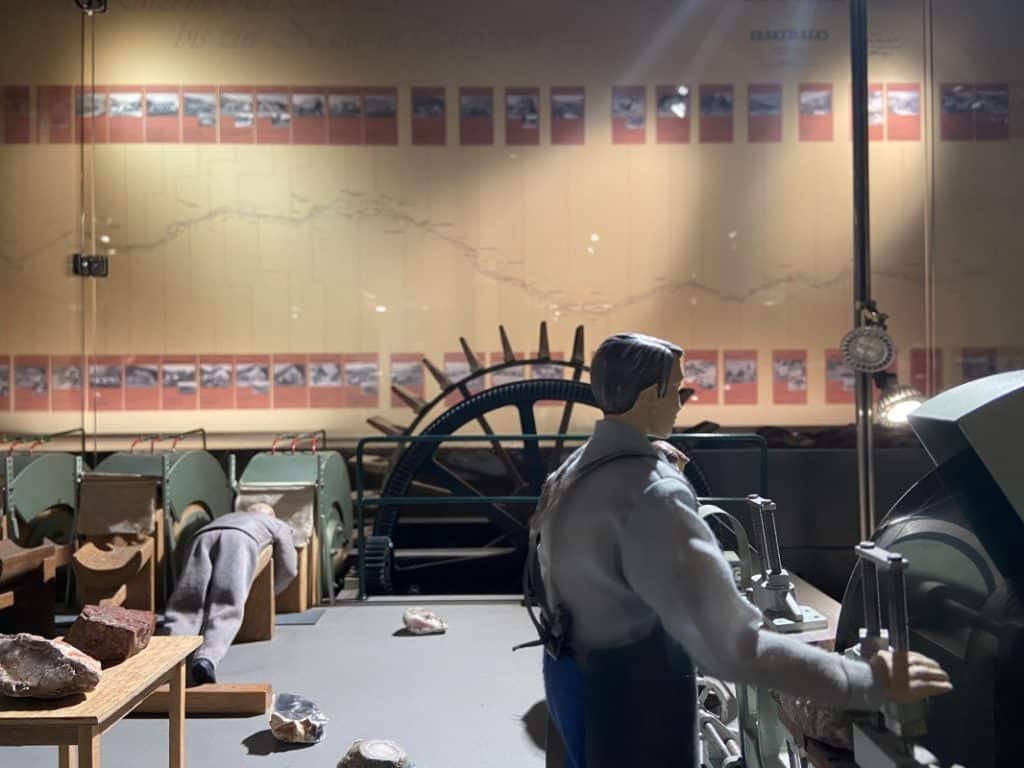
I found the model gemstone-cutting workshops, which illustrate the working process here, very interesting. From our previous visits to the Historic Water Loop and to the artists of the ManufakTour, I recognised some of the machines and work steps. It’s great to have such a direct comparison.
Not only local agates are presented in the German Gemstone Museum. The visitor can admire stones from all over the world. From the middle of the 19th century, companies imported many stones from Brazil, which helped the industry to flourish. Beautifully cut stones are presented here.
The topic of gemmology reminded me a lot of my geology courses at university. Chemical compositions, physical properties and characteristics of different gemstones are explained here in a simple and understandable way. I also found the insight into synthetic crystals and the information about the use of diamonds and gemstones in industry very exciting.
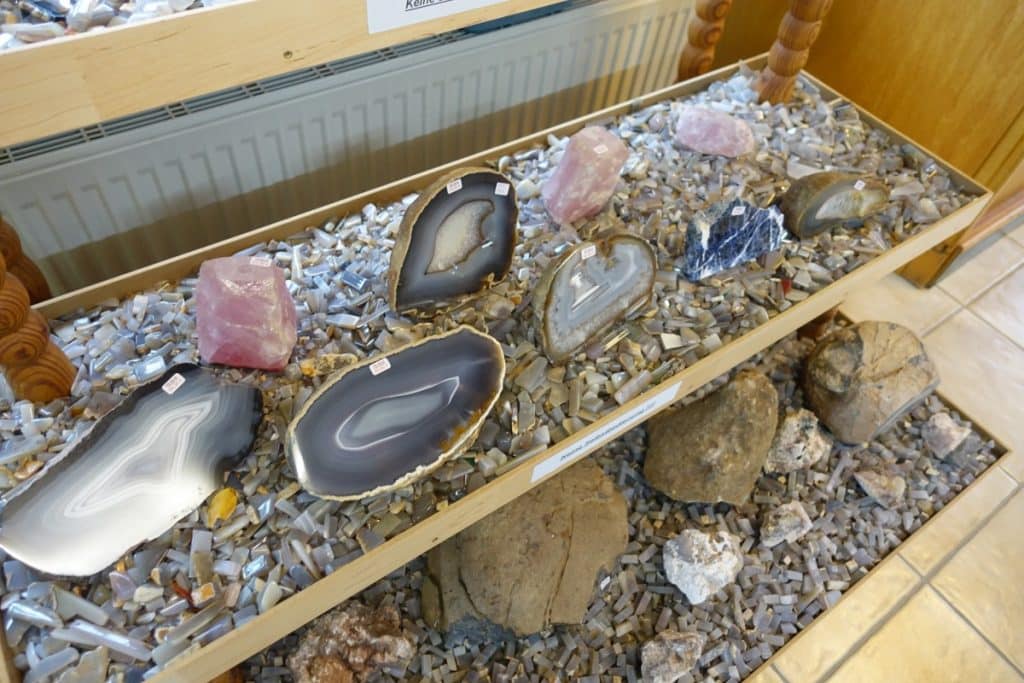
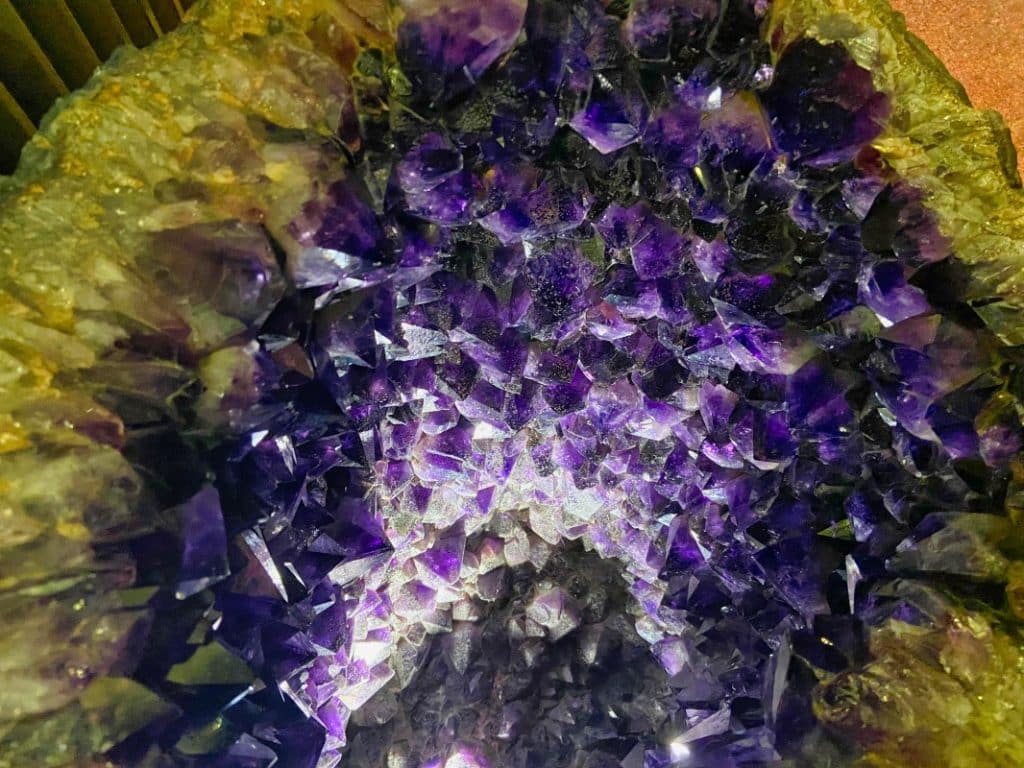
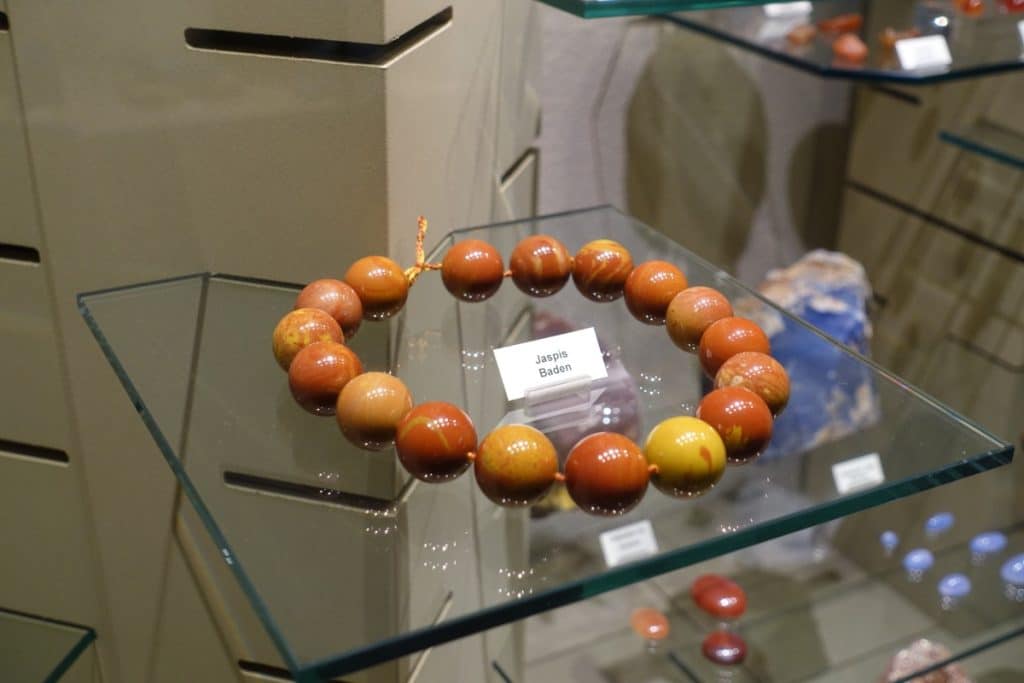
On the first floor, the German Gemstone Museum presents the diversity of gemstones. The showcases glitter and flash in a wide variety of colours. On display, for example, are the group of quartz or garnets, from rock crystal to opal, stones in the most diverse sizes, shapes and colours simply beautiful. Some of the names, such as aquamarine or lapis lazuli, are familiar to me, others, such as spectrolite or amazonite, I have never heard of. As I strolled from object to object, I couldn’t decide at all which stone I liked best.
Gemstone art
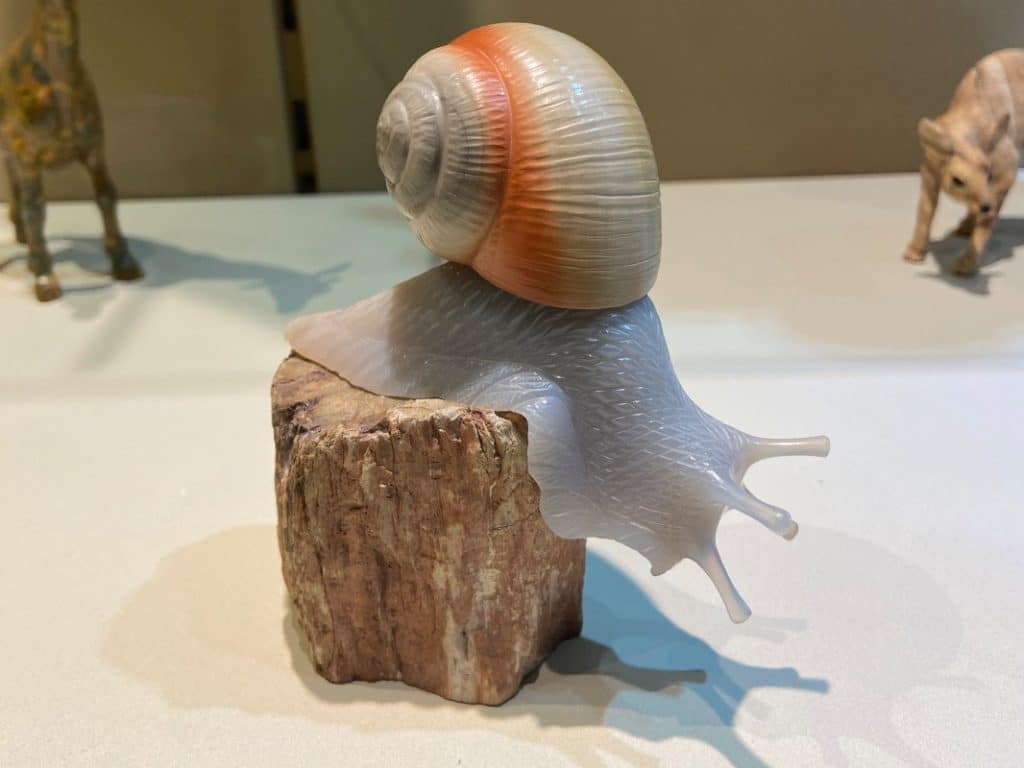
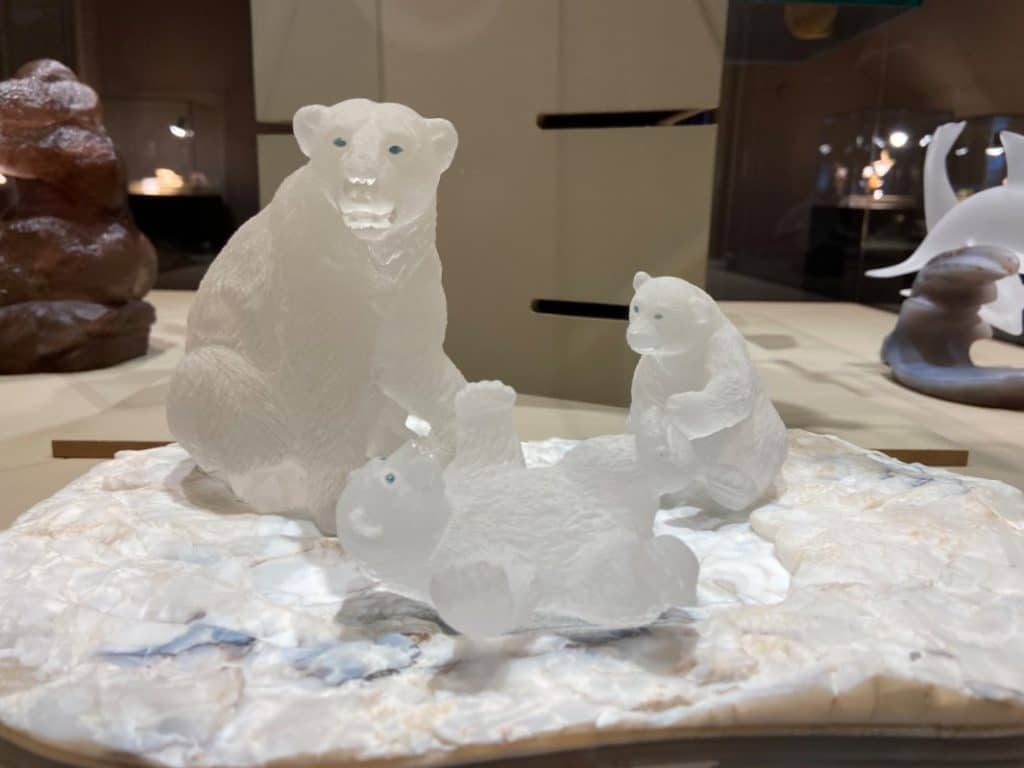
The permanent exhibition is rounded off by objects made of precious stones. On the first floor are a wide variety of art objects. There are artists who have transformed the stones into animals. The snail looks so realistic to me that I can hardly believe I’m looking at a “stone”.
I am also impressed by the gems, historical seals and vessels. One object in particular attracts my attention. The wonderful work was made by Andreas Roth, whom we had just met on the ManufakTour. Rightly, I think, is this extraordinary piece in a museum.
An impressive museum, a great exhibition and thus a really successful conclusion around the topic of gemstones.
Tip:
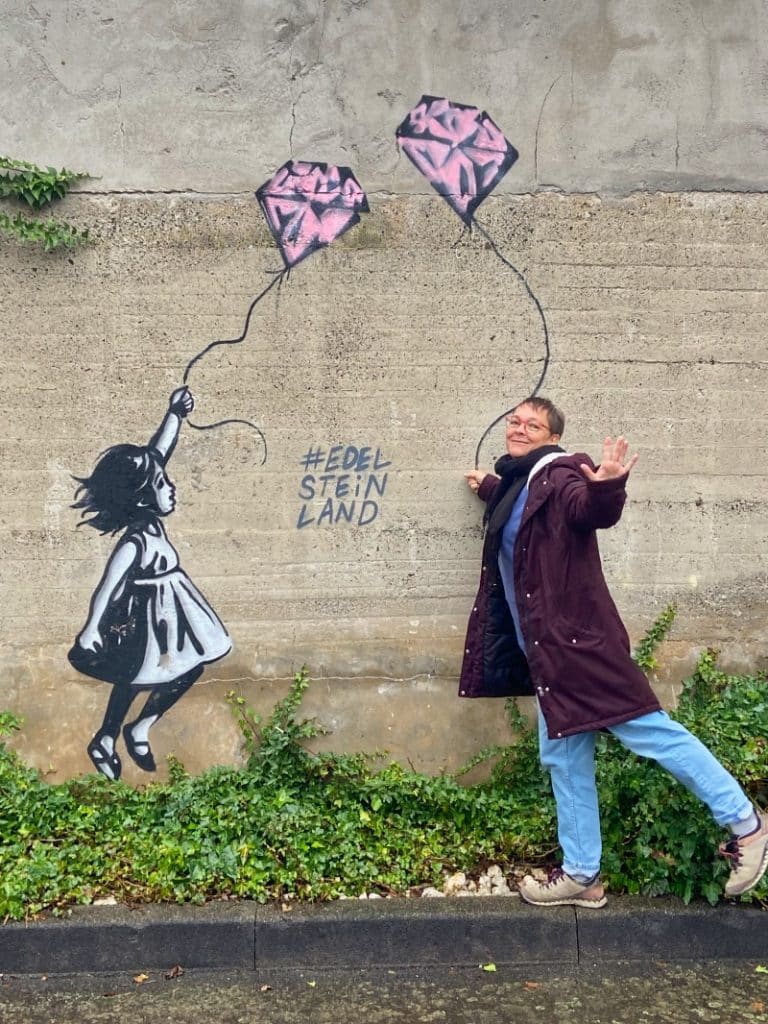
In the courtyard of the museum there is a graffiti that is ideal as a photo motif.

Leave a Reply