We are no strangers to monumental structures in Berlin. Often, they are remnants of socialist regimes that today seem surreal and almost oppressive, as they inevitably bring to mind times gone by. This is precisely the feeling conveyed by the Slavín War Memorial in Bratislava. It is well worth a visit, not only for its history but also for its fantastic location.
Anyone making their way to Slavín in Bratislava senses, even as they climb, that something special awaits them. The route takes you through one of the city’s most expensive and upmarket residential areas, steeply uphill along quiet, tree-lined streets. Once you reach the top, the atmosphere changes abruptly.


A Place of Silence: Remembering the Liberation in 1945
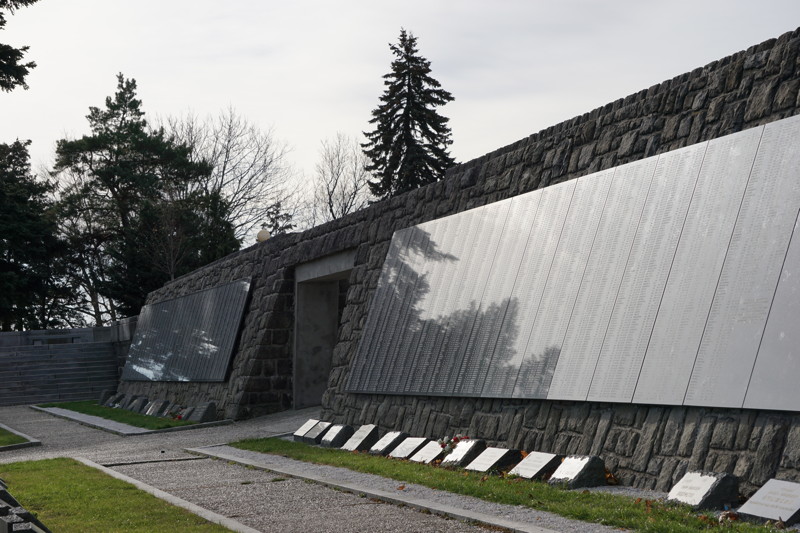
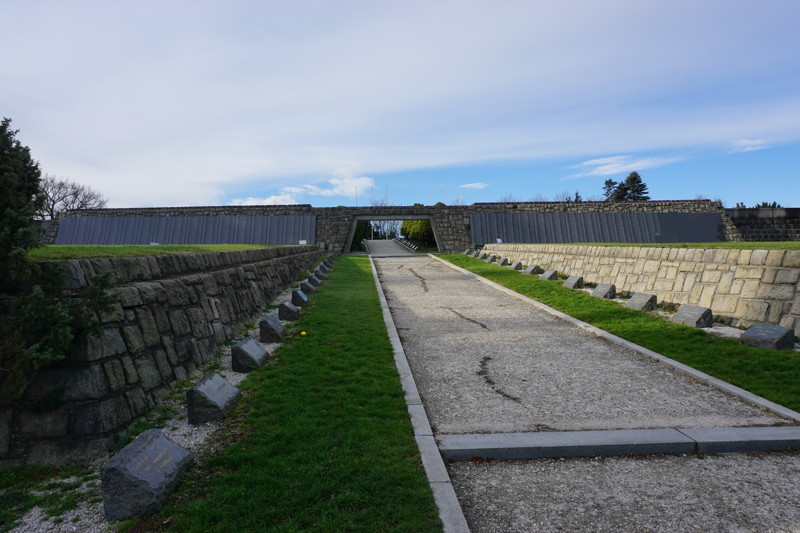
The Slavín memorial was ceremoniously opened in 1960 and serves as a memorial for 6,845 fallen Soviet soldiers of the Red Army. They lost their lives in April 1945 during the fierce battles for the liberation of Bratislava and found their final resting place here. Approaching the area, you immediately notice the heavy silence that lies over the place. A wide, awe-inspiring staircase leads from the central square up to the expansive cemetery, which consists of six large mass graves and over 250 individual graves. Standing between the graves, taking in the countless names or simply the sheer number of those buried, you become intensely aware of the historical weight of this place.
Architecture That Makes You Feel Small
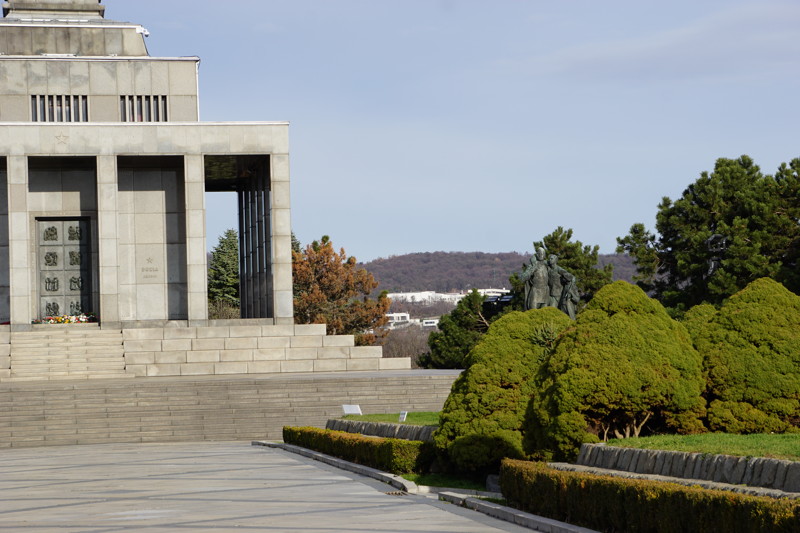
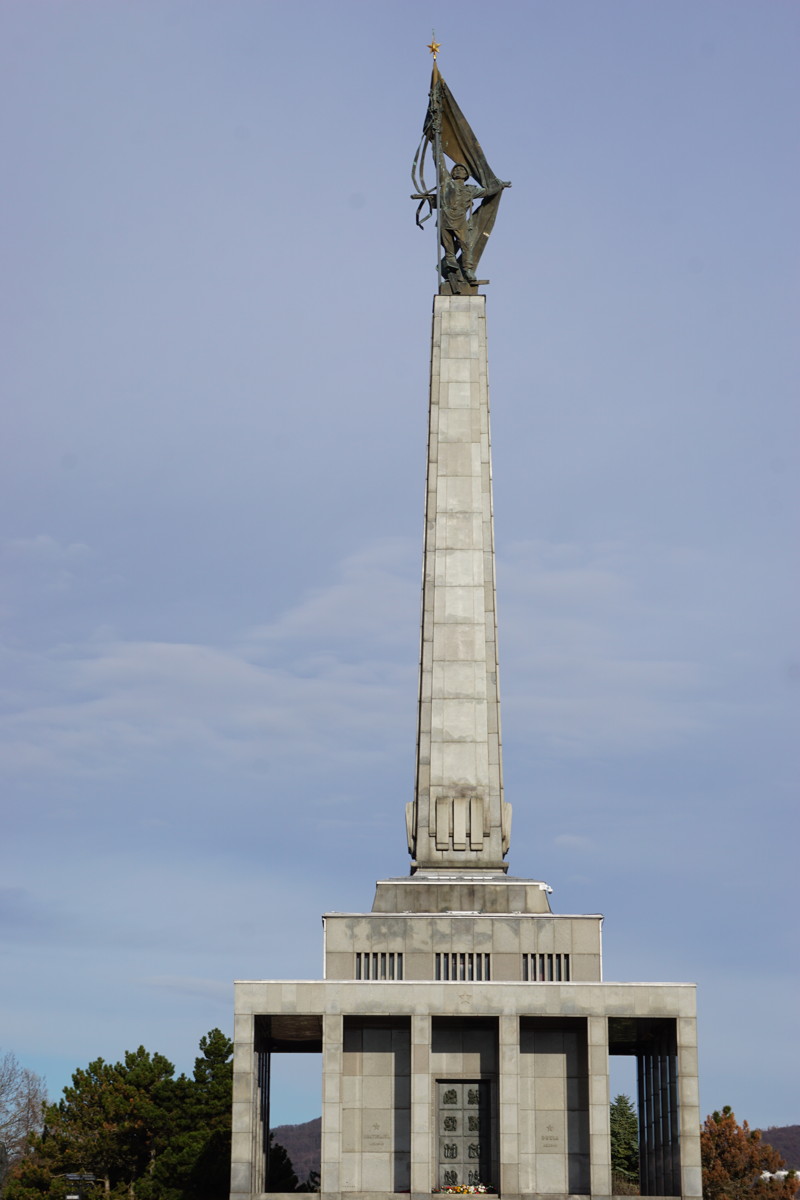
With a total height of 52 meters, Slavín is the largest war memorial in Central Europe. The architecture of the complex is entirely designed to demonstrate power and imperishability. Standing directly on the massive parade ground at the foot of the monument, you inevitably feel tiny.


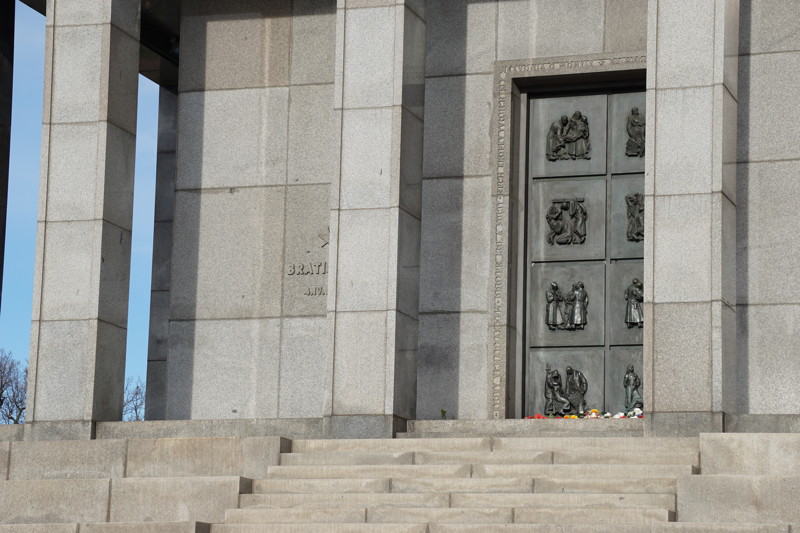
The central area of the complex is dominated by a massive ceremonial hall. Particularly impressive is the huge coffered door, decorated with heavy bronze reliefs. They serve as a reminder of the horrors of war and the struggle for liberation. Inside the hall, there are statues, solemn inscriptions, and a symbolic sarcophagus dedicated to the memory of the fallen.
Right above this hall towers the most striking element of the complex: a 39.5-meter-high granite pylon soaring steeply into the sky. On its tip, an eleven-meter-high statue of a soldier balances seemingly effortlessly. He proudly hoists the flag over the liberated land while trampling the symbols of National Socialism underfoot. I always find it astonishing how similar the design language of these monuments is – in Berlin, too, you can find visually very similar, heroic figures sending the exact same unambiguous message.
Between Oppressive History and a Peaceful Present
Personally, I found the visit to the monument quite oppressive. This was due less to the cemetery itself and more to the strict, cold architecture of socialist realism. With its huge stone parade grounds and massive representative buildings, it inevitably brings to mind the Soviet dictatorship that was forced upon the Eastern Bloc countries after the war.
Nevertheless, this place also has a completely different, unexpectedly light side. The monument is surrounded by a spacious, green park where locals go for walks, sit on the lawns, or enjoy the peace and quiet away from the hustle and bustle of the city.

The Best View Over Bratislava
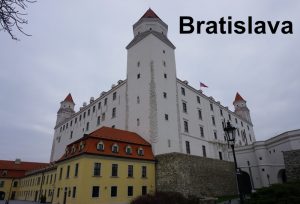
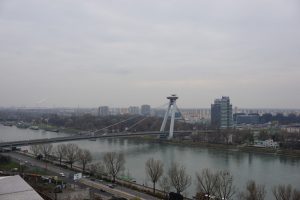
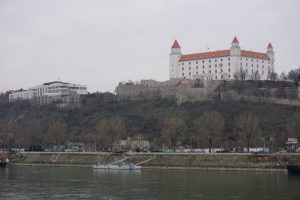
Above all, I enjoyed the incredibly beautiful view. Slavín sits majestically on a hill and, from its eastern terrace, offers one of the best panoramic views of the entire region. From up here, almost the entire city lies at your feet. You look directly at the imposing Bratislava Castle, see the Danube sparkling, spot the modern “UFO” on the Bridge of the Slovak National Uprising, and can see far into the modern district of Petržalka.
Visitor informations
Address
Slavín 1
81104 Bratislava
Getting there
Bus:
If you prefer not to walk the entire way, you can take the small bus line 147, which stops almost right in front of the monument (“Slavín” stop).
by foot:
Alternatively, you can walk from the Old Town. However, this route leads rather steeply uphill through a residential villa district and takes about 20 to 30 minutes, depending on your pace. Comfortable shoes are definitely recommended!
Parking
There are usually plenty of convenient parking options directly by the monument and in the adjacent streets of the neighborhood.
Opening hours:
The grounds are freely accessible at all times.
Admission
Access to the entire grounds, the monument, and the cemetery is completely free of charge, as it is a public park.
Accessibility
Since the monument is located on a hill and is heavily terraced, the site has many stairs.
The lower paths through the park are wheelchair accessible, but the direct ascent to the central ceremonial hall, the obelisk, and the graves is unfortunately very difficult or nearly impossible for wheelchair users or people with severe mobility impairments.
Published 27 May 2017
Leave a Reply